A Divine Interlude: Exploring Venus between Ceres and Bacchus
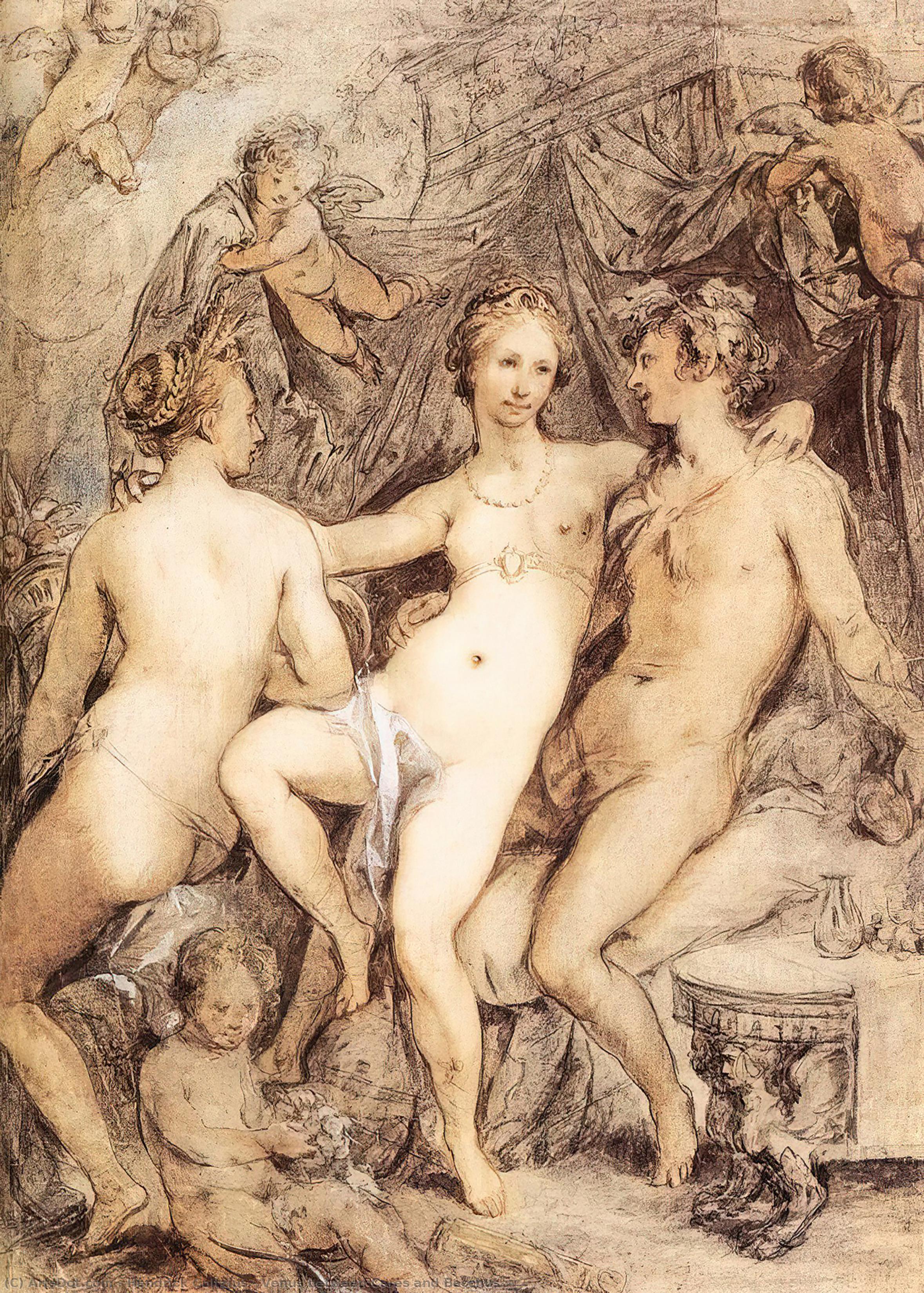
To gaze upon this magnificent canvas is to step directly into a moment suspended in mythological splendor. Venus between Ceres and Bacchus, painted around 1590 by Hendrik Goltzius, is far more than a mere depiction of classical figures; it is an elaborate tapestry woven from themes of fertility, divine love, and the cyclical nature of life itself. The composition immediately draws the eye into a richly populated scene where three central figures—the goddess Venus, the nurturing Ceres, and the jovial Bacchus—are arranged in a tableau vivant that speaks volumes through its very stillness.
Mythological Resonance and Symbolism
The grouping of these deities is inherently symbolic. Venus, embodying beauty and desire, occupies the heart of the narrative, flanked by two powerful forces of nature and sustenance. Ceres, goddess of agriculture and motherhood, represents the bounty of the earth, while Bacchus, the god of wine and ecstasy, speaks to pleasure and vital energy. The inclusion of these figures suggests a harmonious balance—a divine acknowledgment that beauty (Venus) thrives when supported by both earthly nourishment (Ceres) and spirited joy (Bacchus). Scattered throughout the scene are carefully placed objects: a delicate cup, an ornate bowl, and a central vase. These items are not incidental; they function as visual anchors, hinting at rituals, offerings, and the pleasures that accompany life's most profound experiences.
Mastery of the Northern Mannerist Style
Hendrik Goltzius, a titan of the late Renaissance and early Baroque period, imbues this work with his signature "exuberance." While rooted in classical mythology, the execution showcases the sophisticated flair characteristic of Northern Mannerism. Goltzius was renowned for his technical virtuosity, translating the drama and complexity often associated with Italian High Renaissance masters into a distinctly German-Dutch sensibility. Observe the figures: their poses are dynamic yet elegantly composed, suggesting an underlying narrative tension beneath the surface calm. The presence of three angels in the background further elevates the scene from a simple gathering to an apotheosis—a moment blessed by celestial intervention.
Technique and Visual Impact for the Modern Collector
The sheer scale of this piece, measuring 402 x 287 cm, commands attention, making it a breathtaking focal point for any grand hall or gallery. The richness of Goltzius's technique allows for intricate detailing in the drapery, the musculature, and the symbolic accoutrements. For those seeking to bring this level of historical grandeur into their own space, acquiring a high-quality hand-painted reproduction offers an unparalleled opportunity. It allows one to connect intimately with the master’s brushwork—the subtle gradations of tone, the dramatic interplay of light across bare skin, and the deep saturation of the background elements—without the monumental commitment of the original masterpiece.
An Emotional Echo Across Centuries
Ultimately, Venus between Ceres and Bacchus resonates because it speaks to universal human concerns: the pursuit of beauty, the necessity of sustenance, and the celebration of life's fleeting joys. It is a visual meditation on abundance. Owning or displaying a reproduction of this work is not merely decorating; it is curating an atmosphere steeped in classical mythology, artistic genius, and enduring, divine harmony.