A Forest’s Silent Echoes: Henri Rousseau's "Forest Rendezvous"
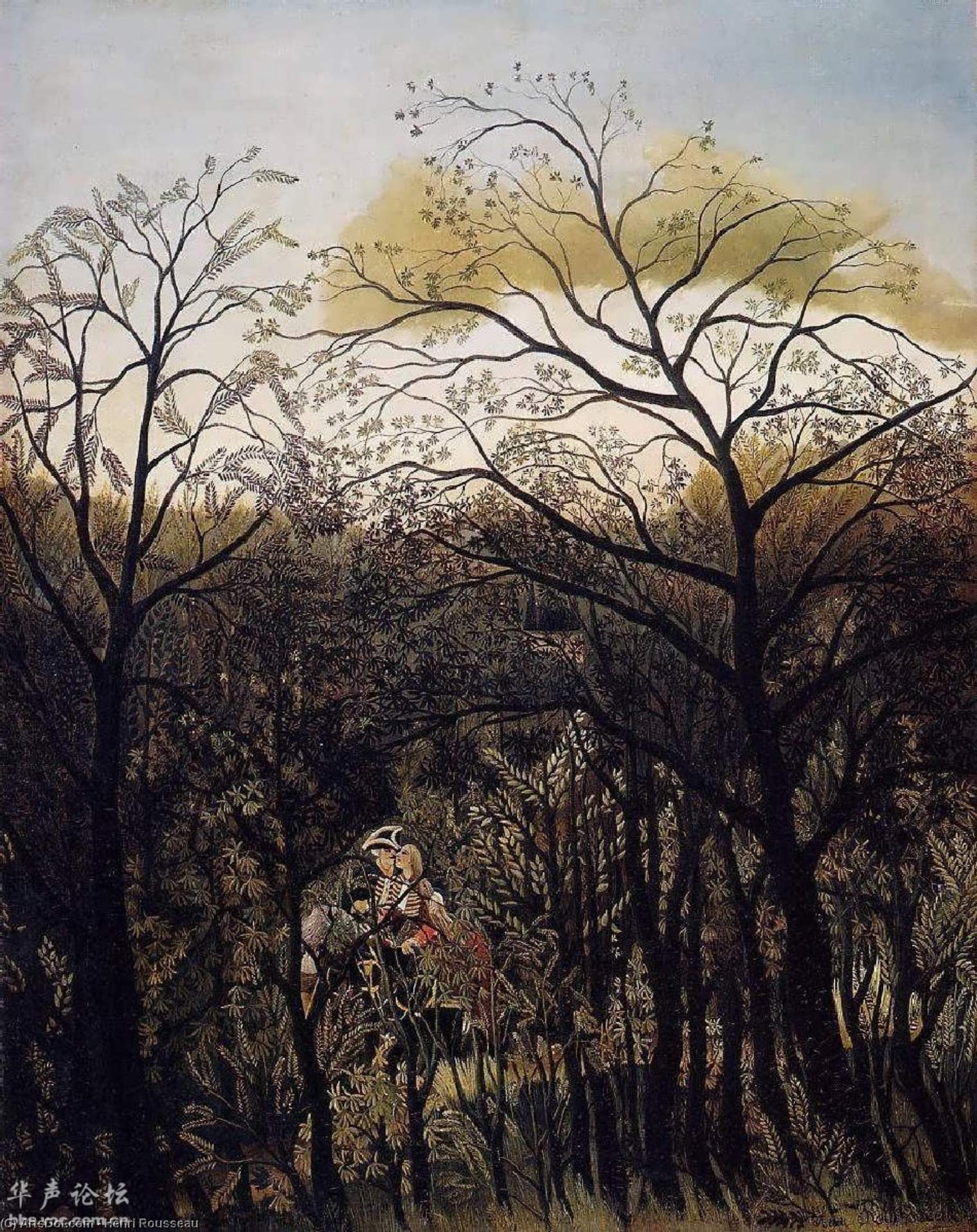
Henri Julien Félix Rousseau, known affectionately as “Le Douanier” – the customs officer – possessed an extraordinary gift: he painted not what he *saw*, but what he *felt*. “Forest Rendezvous,” completed in 1886, is a prime example of this deeply personal approach. It’s more than just a depiction of a woodland scene; it's a portal into the artist’s subconscious, a vibrant tapestry woven from memory, emotion, and an almost childlike fascination with the natural world. The painting immediately draws the viewer in with its rich, saturated colors – deep greens, earthy browns, and flashes of crimson and gold – creating an atmosphere both inviting and slightly unsettling.
Rousseau’s style is undeniably distinctive, firmly rooted in what we now recognize as Naïve or Primitive art. He deliberately eschewed academic techniques like linear perspective and meticulous detail, opting instead for simplified forms, flattened spaces, and a direct, unmediated approach to his subject matter. This wasn't a rejection of skill; rather, it was an embrace of a raw, unfiltered vision. The figures within the forest – a small group of individuals engaged in some unseen activity – are rendered with broad brushstrokes and a remarkable lack of precision, yet they possess a potent sense of presence. They aren’t portraits in the traditional sense, but embodiments of mood and feeling.
A Journey into Rousseau's World
Born in Laval, France, in 1844, Rousseau led a life largely defined by his occupation as a toll collector. This seemingly mundane existence provided him with a unique vantage point – observing the rhythms of rural life and absorbing the textures and colors of the natural world. It’s believed that he began painting seriously only around age forty, spurred on by encouragement from a friend who recognized his innate artistic talent. This late start is crucial to understanding the work; Rousseau wasn't striving for realism or social commentary; he was simply expressing himself through color and form.
The historical context of “Forest Rendezvous” is equally important. Painted during the waning years of the 19th century, it reflects a growing interest in folklore, mythology, and the exotic – trends that were gaining momentum within European art circles. Rousseau’s jungle scenes, populated by fantastical creatures and imbued with a dreamlike quality, can be seen as a response to this cultural shift. He drew inspiration from his own imagination, combined with elements of African and Oceanic art, creating a world entirely his own.
Symbolism and Emotional Resonance
While the precise meaning of “Forest Rendezvous” remains open to interpretation, several symbolic elements contribute to its overall impact. The dense foliage suggests both concealment and protection, while the scattered figures hint at human interaction within this wild space. The vibrant colors – particularly the crimson accents – evoke a sense of energy and vitality, contrasting with the muted tones of the forest floor. It’s possible that Rousseau was exploring themes of solitude, connection to nature, or perhaps even the subconscious mind.
More than just a visual experience, “Forest Rendezvous” evokes a powerful emotional response. There's a feeling of mystery and enchantment, a sense of being transported to another realm. The painting’s simplicity belies its depth; it invites viewers to lose themselves in its intricate details and contemplate the hidden meanings within.
A Legacy of Naïve Genius
Henri Rousseau’s work was largely dismissed during his lifetime, but today he is recognized as a pioneering figure in the development of modern art. His unique style paved the way for later artists such as Paul Gauguin and Marc Chagall, and his paintings continue to captivate audiences with their raw emotion and imaginative power. Reproductions of “Forest Rendezvous” offer a remarkable opportunity to experience this extraordinary artist’s vision firsthand – a testament to the enduring beauty of Naïve art and the profound insights of a truly singular talent.