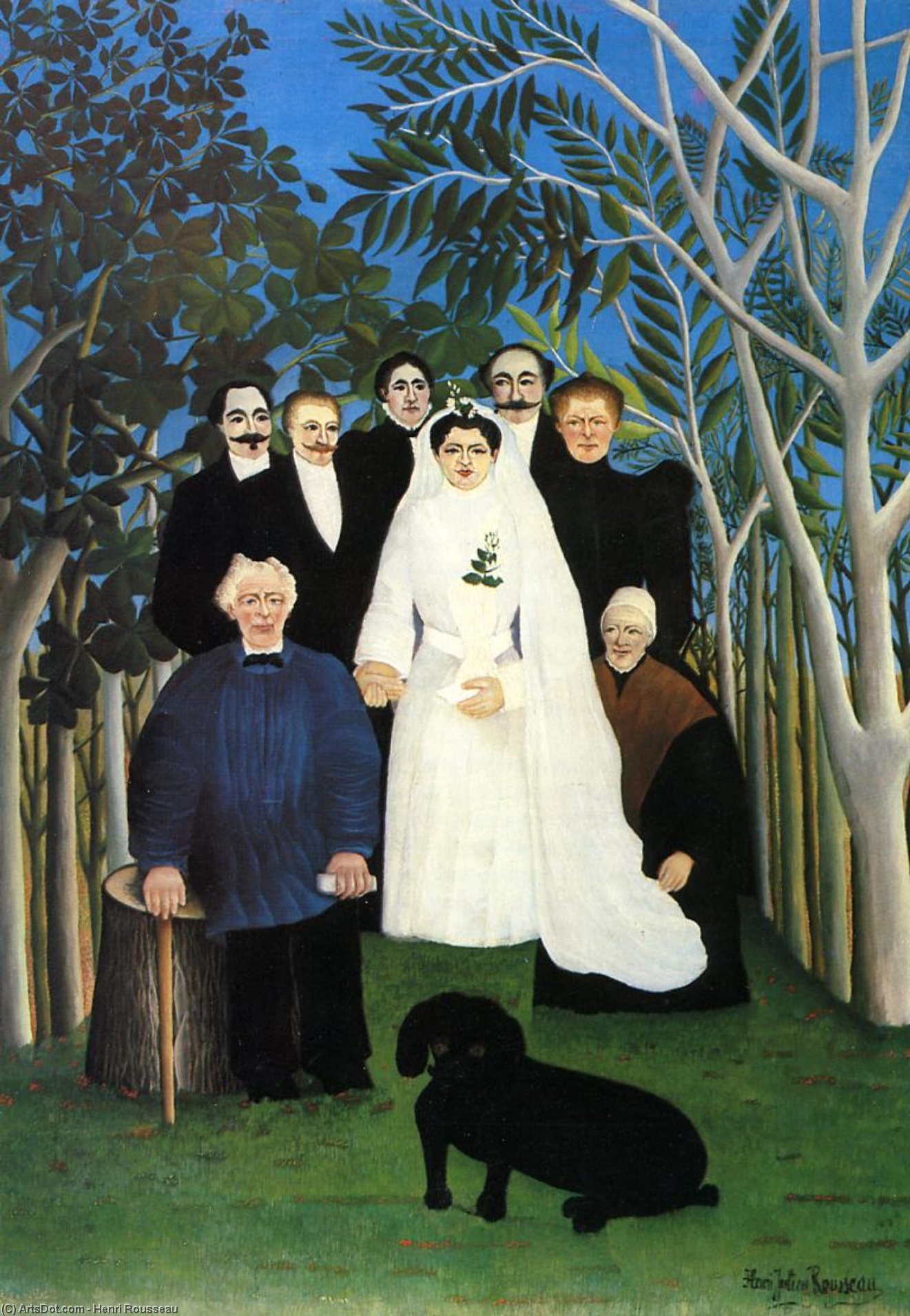
A Glimpse of Celebration: “The Wedding” by Henri Rousseau
Within the evocative world crafted by Henri Rousseau – affectionately known as "Le Douanier," or the customs officer – resides “The Wedding,” a captivating tableau that transcends mere representation to embody a potent blend of naive charm, symbolic depth, and an undeniable sense of joyous community. Painted in 1904, this artwork isn’t simply a depiction of a wedding; it's a portal into a dreamlike realm where the familiar rituals of union are rendered with a captivating simplicity, echoing the artist’s distinctive style and offering a poignant reflection on human connection.
Rousseau’s artistic journey was anything but conventional. A toll collector by trade, he pursued his passion for painting only after reaching middle age, largely self-taught and drawing inspiration from botanical gardens, illustrated magazines, and the vibrant atmosphere of the Jardin des Plantes in Paris. This unconventional path resulted in a style characterized by flattened perspectives, simplified forms, and an exuberant palette—a deliberate rejection of academic realism in favor of a deeply personal and imaginative vision. “The Wedding” is a prime example of this approach; figures are presented on a single plane, lines are bold and graphic, and colors – predominantly blues and greens punctuated by the bright whites of bridal attire – radiate with an almost childlike intensity.
Decoding the Naive Narrative
At first glance, “The Wedding” appears straightforward: a central couple, presumably the bride and groom, stand amidst a group of figures engaged in celebration. However, closer observation reveals layers of symbolic meaning woven into Rousseau’s deliberate simplification. The composition is remarkably balanced, with the central pair anchoring the scene while surrounding individuals contribute to an atmosphere of warmth and shared joy. Notice the subtle gestures – a hand offered in greeting, a smile exchanged—that suggest genuine connection and camaraderie. The stylized landscape backdrop, rendered with broad brushstrokes and a lack of precise detail, further enhances the painting’s dreamlike quality, transporting the viewer into a world where time seems to slow and emotions run freely.
Rousseau's signature “primitive” style is particularly evident in the treatment of light and shadow. There’s an evenness to the illumination, suggesting an outdoor setting bathed in a diffuse, almost ethereal glow. Perspective is largely absent; figures are placed on a single plane, creating a sense of immediacy and intimacy. This deliberate flattening of space contributes significantly to the painting's overall naive aesthetic, inviting us to focus not on realistic representation but on the emotional core of the scene.
A Window into Rousseau’s World
The historical context surrounding “The Wedding” is crucial to understanding its significance. Painted in 1904, it reflects a burgeoning interest in non-Western art and folklore—a fascination that profoundly influenced many artists of the time. Rousseau's work, with its emphasis on exotic subjects and dreamlike imagery, can be seen as a precursor to movements like Surrealism, anticipating the exploration of the subconscious and the blurring of reality and fantasy. The painting’s reception during his lifetime was mixed; initially ridiculed for its unconventional style, it gradually gained recognition as a unique expression of artistic vision.
The influence of Henri Rousseau extends far beyond the art world. His work continues to resonate with audiences today, offering a glimpse into a world where imagination reigns supreme and the simple joys of human connection are celebrated with unrestrained enthusiasm. “The Wedding” stands as a testament to the power of artistic vision—a captivating reminder that beauty can be found in the most unexpected places, rendered with honesty, sincerity, and an unwavering belief in the transformative potential of art.