Introduction to the Painting
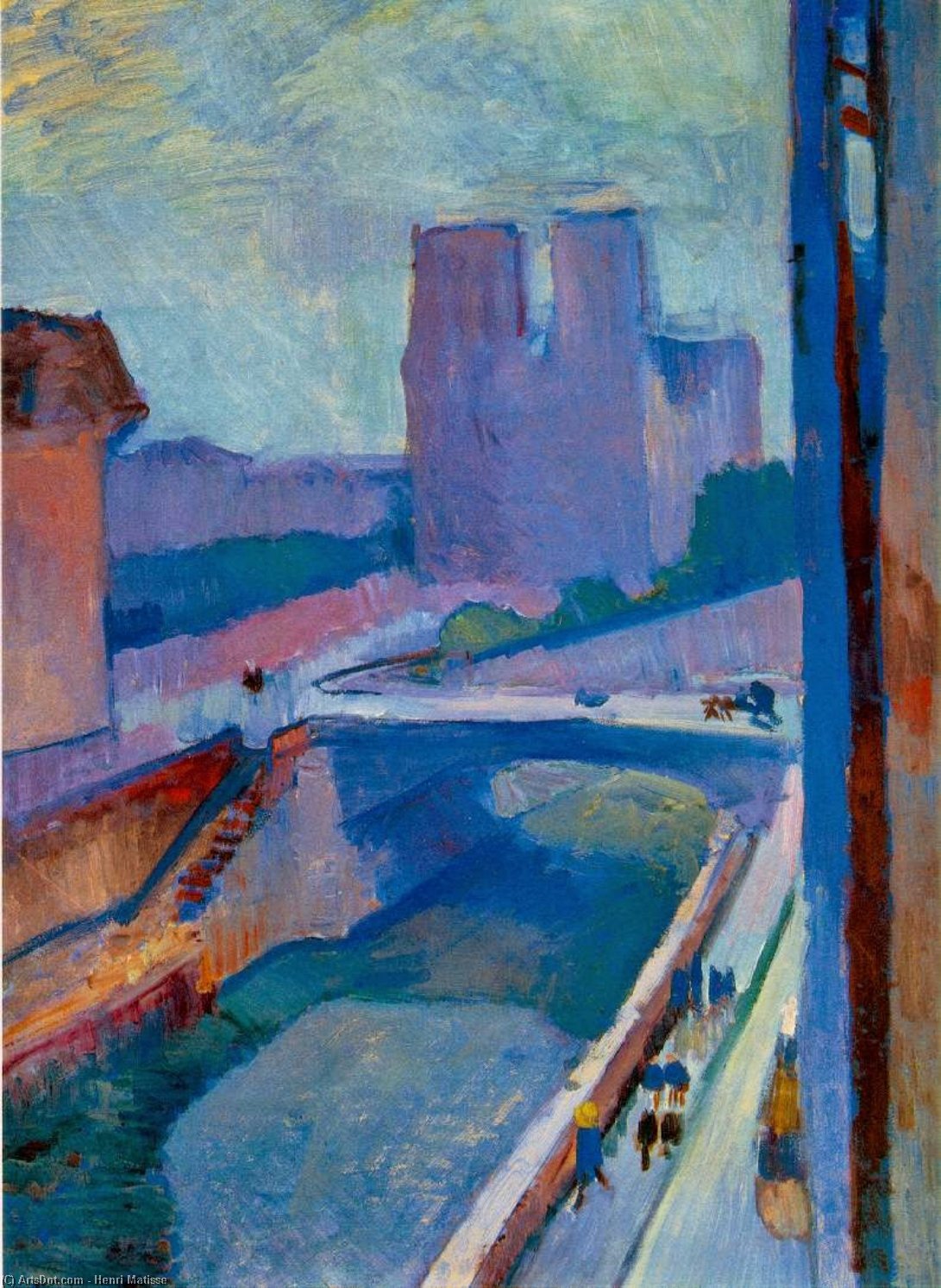
A Glimpse of Notre-Dame in the Late Afternoon, painted by
Henri Matisse in 1902, is a seminal work that encapsulates the essence of Fauvism. This painting, measuring 72 x 54 cm, is characterized by its dark colors and somber mood, reflecting the personal difficulties Matisse faced during this period.
The Dark Period of Matisse
Matisse's life was marked by financial struggles and personal hardships. His inability to sell his works made it challenging for him to provide for his family. His wife, Amelie, had to open a dress shop to support the family, but she was forced to close it due to a conspiracy involving her mother. This tumultuous period is often referred to as Matisse's "dark period," which influenced his shift towards more saleable canvases.
Artistic Style and Composition
The painting features a blue cityscape with a bridge over water, set against the backdrop of Notre-Dame Cathedral. The sky is painted in vibrant shades of orange and pink, capturing the serene atmosphere of late afternoon. Pedestrians are seen walking along the sidewalk, while two cars are visible on the street, adding to the sense of daily life.
Fauvism Art Movement
Fauvism, an early 20th-century art movement, emphasized painterly qualities and strong color over realistic values. Matisse, along with André Derain, was a leading figure in this movement. Fauvist paintings often featured bold, vivid colors and energetic brushstrokes, as seen in
A Glimpse of Notre-Dame in the Late Afternoon.
Other Notable Works by Matisse
Matisse's contributions to art are vast and diverse. Some notable works include:
Conclusion
A Glimpse of Notre-Dame in the Late Afternoon is a testament to Matisse's skill and his contribution to the Fauvist movement. The painting's dark colors and somber mood reflect the artist's personal struggles, while its composition and use of color showcase his mastery of the medium. For more information on Henri Matisse and his works, visit
Henri Matisse at ArtsDot. To learn about the broader context of painting history, refer to
History of Painting on Wikipedia.