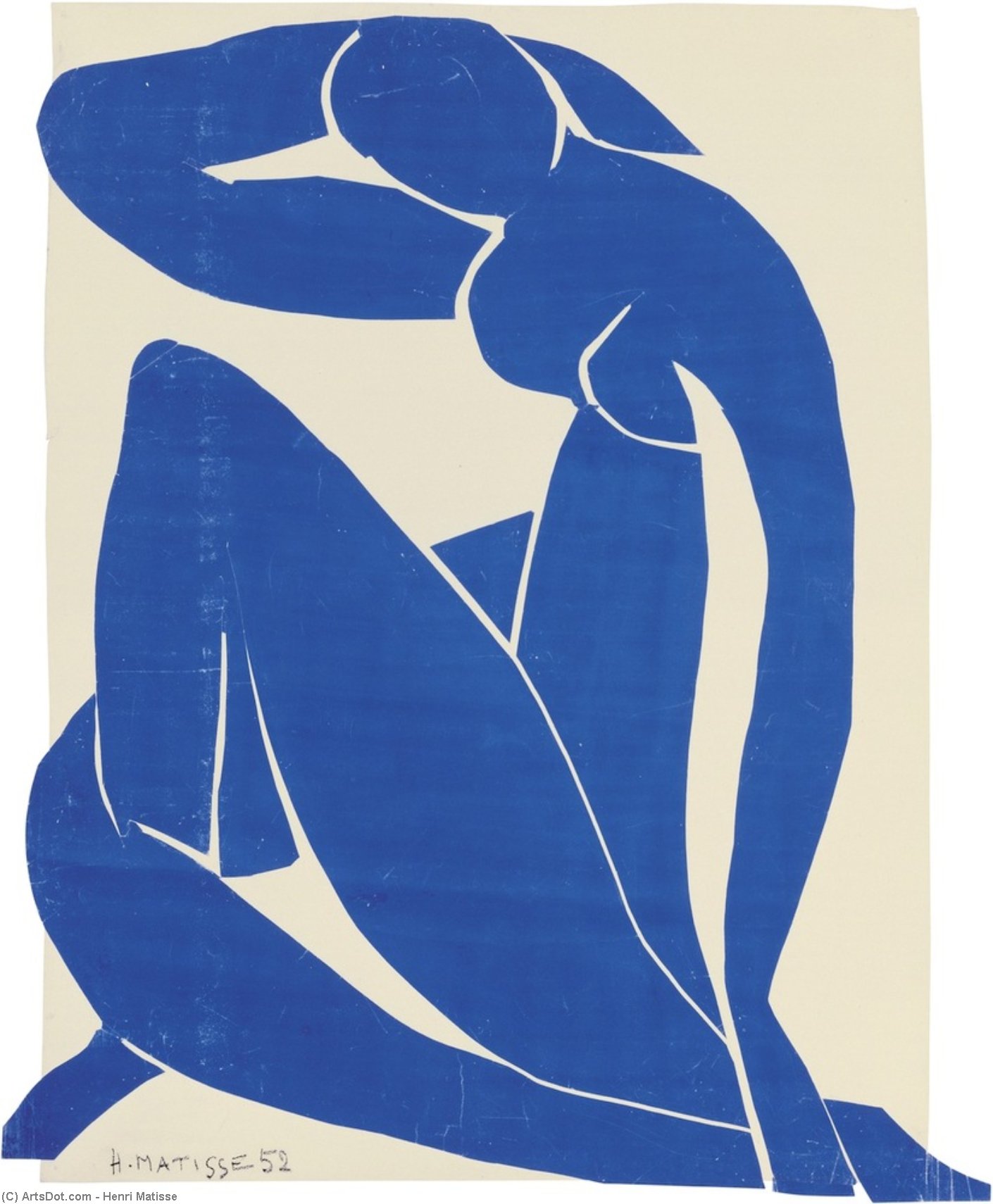
Explore Henri Matisse’s 'Blue Nude' (1952). A striking cut-out masterpiece in vibrant blues & flowing forms, embodying Fauvist style & emotional depth. Perfect for art lovers & collectors.
Explore Henri Matisse (1869-1954): Fauvism's master of color! Discover iconic paintings, cut-paper collages & his influence on modern art. A leading French painter.
Subject and Composition
This striking artwork captures an abstracted human figure rendered in bold, flowing shapes and vibrant hues. The central form, likely representing a seated or crouching female figure, exudes a sense of softness and vulnerability through its rounded contours. The figure’s posture, combined with the minimalistic yet expressive design, invites viewers into a contemplative space where human emotion and form intersect. The composition’s simplicity emphasizes the power of shape and color to evoke mood and intimacy, making it a captivating focal point for any space.
Style and Technique
Created using Henri Matisse’s renowned cut-out technique, this piece exemplifies his mastery in collage art. The artist meticulously layered colored paper, cutting organic shapes with scissors to craft a harmonious balance of positive and negative space. The flat, uniform textures highlight the tactile quality of the layered paper, while the clean, smooth edges demonstrate precision and control. This approach, developed in Matisse’s later years, reflects a modernist aesthetic rooted in Fauvism, characterized by its bold use of color and simplified forms that prioritize emotional expression over realistic depiction.
Historical Context and Artistic Significance
Produced in 1952, during a period of artistic innovation and personal reflection for Matisse, this work belongs to his celebrated series of Blue Nudes. After undergoing surgery for stomach cancer, Matisse’s physical limitations led him to explore new creative avenues, culminating in these iconic paper cut-outs. The Blue Nudes series is regarded as a pinnacle of modernist collage, blending influences from African sculpture, Polynesian art, and Fauvist color theory. This piece exemplifies his ability to distill complex human emotions into pure form and color, marking a significant evolution in his artistic journey.
Symbolism and Emotional Impact
The dominant use of blue in this artwork symbolizes depth, distance, and introspection, inviting viewers into a meditative state. The abstracted figure, with its gentle curves and enclosed posture, conveys themes of vulnerability, serenity, and inner reflection. The minimalistic approach strips away extraneous detail, allowing the viewer to focus on the emotional resonance of the form and color. This work’s contemplative mood makes it a powerful piece for inspiring calm and introspection in any environment.
Inspiration and Interior Design
Perfect for collectors, art lovers, and interior designers, this high-quality reproduction offers a timeless addition to modern and contemporary spaces. Its bold colors and abstract form serve as a statement piece that complements minimalist, eclectic, or sophisticated decor. Whether displayed in a living room, office, or gallery setting, this artwork brings a sense of artistic innovation and emotional depth, transforming any space into a sanctuary of creativity and reflection.