Explore Henri Matisse (1869-1954): Fauvism's master of color! Discover iconic paintings, cut-paper collages & his influence on modern art. A leading French painter.
A Burst of Light Amidst Verdant Silence: Exploring Henri Matisse’s ‘Sun’s Ray’
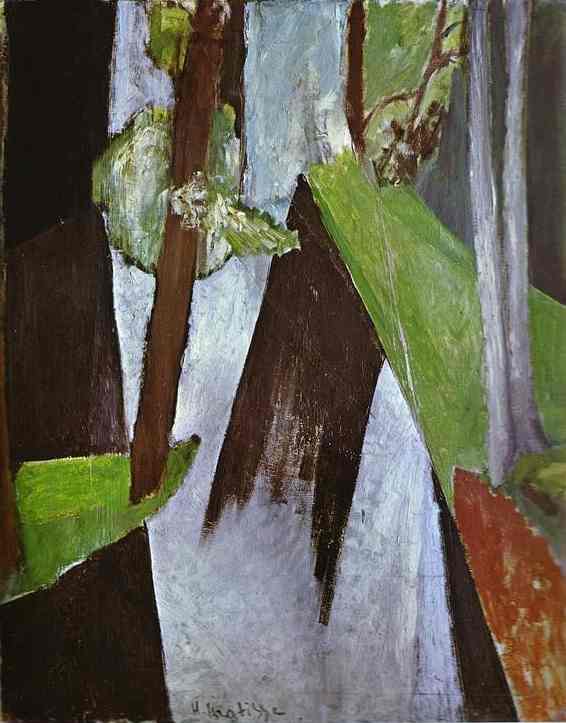
Henri Matisse's “Sun’s Ray,” painted in 1917, stands as a quintessential example of Cubist exploration into perception and representation. More than just a depiction of trees silhouetted against a radiant sunbeam, it embodies a profound shift in artistic thinking—a deliberate rejection of traditional perspective and an embrace of fractured planes to convey the dynamism inherent within nature itself. This seemingly simple landscape is imbued with layers of meaning that resonate deeply with viewers today.
The Genesis of Cubism: Challenging Artistic Conventions
Matisse’s foray into Cubism wasn't born from a desire for radical innovation alone; it stemmed from an intellectual engagement with the burgeoning theories of Einstein and Planck concerning space and time. Artists like Picasso and Georges Braque were grappling with how to depict objects as they appear simultaneously from multiple viewpoints—a concept fundamentally opposed to Renaissance conventions that prioritized single, idealized perspectives. “Sun’s Ray” exemplifies this approach brilliantly; the tree trunks aren't rendered in a linear fashion but are broken down into geometric shapes, creating an illusion of depth and movement without relying on conventional shading or foreshortening. The artist meticulously analyzed how light interacts with surfaces, attempting to capture its multifaceted nature rather than simply imitating its appearance.
Technique and Material: Mastering Color and Texture
Executed in oil on canvas, Matisse’s technique is characterized by a deliberate restraint—a masterful control of color palettes and brushstrokes designed to maximize impact. The dominant hues are warm yellows and oranges, radiating outwards from the central sunbeam, creating an illusion of heat and luminosity. These colors aren't blended smoothly; instead, they are applied in bold patches, emphasizing texture and contributing to the overall visual energy. Matisse’s meticulous attention to detail—evident in the subtle variations within the tree trunks and foliage—underscores his commitment to capturing the essence of the subject matter with uncompromising precision. The canvas surface itself is treated with a textured medium, enhancing the impression of materiality and grounding the artwork in the tangible world.
Symbolism Within Simplicity: Light as Embodiment of Vitality
Beyond its formal innovations, “Sun’s Ray” carries symbolic weight that speaks to Matisse's broader artistic philosophy. The sunbeam itself represents not merely illumination but also vitality, warmth, and renewal—themes central to Matisse’s preoccupation with capturing the beauty and dynamism of life. In a period marked by anxieties surrounding the horrors of World War I, this depiction of serene natural grandeur offered a counterpoint to the pervasive darkness of the era. The trees serve as anchors for the composition, symbolizing resilience and steadfastness amidst turbulent times. They stand tall against the radiant light, suggesting an enduring spirit capable of overcoming adversity.
Emotional Resonance: Capturing Tranquility and Wonder
Ultimately, “Sun’s Ray” succeeds in conveying a profound sense of tranquility and wonder—a feeling that transcends mere visual representation. Matisse's masterful use of color and form invites contemplation, prompting viewers to consider the interplay between light and shadow, stillness and movement. The painting evokes memories of sun-drenched forests, transporting us back to a time when nature reigned supreme and beauty held sway over anxieties. It’s a testament to Matisse’s ability to distill complex ideas into deceptively simple images—a feat that continues to inspire artists and collectors alike.