The Genesis of a Vibrant Vision
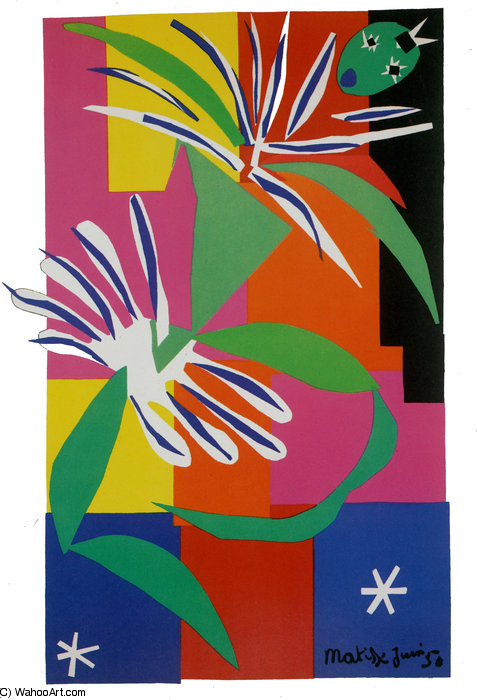
Henri Matisse’s Danseuses Créole Gouache sur Feuilles de Papier Canson Découpées Nice, Musée Matisse is more than just a painting; it’s an explosion of color and emotion, a quintessential embodiment of the Fauvist movement. Completed in 1950 during his later years, this intimate work—measuring a modest 205 x 120 cm—captures a fleeting moment of grace and joy within the vibrant heart of Nice. The scene unfolds with a group of Creole dancers, their figures rendered with an almost childlike simplicity, yet imbued with a palpable energy that draws the viewer into their world. It’s a testament to Matisse's evolving artistic philosophy, moving beyond mere representation towards a celebration of pure feeling and color itself.
The painting’s unique construction—gouache applied to meticulously cut-out paper leaves—immediately sets it apart. This technique, a hallmark of Matisse’s later work, adds an incredible layer of texture and depth. The individual pieces of paper, each painted with bold strokes and saturated hues, are then arranged and glued onto a larger surface, creating a mosaic effect that is both playful and sophisticated. The choice of cut-out paper itself speaks to a deliberate rejection of traditional painting methods, embracing a more immediate and tactile approach to creation. It’s as if Matisse was dismantling the conventional boundaries of art, inviting the viewer to actively participate in the construction of the image.
Fauvism: A Revolution in Color
To fully appreciate Danseuses Créole, it’s essential to understand the context of Fauvism. Emerging in France around 1905, this movement represented a radical departure from the established artistic norms of the time. Artists like Matisse, André Derain, and Maurice de Vlaminck sought to liberate color from its descriptive function, using it instead as an independent expressive force. The term “Fauve,” meaning “wild beast” in French, aptly describes this unrestrained approach – a deliberate embrace of boldness and spontaneity. Matisse’s work exemplifies this perfectly; the vibrant blues, yellows, pinks, and oranges aren't meant to mimic reality but rather to evoke specific emotions and sensations.
Within the painting itself, the dominant palette is dominated by striking blue petals and radiant yellow stamen. This carefully orchestrated contrast creates a powerful sense of harmony and balance, drawing the eye across the composition. The inclusion of scattered stars in the background adds an element of whimsy and dreaminess, further enhancing the painting’s captivating allure. It's as if Matisse is inviting us to step into a world where color reigns supreme, untethered by conventional constraints.
Matisse: A Journey Through Color and Form
Henri Matisse was a restless innovator throughout his long and prolific career, experimenting with various mediums including painting, sculpture, printmaking, and collage. Born in 1869 in Le Cateau-Cambrésis, France, he initially studied law before discovering his true passion for art during a convalescence following an illness. His early works reflected a classical influence, but he quickly developed his own distinctive style, characterized by fluid draughtsmanship and an unparalleled mastery of color. The Baltimore Museum of Art holds a significant collection of Matisse’s work, offering a comprehensive overview of his artistic evolution.
The Musée Matisse in Nice, dedicated entirely to the artist's life and oeuvre, is a pilgrimage site for art lovers worldwide. It houses an extraordinary range of paintings, drawings, prints, and sculptures, providing invaluable insights into Matisse’s creative process and his enduring legacy. His influence on contemporary artists remains profound, inspiring generations with his bold experimentation and unwavering commitment to the expressive power of color.
A Timeless Legacy
Danseuses Créole is a masterpiece that encapsulates the spirit of Fauvism and Matisse’s unique artistic vision. Its vibrant colors, innovative technique, and captivating composition make it a standout piece in his oeuvre. For those seeking to delve deeper into the world of Henri Matisse, we invite you to explore our collection of high-quality reproductions, bringing this iconic painting into your home or studio. You can also find valuable insights on Henri Matisse Wikipedia and at the Musée Matisse (Nice).