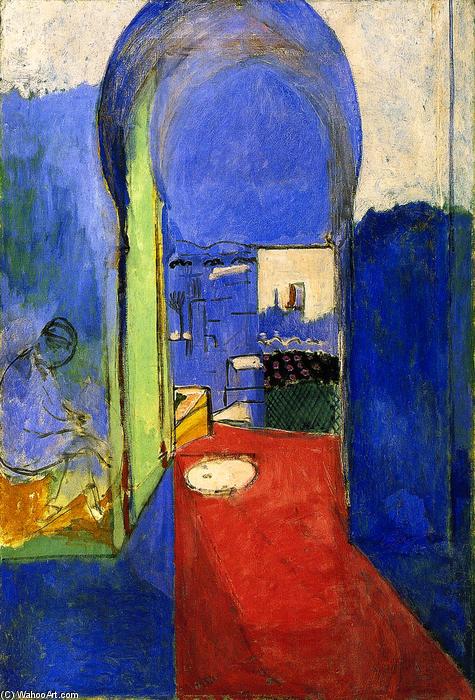
Explore Henri Matisse’s "Entrance to the Casbah" – a vibrant Fauvist masterpiece! Discover its bold colors, dynamic composition & unique style at the Pushkin Museum.
Explore Henri Matisse (1869-1954): Fauvism's master of color! Discover iconic paintings, cut-paper collages & his influence on modern art. A leading French painter.
Explore European art's evolution at the Pushkin State Museum of Fine Arts in Moscow! Discover masterpieces from Italian Primitives to Impressionism & beyond – a cultural journey awaits.
A Glimpse into Matisse’s North African Reverie
Henri Matisse's *Entrance to the Casbah* (1912) transports viewers to a world steeped in exoticism and vibrant color. This oil on canvas, measuring 116 x 80 cm and currently housed at the Pushkin State Museum in Moscow, isn’t merely a depiction of a place; it's an *impression* – a distillation of Matisse’s experience and fascination with North African culture following his travels to Tangier. The painting doesn’t aim for photographic realism but rather seeks to capture the atmosphere, light, and emotional resonance of the Casbah. A seated figure dominates the foreground, seemingly lost in contemplation, while an arched doorway beckons us into a mysterious interior space.
Fauvism Unleashed: Color as Emotion
*Entrance to the Casbah* is a quintessential example of Fauvist painting. Matisse, a leading figure in this early 20th-century movement, rejected traditional representational color in favor of bold, arbitrary hues used for their expressive power. The canvas explodes with intense blues and reds – colors not necessarily found in nature but chosen to evoke specific feelings. This is not about mimicking reality; it’s about conveying an emotional response to the subject. The simplified forms and energetic brushwork further contribute to this sense of raw, unbridled emotion. Notice how the red carpet anchors the composition while simultaneously creating a visual tension with the cool blues that recede into the background. The white circle within the archway acts as a focal point, drawing the eye deeper into the scene.
Symbolism and Spatial Ambiguity
The painting’s symbolism is open to interpretation, adding layers of intrigue. The Casbah itself represents a world apart – exotic, mysterious, and alluring. The seated figure could symbolize contemplation, leisure, or even a sense of detachment from the bustling life implied beyond the archway. The flattened perspective and ambiguous spatial relationships contribute to a dreamlike quality. Matisse deliberately avoids creating a convincing illusion of depth, instead prioritizing the interplay of color and form. This deliberate distortion is characteristic of his artistic approach, which prioritized aesthetic impact over strict adherence to visual accuracy. The bowl near the seated figure hints at everyday life but remains secondary to the overall atmospheric effect.
A Lasting Legacy: Matisse’s Influence
*Entrance to the Casbah*, alongside works like *Landscape viewed from a Window* and paintings by fellow Fauvist André Derain, such as *Drying the Sails*, cemented Matisse's place as a revolutionary figure in modern art. His bold use of color and simplified forms paved the way for future generations of artists, influencing movements like Expressionism and beyond. The painting’s enduring appeal lies in its ability to evoke a sense of wonder and transport viewers to another world – a testament to Matisse’s mastery of color, composition, and emotional expression. It remains a powerful example of how art can transcend mere representation and become a vehicle for profound aesthetic experience.