A Symphony of Violet and Light
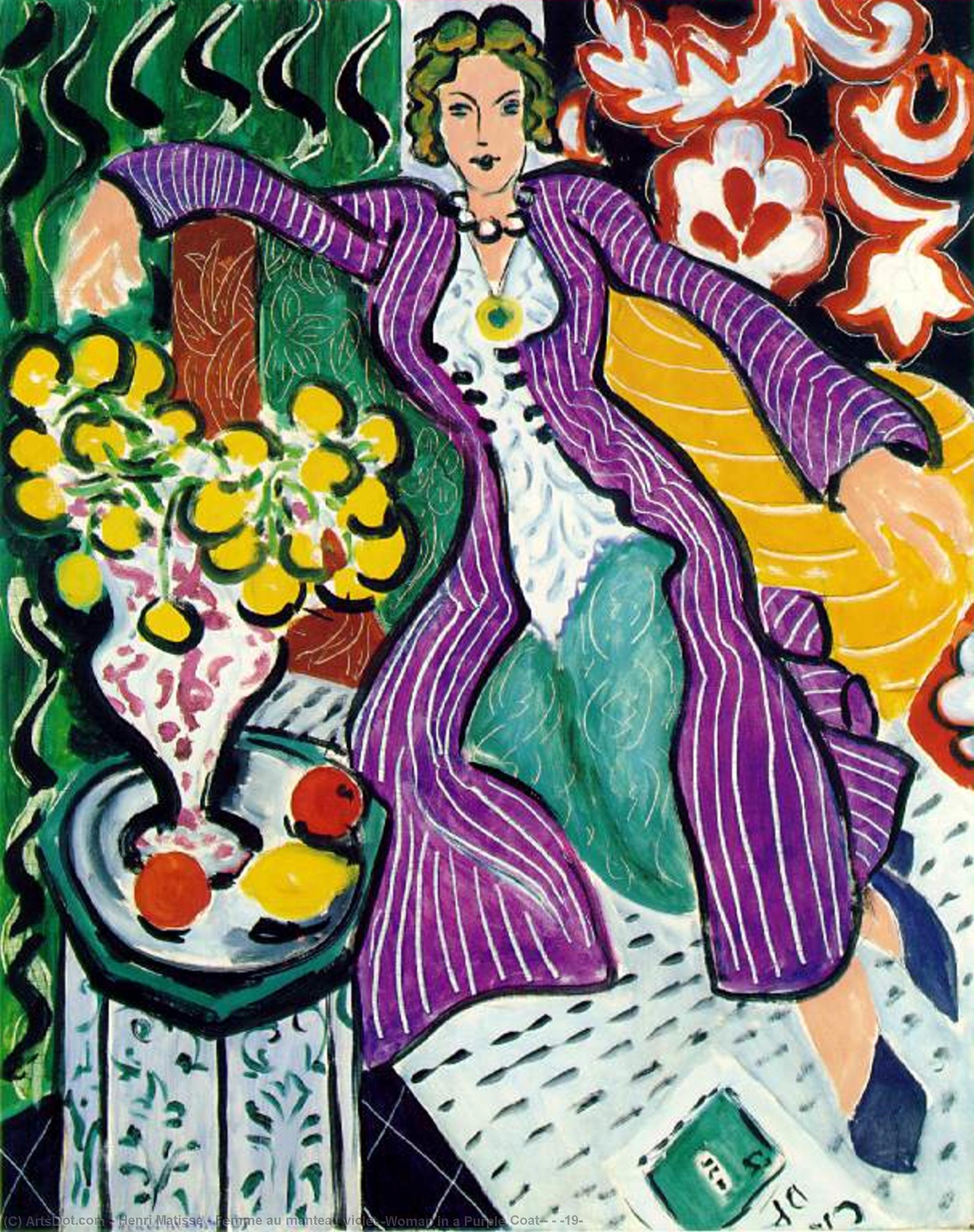
In the pantheon of modern art, few images possess the magnetic pull of Henri Matisse’s “Femme au manteau violet” (Woman in a Purple Coat). Painted in 1937, this masterpiece serves as a breathtaking window into the mature period of a titan who redefined the boundaries of color and form. The painting captures a moment of profound serenity, depicting a woman—often identified as Matisse’s beloved assistant and model, Lydia Delectorskaya—seated gracefully amidst a lush, decorative arrangement. As your eyes meet the canvas, you are immediately struck by the commanding presence of her purple coat, a hue Matisse famously associated with passion and vitality. This vibrant garment does not merely sit upon the figure; it radiates, acting as the emotional heartbeat of the composition against a backdrop of textured foliage and sun-dappled elements.
The scene is an exquisite dance of stillness and life. Scattered around the subject are traces of nature’s bounty—apples, oranges, and a vase brimming with blossoms—which ground the ethereal quality of the colors in a tangible, domestic intimacy. There is a rhythmic harmony at play here; the way the light interacts with the fruit and the petals creates a sense of warmth that invites the viewer to step into this private, tranquil sanctuary. For the discerning collector or interior designer, this piece offers more than just visual beauty; it provides an atmosphere of sophisticated calm, making it a transformative addition to any curated space.
The Mastery of Fauvist Spirit and Technique
To understand the brilliance of this work, one must look closely at Matisse’s revolutionary approach to technique. Moving far beyond the meticulous realism of his predecessors, Matisse utilized flattened planes of color—a hallmark of the Fauvist movement—to create a sense of depth without relying on traditional perspective. He employs bold, expressive outlines that encircle the subject, pushing her forward toward the viewer and creating a striking three-dimensional illusion. This technique makes the figure appear almost as if she might step off the canvas, imbuing the work with a dynamic energy that belies its quiet subject matter.
The brushwork itself is a testament to his mastery; thick, deliberate strokes imbue the textures of the grass and the fabric with palpable life. There is no reliance on rigid, straight lines; instead, Matisse uses the juxtaposition of contrasting hues to define shapes and boundaries. This fluid approach allows the colors to breathe and interact, creating a visual melody where the deep violets, bright oranges, and verdant greens sing in unison. It is this seamless blend of decorative abstraction and emotional depth that makes a high-quality reproduction of this painting so captivating—it captures not just a likeness, but a feeling of pure, unadulterated light.
An Enduring Legacy for the Modern Interior
Beyond its technical prowess, “Femme au manteau violet” carries a profound historical weight. Created during a period when Matisse was refining his "cut-out" and decorative styles, the painting represents the pinnacle of his ability to distill complex human emotions into simplified, powerful forms. It is a work that speaks of resilience, beauty, and the enduring power of the natural world. The relationship between the artist and his model, Lydia, adds a layer of poignant intimacy to the piece, as she was a vital presence in his studio during his later years.
For those seeking to infuse their homes or galleries with a sense of timeless elegance, this artwork serves as an incomparable focal point. Its bold color palette is versatile enough to complement both contemporary minimalist settings and more traditional, opulent decors. Owning a reproduction of such a significant work allows one to live alongside a piece of art history—a constant reminder of the beauty found in the balance of color, light, and the quiet moments of human existence. It is an investment in emotion, a celebration of the French modern spirit, and a masterpiece that continues to inspire awe in all who behold it.