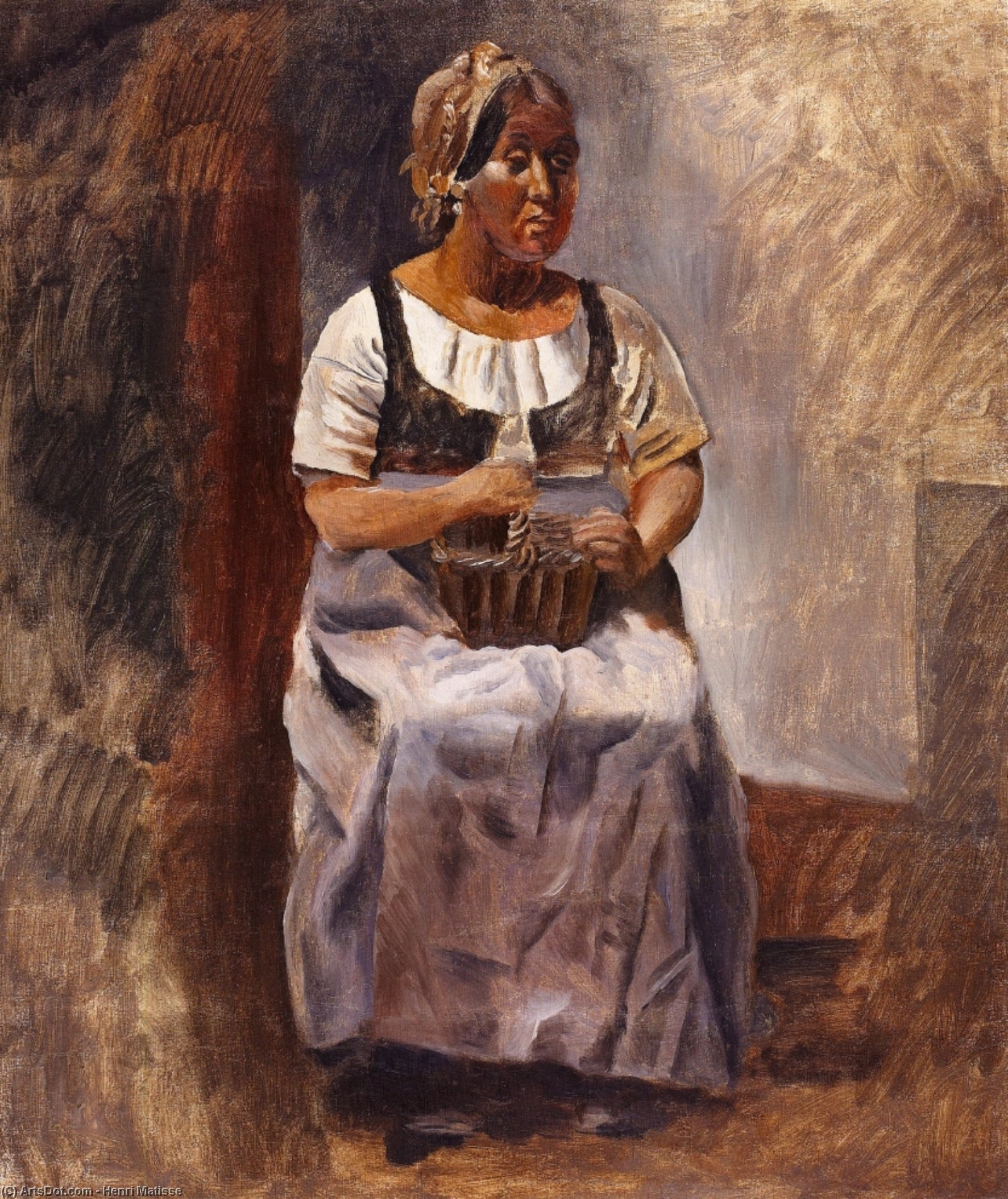
Figure in Scutari Carpet – A Study in Color and Emotion
Henri Matisse’s “Figure in Scutari Carpet,” created in 1922, stands as a testament to the transformative power of Post-Impressionism. Departing from Impressionist preoccupation with fleeting light and atmosphere, Matisse sought instead to distill emotion onto canvas—a pursuit that resulted in this striking charcoal drawing.
- The Artist: Henri Matisse
- Matisse (1869-1954) was a titan of 20th-century art, alongside Picasso. His prolific output spanned painting, sculpture, and printmaking, establishing him as one of the most influential figures in modern artistic expression.
The Painting: “Figure in Scutari Carpet” This intimate portrait captures a woman seated on the ground, her hands gently cradling a basket—a simple yet profoundly expressive gesture. The muted tones of charcoal contrast beautifully with the vibrant hues suggested by the patterned carpet beneath her feet, hinting at Matisse’s masterful manipulation of color.
- Composition: The central figure dominates the frame, while two smaller figures flanking her create a sense of depth and narrative.
- Expression: Her gaze is direct, conveying determination and quiet contemplation—a hallmark of Matisse’s ability to convey psychological nuance through visual form.
- Setting: The inclusion of a chair and dining table establishes a domestic scene, grounding the figure in a familiar context.
Post-Impressionism Art Movement Following Impressionism's focus on optical perception, Post-Impressionists prioritized subjective experience and emotional resonance. Matisse embraced this ethos wholeheartedly, rejecting naturalistic representation for bold color palettes and expressive brushstrokes—a stylistic choice that cemented his legacy as a pioneer of modern art.
- Key Elements: Artists like Matisse sought to capture inner feelings rather than merely depicting external reality.
- Symbolism: The carpet itself could represent comfort, stability, or perhaps even the burdens carried by women in society during Matisse’s time.
“Figure in Scutari Carpet” exemplifies Matisse's unwavering commitment to conveying emotion through color and form. It is more than just a drawing; it’s an invitation to contemplate stillness, resilience, and the beauty found within quiet moments—qualities that continue to resonate with audiences today.