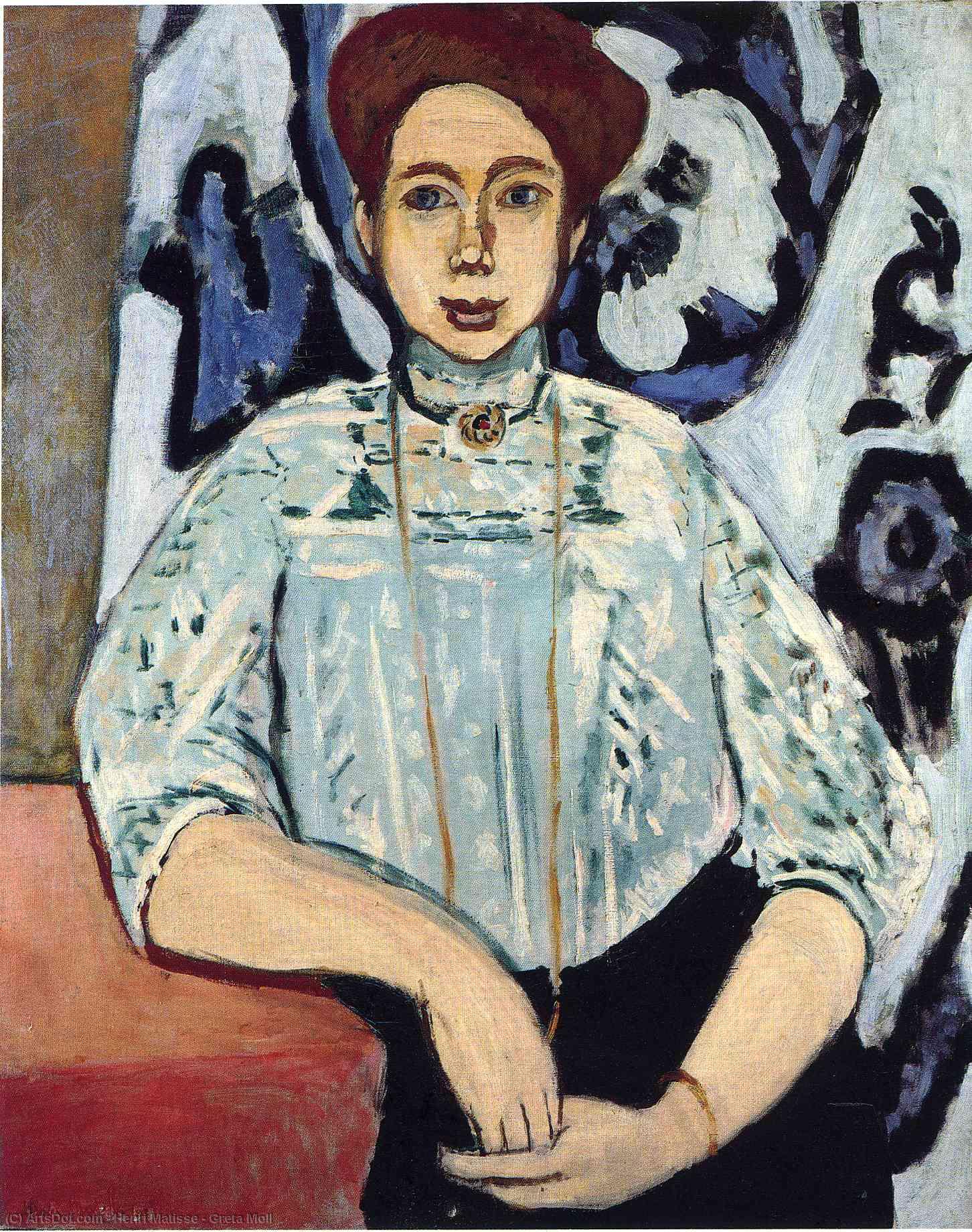
Greta Moll by Henri Matisse: A Study in Color and Form
- Artist: Henri Matisse
- Year: 1908
- Medium: Oil on Canvas
- Dimensions: 92 x 73 cm
- Location: National Gallery, London
Greta Moll is a captivating portrait by Henri Matisse, created during his Fauvist period. This work exemplifies Matisse's exploration of color and form to convey emotion and create a visually striking composition. The painting depicts Greta Moll, a German artist and student of Matisse, seated on a bench, her gaze directed towards the viewer.
Fauvism and Artistic Context
Matisse was a leading figure in the Fauvist movement, which emerged in the early 20th century. "Fauves" (meaning "wild beasts") was a term applied to artists who used intense, non-naturalistic colors and bold brushstrokes. This style represented a departure from traditional Impressionism and aimed to express subjective emotions rather than objective reality.
- Key Characteristics of Fauvism: Intense color palettes, simplified forms, expressive brushwork, rejection of realistic representation.
- Influence on Matisse: Matisse drew inspiration from Post-Impressionist artists like Van Gogh and Gauguin, who also experimented with color to convey emotion.
- Historical Significance: Fauvism played a crucial role in the development of modern art, paving the way for Expressionism and other abstract movements.
Analysis of Technique and Composition
Matisse's technique in Greta Moll is characterized by its bold use of color and simplified forms. He employs a vibrant palette of blues, greens, reds, and browns to create a dynamic visual experience. The background features two benches and a clock, adding depth and context to the scene.
- Color Palette: The painting's striking colors are not meant to be realistic but rather expressive. Matisse uses complementary colors (e.g., blue and orange) to create contrast and visual interest.
- Brushwork: The brushstrokes are visible and energetic, contributing to the overall sense of movement and vitality.
- Composition: Matisse carefully balances the figure of Greta Moll with the background elements, creating a harmonious composition that draws the viewer's eye.
Symbolism and Emotional Impact
While seemingly straightforward, Greta Moll carries subtle symbolic weight. The choice of colors and the pose of the sitter evoke feelings of tranquility and introspection.
- The Clock: The clock in the background may symbolize the passage of time or a sense of fleeting moments.
- Greta's Gaze: Her direct gaze engages the viewer, creating a connection that transcends the canvas.
- Emotional Impact: The painting evokes a sense of calm contemplation and understated elegance. It is a testament to Matisse’s ability to capture human emotion through color and form.
Matisse's Later Works and the Goldfish Motif
Later in his career, Matisse frequently incorporated goldfish as a motif in his works. These depictions symbolized tranquility, pictorial space, and contemplation. This theme is evident in his still life paintings, etchings, drawings, and prints from the 1910s and 1920s.
Greta Moll stands as a significant work within Matisse's oeuvre, showcasing his mastery of color and form during the Fauvist period. It remains an enduring example of modern art’s power to evoke emotion and inspire contemplation.