A Symphony of Yellows: The Radiant Soul of Matisse’s Interior
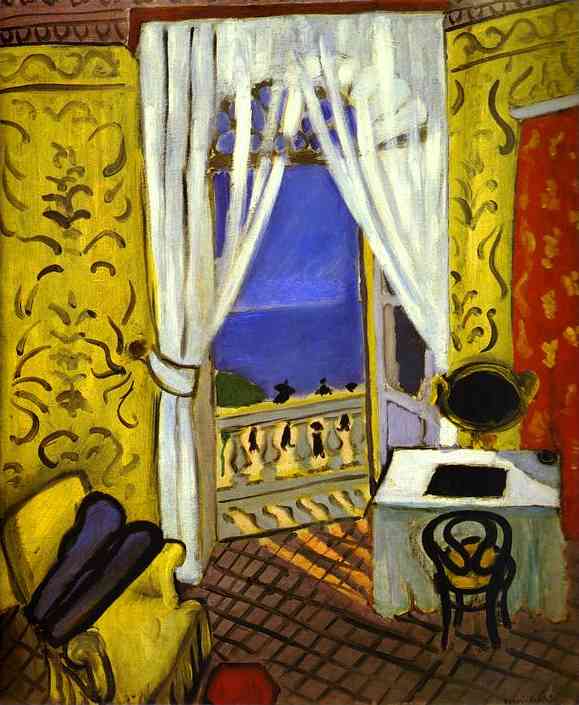
To step into Henri Matisse’s “Interior with a Violin Case” is to abandon the mundane and surrender to a world where light does not merely illuminate, but breathes. Created during the artist's prolific period in Antibes between 1925 and 1930, this masterpiece serves as a profound testament to Matisse’s unwavering commitment to color and form. It is far more than a simple depiction of a domestic space; it is an exercise in expressive abstraction designed to evoke a specific, visceral emotion. The room is bathed in a breathtaking symphony of yellows—a palette that feels both warm and transformative, capturing the very essence of Mediterranean sunlight filtering through a window.
The composition is deceptively simple yet intellectually dense. A comfortable chair and a sofa anchor the scene, providing a sense of domestic stability, while a dining table occupies the center of the frame. The inclusion of white curtains introduces a subtle, rhythmic counterpoint to the dominant golden hues, suggesting an openness to the world beyond the walls. Amidst this tranquil setting, the presence of figures—one standing near the couch, another further back, and a third near the table—injects a quiet vitality into the room. These figures do not demand attention through action; rather, they exist as part of the painting's rhythmic pulse, adding layers of life and human connection to an otherwise still interior.
The Bold Language of Fauvism and Technique
For the discerning collector or interior designer, the true allure of this work lies in its masterful execution of the Fauvist style. Matisse famously rejected the meticulous realism and soft blending of the Impressionists, opting instead for a deliberate, almost rebellious use of color. He applied pigment thickly onto the canvas, utilizing an impasto technique that lends the painting a tactile, sculptural quality. This layering of colors directly onto one another, without extensive underpainting, creates a vibrant energy that seems to vibrate on the surface of the canvas.
This approach was part of a larger historical movement to liberate art from the constraints of representation. Influenced by the geometric simplifications of Cézanne and the fragmentation of Picasso, Matisse sought to distill visual experience into its most fundamental elements: shape and color. In "Interior with a Violin Case," every brushstroke is an intentional choice meant to capture the atmosphere rather than a literal transcription of reality. The violin case itself, resting near the window, acts as a poignant symbol—a silent nod to the harmony between music and visual art, suggesting that the room is not just a space for living, but a stage for sensory experience.
An Inspiration for Modern Living
For those seeking to infuse their own spaces with inspiration, this artwork offers a masterclass in atmosphere. The painting’s ability to transform a quiet moment into a monumental event makes it an extraordinary choice for high-quality reproductions in contemporary interiors. Whether placed in a sun-drenched living room or a sophisticated study, the work brings with it a sense of joie de vivre—a joy of life that is both calming and stimulating.
Owning a piece that echoes Matisse’s vision means inviting a revolution of the senses into one's home. The painting does not merely decorate a wall; it alters the temperature of a room, warming it with its golden light and enriching it with its historical depth. It remains a timeless invitation to view the world through a lens of vibrant emotion, reminding us that even the most quiet corners of our lives can be filled with extraordinary beauty.