A Symphony of Form and Light
In the pantheon of modernism, few works capture the transformative power of metamorphosis quite like Henri Matisse’s Jeannette II. Created during a pivotal era between 1910 and 1913, this masterpiece serves as a profound exploration of how a single subject can evolve through the lens of an artist's changing vision. While many recognize Matisse for his vibrant, sweeping canvases, Jeannette II reveals a different facet of his genius—a sculptor who approached bronze and stone with the rhythmic sensibility of a painter. The work is part of a celebrated series of five busts inspired by the model Jeanne Vaderin, each iteration pushing further away from traditional realism toward a breathtakingly modern abstraction.
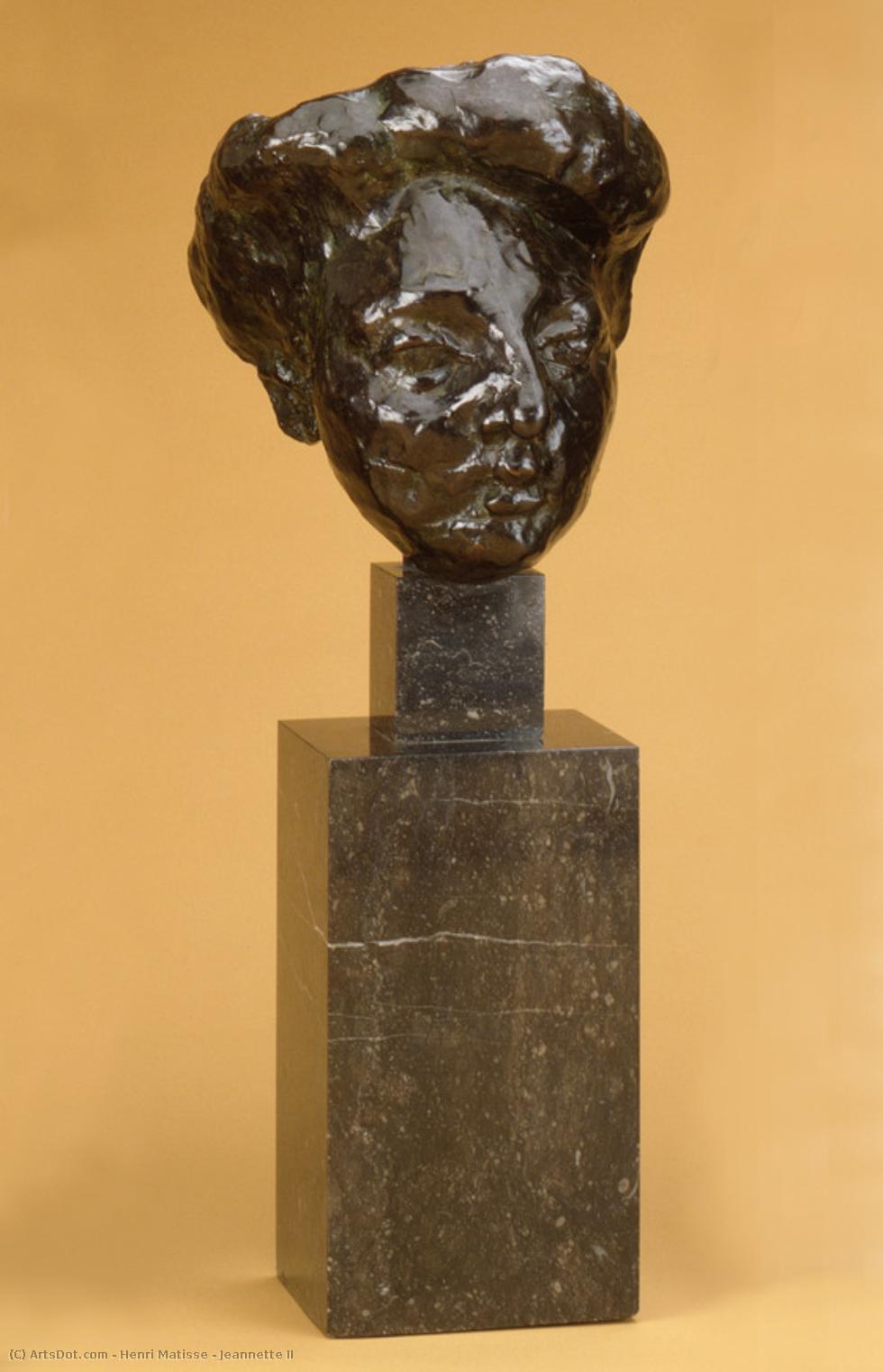
The sculpture presents a captivating study of a human head, rendered with a deliberate focus on the interplay between smooth, sweeping planes and textured, expressive surfaces. There is an undeniable sense of movement frozen in time; the features are not merely captured but are sculpted to evoke a psychological depth that transcends the physical medium. To gaze upon Jeanness II is to witness the tension between the classical weight of the bust and the radical, avant-garde spirit of the Fauvist and Expressionist movements. It is a piece that commands attention through its quiet strength, offering a focal point that is both intellectually stimulating and visually serene.
The Mastery of Technique and Texture
What makes Jeannette II particularly alluring for the discerning collector or interior designer is its remarkable tactile quality. Matisse famously declared, "I sculpted as a painter," and this philosophy is etched into every curve of the work. The technique avoids the rigid, academic precision of traditional portraiture, opting instead for a fluid approach where light and shadow perform a continuous dance across the surface. In high-quality reproductions, this effect is meticulously preserved, capturing the way light catches the prominent ridges of the nose and the soft contours of the brow.
The aesthetic impact of the piece is further heightened by its relationship with color and environment. Often presented against luminous, warm backdrops—such as the striking yellows that Matisse himself favored—the sculpture gains a radiant, almost ethereal glow. This juxtaposition of the solid, grounded form of the bust against a vibrant, atmospheric background creates a sense of depth that can transform any space. For those looking to curate an environment of sophisticated modernism, this work provides a perfect balance of classical elegance and bold, contemporary energy.
A Legacy of Emotional Resonance
Beyond its formal brilliance, Jeannette II carries a profound emotional weight. It is a work steeped in the spirit of experimentation that defined the early 20th century. As Matisse moved through his series of Jeannettes, he stripped away the superfluous to find the essence of his subject. In this second iteration, we see a bridge between the naturalistic and the abstract—a moment of serene contemplation where the subject seems to look inward, inviting the viewer to do the same.
For the art lover, owning or displaying a reproduction of such a significant work is an opportunity to bring a piece of art history into the contemporary home. It serves as a conversation starter, a symbol of creative courage, and a testament to the enduring beauty of the human form. Whether placed in a minimalist gallery setting or as a centerpiece in a richly textured study, Jeannette II continues to inspire awe, reminding us that true art does not just represent life—it celebrates the very soul of it.