A Moment of Quietude: Exploring Matisse’s *Jeune fille à la gandoura verte*
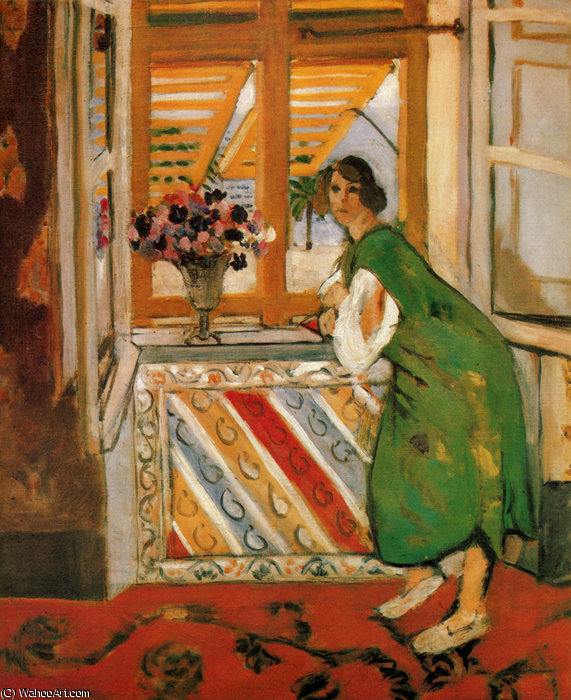
Henri Matisse's *Jeune fille à la gandoura verte* (Young Girl in a Green Gandoura), painted in 1921, is more than just a portrait; it’s an intimate glimpse into a moment of serene domesticity. Measuring 65 x 55 cm, this oil on canvas exemplifies Matisse's evolving style and his masterful command of color and composition during the post-Fauvist period. The painting currently resides in a private collection (Colin Collection) after having been part of several prominent collections including those of Marcel Kapferer, Lillie P. Bliss, and Ralph F. Colin.
Subject & Composition: Motherhood and Interiority
The artwork depicts a young woman seated near a window, gently holding an infant. Her gaze is directed inward, suggesting a state of quiet contemplation. The composition is carefully balanced; the figure doesn’t dominate but harmonizes with her surroundings. A vibrant red carpet anchors the scene, providing warmth and visual interest. Vases filled with plants add depth and texture, reflecting Matisse's lifelong appreciation for decorative arts – an element often overlooked in discussions of his more abstract works. The window acts as a framing device, subtly suggesting a world beyond while simultaneously emphasizing the intimacy of the interior space.
Style & Technique: Beyond Fauvism
While Matisse is famously associated with *Fauvism* – known for its bold, non-naturalistic colors and energetic brushstrokes – *Jeune fille à la gandoura verte* demonstrates a shift towards greater refinement and simplification. The color palette remains vibrant, but it’s employed with more subtlety than in his earlier Fauvist works. The green of the woman's *gandoura* (a loose-fitting North African garment) is particularly striking, creating a sense of balance and tranquility. Matisse utilizes loose brushwork, visible strokes that contribute to the painting’s tactile quality and expressive energy. He prioritizes form and color over precise detail, resulting in a stylized yet deeply emotive representation.
Historical & Cultural Context: Mediterranean Influences
The inclusion of the *gandoura* is significant. It hints at Matisse's growing fascination with North African culture, which profoundly influenced his art after several trips to Morocco and Algeria. This garment wasn’t merely a stylistic choice; it represented a broader exploration of different cultures and aesthetics. The painting reflects a post-war desire for peace and tranquility, offering a respite from the anxieties of the era through its depiction of domestic harmony.
Symbolism & Emotional Impact: Serenity and Sensuality
*Jeune fille à la gandoura verte* evokes a powerful sense of serenity and maternal tenderness. The woman’s posture and inward gaze suggest a moment of peaceful reflection, while the presence of her child underscores themes of love and nurturing. Matisse's exploration of visual rhythm and sensuality is evident in the flowing lines of the *gandoura* and the gentle curves of the figures. The painting isn’t about dramatic narrative; it’s about capturing a fleeting moment of beauty and emotional resonance.
Legacy & Appreciation
This artwork stands as a testament to Matisse's enduring ability to create captivating scenes that blend color, texture, and emotion. It has been exhibited in numerous retrospectives dedicated to his work and continues to inspire art enthusiasts worldwide. For those seeking to bring a touch of Matisse’s brilliance into their own spaces, high-quality reproductions are available, allowing you to experience the beauty and tranquility of *Jeune fille à la gandoura verte* firsthand.
- Related Works: Explore other masterpieces by Matisse such as *Luxury, Serenity & Pleasure* and works by his contemporaries like Paul Cézanne’s *Portrait of Madame Cezanne in a Red Dress*.
- Museum Collections: Discover more Matisse paintings at institutions like The Baltimore Museum of Art and the Musée de l'Orangerie.
For further exploration of Henri Matisse’s life and work, visit ArtsDot.com.