Henri Émile Benoît Matisse (1869-1954) revolutionized art with his pioneering approach to color. Initially drawn to law, he discovered painting after an illness and embraced Fauvism, establishing himself as a leading figure in modern art.
Explore Henri Matisse (1869-1954): Fauvism's master of color! Discover iconic paintings, cut-paper collages & his influence on modern art. A leading French painter.
A Bold Embrace of Color: Henri Matisse’s Joaquina
Henri Matisse, born December 31, 1869, in the small northern French town of Le Cateau-Cambrésis, wasn’t destined for a life immersed in pigment and form. Initially pursuing law in Paris after secondary school, his path dramatically altered following an attack of appendicitis in 1889. Confined to recovery, he discovered a latent passion ignited by the simple act of painting with a set of art supplies gifted by his mother. This wasn’t merely a diversion; it was a revelation—a turning point that steered him away from legal briefs and towards a world where color would become his language and canvas his domain. Growing up in Bohain-en-Vermandois, the son of grain merchants, Matisse initially seemed unlikely to embrace the bohemian life of an artist, yet the seed had been sown, nurtured by convalescence and blossoming into a lifelong dedication. He enrolled at the Académie Julian, then later at the École Nationale des Beaux-Arts, establishing himself as one of France’s leading painters.
The Essence of Fauvism: Matisse's Revolutionary Palette
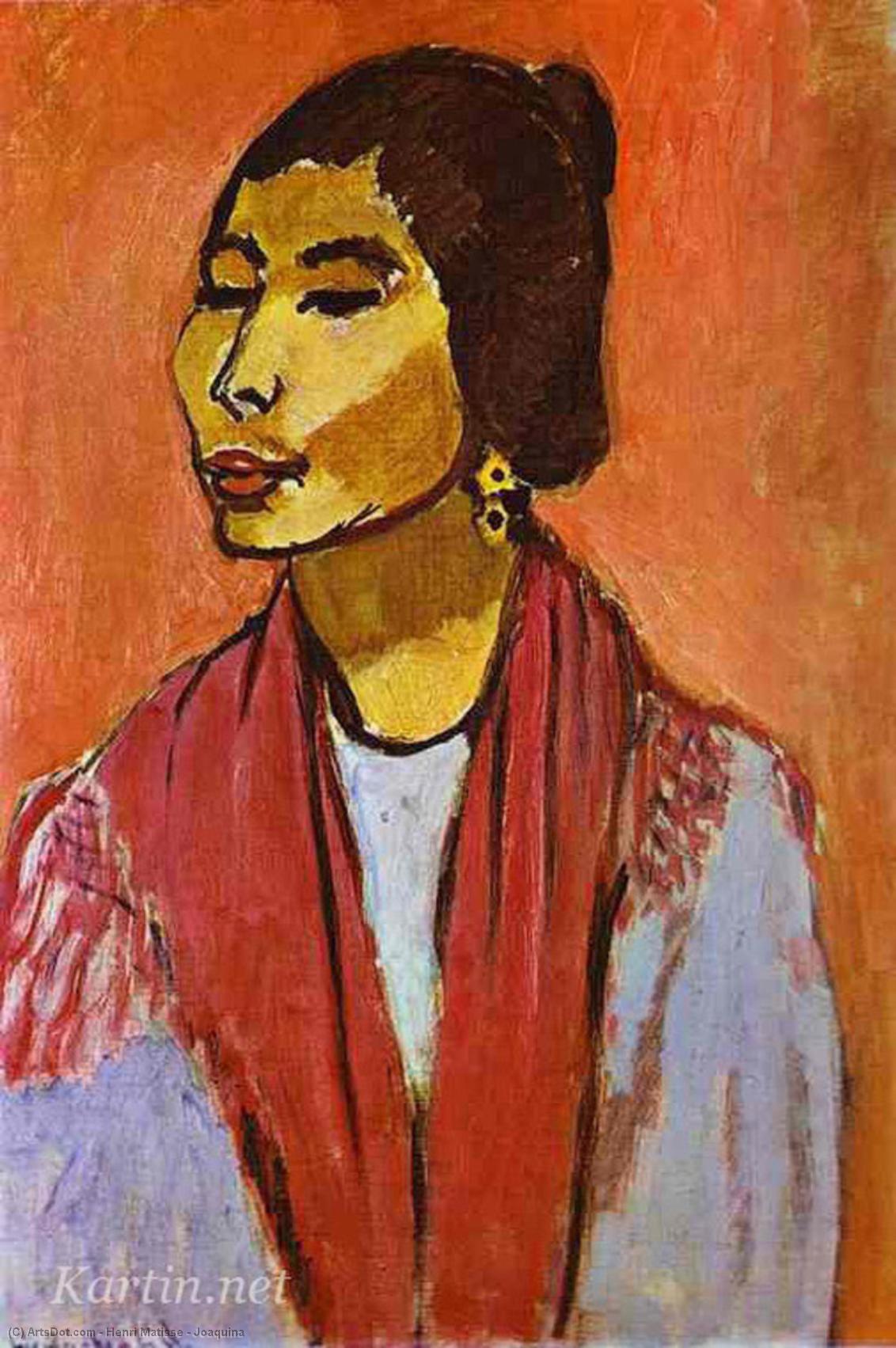
Matisse’s artistic journey culminated in the emergence of Fauvism—a movement he spearheaded alongside André Derain and Maurice Denis—characterized by its uncompromising use of color as an expressive element rather than a faithful representation of reality. Rejecting academic conventions, Matisse championed bold hues – vibrant reds, yellows, blues – applied with unrestrained confidence and spontaneity. “Joaquina” exemplifies this stylistic ethos perfectly; the artist eschews subtle gradations in favor of striking contrasts that heighten visual impact and convey emotion directly. This deliberate departure from naturalistic color palettes was a radical assertion against artistic tradition, marking Matisse as a pivotal figure in the development of modern art.
A Portrait Steeped in Symbolism: Decoding Joaquina’s Expression
The painting depicts a dancer named Joaquina, captured with remarkable precision despite Matisse's simplified draughtsmanship. The woman’s gaze downward contributes to an aura of introspection and contemplation—a hallmark of Fauvist portraiture. Furthermore, the careful placement of earrings adds an element of elegance and sophistication, subtly enriching the visual narrative. The dominant red hue in the background serves as a powerful counterpoint to Joaquina's skin tone, drawing the viewer’s eye towards her face and amplifying the emotional resonance of the piece. Matisse skillfully utilizes color to communicate mood and feeling, prioritizing expressive impact over photographic accuracy—a core principle of Fauvist aesthetics.
Technique and Texture: Matisse’s Fluid Brushstrokes
Matisse's technique is defined by loose, flowing brushstrokes that imbue the canvas with palpable energy and movement. He achieved this effect through layering paint in thin glazes—a method that allowed for maximum luminosity and vibrancy while maintaining a remarkable level of textural detail. The artist’s meticulous attention to surface quality underscores his commitment to conveying not just visual information but also emotional nuance. This masterful execution elevates “Joaquina” beyond mere representation, transforming it into an embodiment of Matisse's artistic vision—a testament to the transformative power of color and brushwork.
Legacy and Influence: Joaquina’s Enduring Relevance
“Joaquina,” alongside other Fauvist masterpieces, continues to inspire artists and collectors alike. Its bold chromatic choices and expressive gesture remain remarkably contemporary, demonstrating Matisse's enduring influence on subsequent generations of painters. The painting serves as a poignant reminder that art can transcend time, communicating universal emotions and capturing the spirit of an era with unparalleled brilliance—a legacy cemented by Henri Matisse’s unwavering belief in color as the primary vehicle for artistic expression.