A Symphony in Blue: Unveiling Matisse’s ‘Lady in Blue’
Henri Matisse's “Lady in Blue,” a captivating portrait rendered with his signature vibrant palette and masterful use of line, offers more than just a visual pleasure; it invites us into the heart of a revolutionary artistic sensibility. Born in 1869 in Le Cateau-Cambrésis, France, Matisse’s journey to becoming one of the most influential artists of the 20th century was far from predetermined. A youthful illness initially steered him toward law, but a convalescence spent painting with gifts from his mother ignited a passion that would forever alter his course. This early embrace of color – a deliberate rejection of academic realism – became the defining characteristic of his oeuvre, and “Lady in Blue” stands as a potent testament to this bold decision.
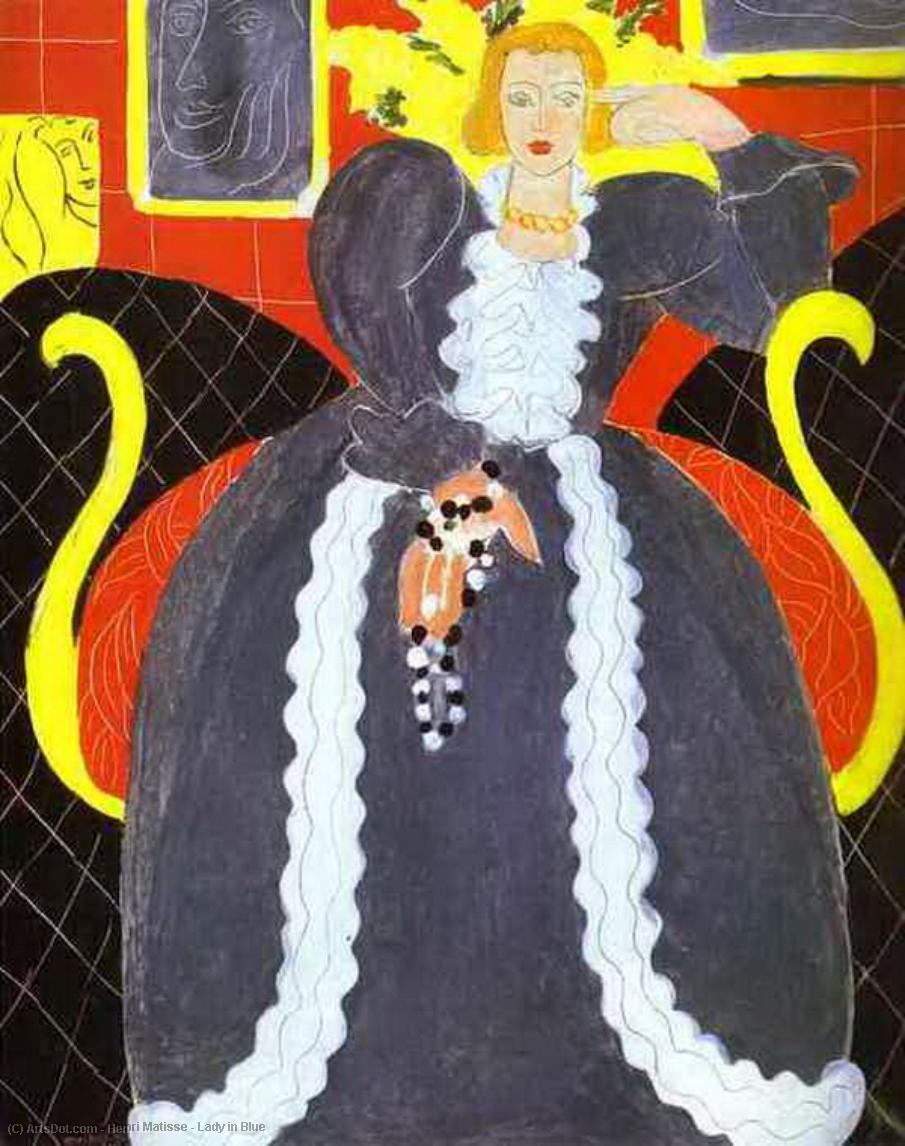
The subject herself is presented with an immediate sense of relaxed elegance. A woman sits comfortably within a chair, her hand gently resting on her head, a gesture both intimate and slightly enigmatic. The dress, rendered primarily in shades of blue – ranging from the deepest indigo to lighter cerulean – dominates the composition, immediately establishing a mood of tranquility and introspection. Yet, Matisse doesn’t rely solely on monochrome; strategically placed reds and yellows punctuate the scene, creating dynamic contrasts that draw the eye and inject energy into the otherwise serene tableau. These bursts of color aren't merely decorative; they are integral to the painting’s expressive power.
The Language of Line: Matisse’s Distinctive Technique
Matisse’s technique is instantly recognizable, characterized by bold, simplified forms and a deliberate avoidance of meticulous detail. He employed a method he termed “drawing with paint,” prioritizing the expressive potential of line over precise representation. Notice how the outlines of the woman's dress are not sharply defined but rather suggested through a series of confident, rhythmic strokes. This technique creates an illusion of depth and volume while simultaneously emphasizing the two-dimensionality of the canvas – a key element in his exploration of flatness. The use of *fauve* colors—intense, non-naturalistic hues—further contributes to this effect, pushing beyond traditional color theory and prioritizing emotional impact.
The background, populated with two cats and a bird, serves not as mere decorative elements but as active participants in the scene. These animals, rendered with equally simplified forms, seem almost dreamlike, contributing to the painting’s overall atmosphere of quiet contemplation. The placement of the bird at the top left corner subtly directs the viewer's gaze upwards, while the cats, positioned on either side, create a sense of balance and harmony within the composition.
Symbolism and Emotional Resonance
While Matisse often resisted definitive interpretations of his work, “Lady in Blue” undoubtedly resonates with themes of domesticity, femininity, and perhaps even a touch of melancholy. The woman’s posture – hands gently resting on her head – suggests a state of peaceful reflection, inviting the viewer to share in her quiet moment. The handbag placed upon her lap hints at a life lived within the comforts of home, while the vibrant colors evoke feelings of joy and optimism despite the underlying sense of introspection. It's important to note that Matisse’s work frequently explored themes of beauty and pleasure, seeking to capture the essence of human experience through color and form.
A Timeless Masterpiece: Reproductions for Today
ArtsDot offers meticulously crafted hand-painted reproductions of “Lady in Blue,” allowing you to bring this iconic artwork into your home or office. Our skilled artisans faithfully recreate Matisse’s distinctive style, capturing the vibrancy of his palette and the dynamism of his line work with exceptional detail. Whether you're an art enthusiast, a collector seeking to expand your collection, or simply someone looking for a stunning piece of décor, our reproductions provide an authentic and beautiful representation of this enduring masterpiece. Experience the emotional power and artistic brilliance of Henri Matisse’s “Lady in Blue” – a timeless testament to the transformative potential of color.