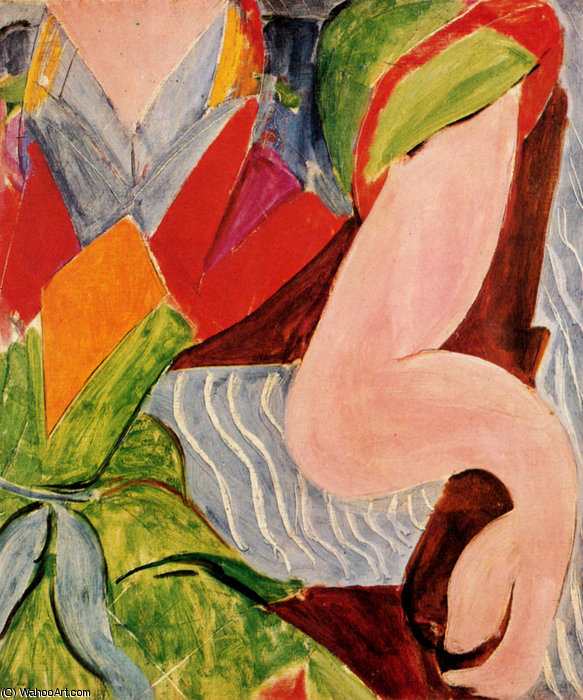
Henri Matisse’s “Le Bras Huile sur Toile Suisse” exemplifies Fauvism, characterized by vibrant hues and energetic strokes. Created in 1938, this painting showcases a woman adorned with red scarf, reflecting Matisse's exploration of color and form. Part of his extensive collection, it embodies his artistic genius and enduring influence on modern art.
Henri Matisse: A Pioneer of Color and Emotion
Henri Matisse (1869-1954) stands as one of the most influential figures in 20th-century art, a painter whose unwavering devotion to color revolutionized artistic expression. Born in Le Cateau-Cambrésis, France, his early life was marked by legal aspirations before a debilitating illness redirected him toward the transformative world of painting—a passion ignited by simple gifts from his mother during convalescence.
The Fauvist Revolution: Bold Strokes and Vibrant Hue
Matisse’s artistic journey culminated in the emergence of Fauvism, a movement he spearheaded alongside Pablo Picasso. Characterized by unrestrained use of color—often jarringly juxtaposed against muted tones—Fauvism rejected academic conventions and prioritized emotional impact over realistic representation. “Le Bras Huile sur Toile Suisse,” Collection Particulière exemplifies this stylistic ethos perfectly.
- Subject Matter: The painting depicts a woman seated, radiating calm amidst an urban backdrop. Her posture conveys intimacy and repose, inviting contemplation.
- Style: Fauvist principles dominate—bold brushstrokes create dynamism and energy, while flattened forms emphasize decorative patterns.
- Technique: Matisse employed thick impasto technique, layering paint onto the canvas to build texture and heighten visual intensity.
A Legacy of Innovation
“Le Bras Huile sur Toile Suisse” isn’t merely a beautiful image; it's a testament to Matisse’s groundbreaking approach to color theory and composition. Like many of his masterpieces, it captures the spirit of its time—a period marked by experimentation and a desire to break free from artistic restraints.
- Historical Context: Fauvism arose in response to Impressionism's focus on capturing fleeting moments of light; Matisse sought to convey deeper emotional truths.
- Symbolism: The woman’s arm and hand—a prominent element—suggest strength, support, and connection—themes prevalent throughout Matisse’s oeuvre.
Emotional Resonance
Ultimately, “Le Bras Huile sur Toile Suisse” transcends its formal qualities to evoke a profound sense of serenity and contemplation. Matisse's masterful manipulation of color achieves an extraordinary feat: transporting the viewer into a realm where beauty resides not in meticulous detail but in expressive vibrancy—a legacy that continues to inspire artists and collectors alike.