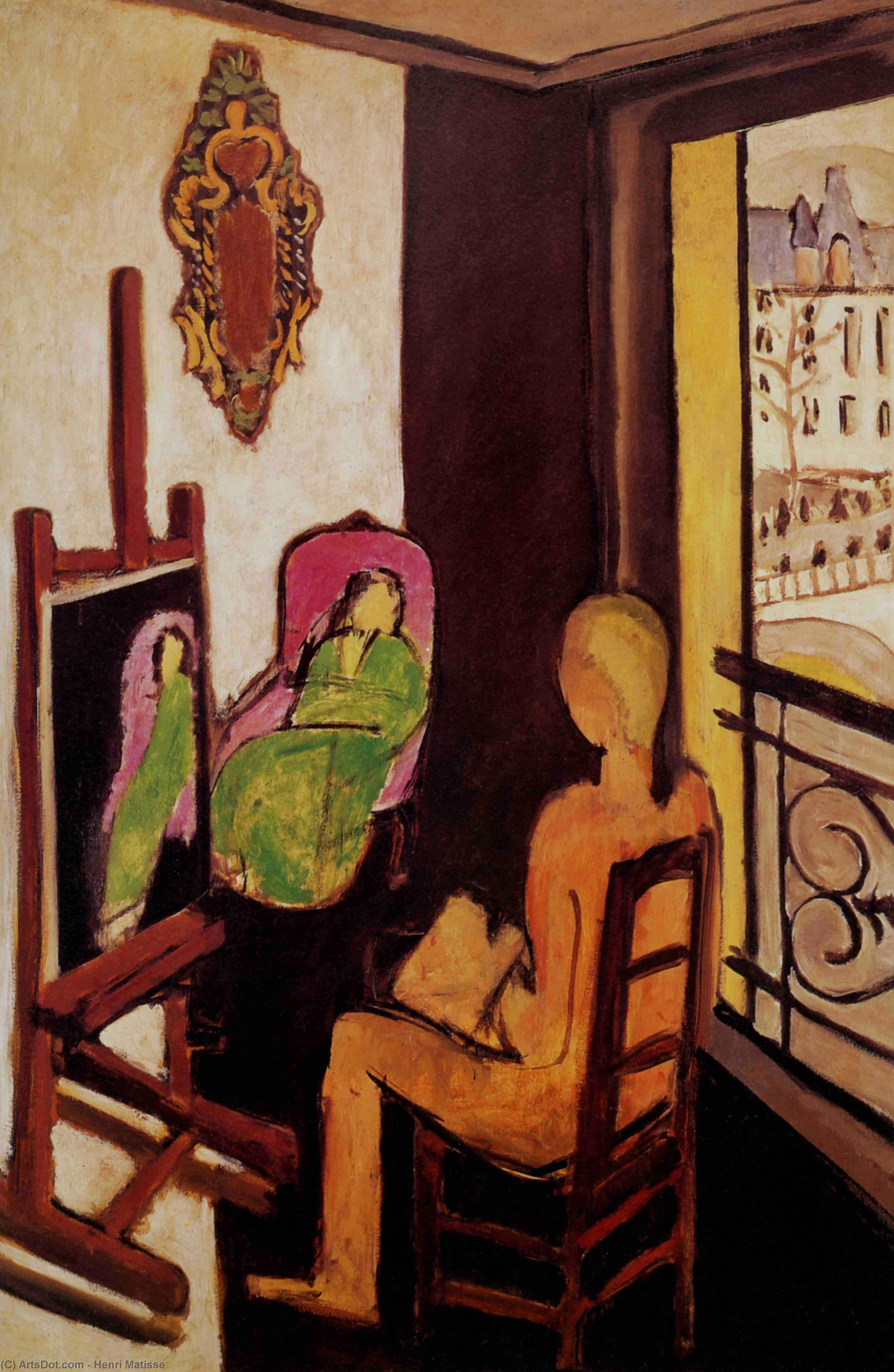
"Le Peintre dans son atelier" by Henri Matisse – A vibrant Fauvist masterpiece depicting a painter at work, capturing the essence of color and form with meticulous detail."
Explore Henri Matisse (1869-1954): Fauvism's master of color! Discover iconic paintings, cut-paper collages & his influence on modern art. A leading French painter.
Le Peintre dans son atelier Huile sur Toile pmdam: A Window Into Fauvist Vision
Henri Matisse, a name synonymous with vibrant color and expressive brushstrokes, remains one of the most influential figures in modern art. His masterpiece, *Le Peintre dans son atelier* ("The Painter and His Model"), painted in 1916-17, offers an unparalleled glimpse into the heart of Fauvism—a movement that irrevocably altered the course of artistic expression. This monumental canvas, measuring 147 x 97 cm and housed at the Musée National d’Art Moderne in Paris, transcends mere representation; it embodies Matisse's revolutionary approach to color and form, cementing his legacy as a pioneer of abstraction.
A Composition Steeped in Symbolism
The painting’s deceptively simple subject matter—a woman seated before a mirror contemplating her reflection alongside a man absorbed in reading—serves as a springboard for profound artistic exploration. Matisse deliberately eschewed naturalistic detail, prioritizing instead bold hues and dynamic textures to convey emotion and atmosphere. The stark contrast between black and white dominates the palette, emphasizing the figure’s presence against the backdrop of the studio space. This deliberate monochrome serves not merely as visual restraint but as a conduit for channeling inner contemplation—a core theme resonating throughout Matisse's oeuvre.
The Fauvist Technique: Bold Color Unleashed
Matisse’s masterful technique exemplifies the defining characteristic of Fauvism: unrestrained color usage. He employed thick impasto strokes, layering pigment onto the canvas with palpable energy and conviction. The dominant hues—deep reds, vibrant yellows, and intense blues—are applied without regard for traditional rules of shading or perspective. Instead, Matisse prioritized visual impact, aiming to evoke feeling rather than accurately depict reality. This audacious approach was initially met with considerable criticism from Parisian critics who deemed it barbaric (“wild beast”), yet it quickly gained recognition as a courageous assertion of artistic freedom and innovation.
Historical Context: Challenging Artistic Conventions
Painted during the tumultuous years leading up to World War I, *Le Peintre dans son atelier* reflects the broader intellectual ferment of its time—a rejection of Impressionism’s optical realism in favor of subjective experience. Matisse's work aligns with a burgeoning interest in exploring psychological states and conveying emotion through color alone. Influenced by Cézanne’s geometric simplification and Japanese prints, he sought to liberate painting from academic constraints, paving the way for subsequent movements like Cubism and Surrealism. The Musée National d’Art Moderne provides an invaluable opportunity to immerse oneself in this pivotal moment of artistic history.
Emotional Resonance: A Portrait of Artistic Pursuit
Ultimately, *Le Peintre dans son atelier* transcends its formal elements to communicate a powerful emotional resonance. It captures the quiet intensity of creative endeavor—the solitary contemplation of an artist wrestling with his craft and confronting his own identity. Matisse’s masterful depiction invites viewers to contemplate themes of introspection, self-representation, and the transformative power of art itself. This enduring image continues to inspire artists and collectors alike, securing its place as one of Henri Matisse's most iconic creations—a testament to his unwavering commitment to artistic vision and expressive innovation.