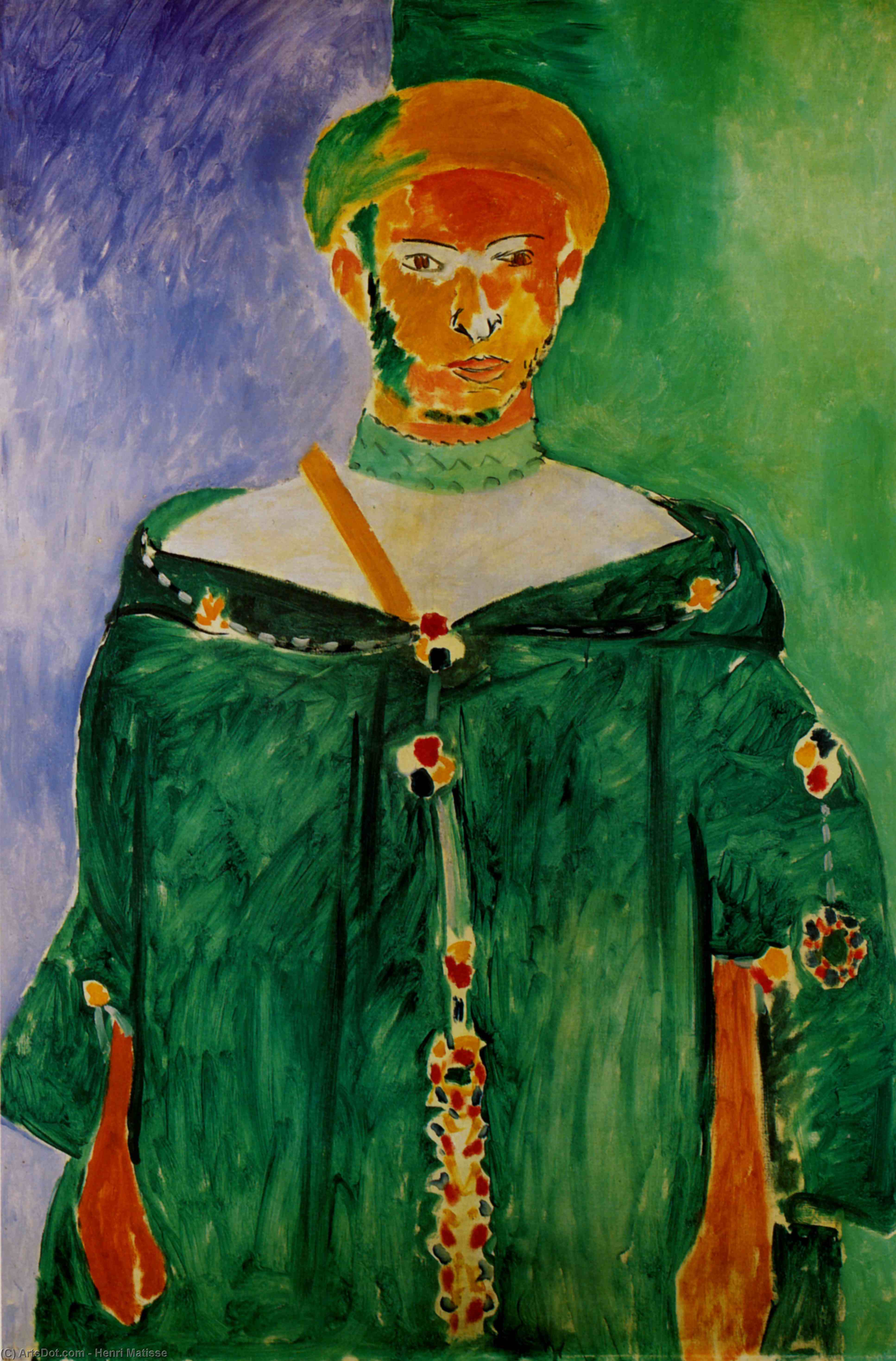
Le Rifain Debout: A Fauvist Masterpiece of Color and Observation
Henri Matisse’s “Le Rifain Debout” (The Standing Digger), painted in 1912 during his pivotal sojourn in Morocco, is more than just a portrait; it's a vibrant explosion of color and a profound exploration of form. This oil-on-canvas work, measuring 145 x 96 cm, exemplifies the height of Fauvism – a movement that dared to shatter traditional artistic conventions by prioritizing pure color and emotional expression over realistic representation. The painting immediately captivates with its audacious palette: deep greens, sunny yellows, and rich golds dominate, creating an intensely luminous and almost hallucinatory effect. It’s a world far removed from the muted tones of academic art, reflecting Matisse's conscious rejection of naturalism in favor of subjective experience.
The subject himself – a Moroccan farmer, likely a water carrier judging by his attire – is rendered with remarkable simplification. Matisse doesn’t attempt to capture every detail; instead, he focuses on the essential elements: the figure’s posture, the folds of his clothing, and most importantly, the powerful impact of color. The man's stance, leaning slightly forward, conveys a sense of quiet dignity and resilience. His face is largely obscured, yet his presence is undeniable – he becomes an archetype of rural life, embodying strength and connection to the land. The use of flat planes of color, characteristic of Fauvism, further emphasizes this simplification, reducing the figure to its most vital components.
Influences and Artistic Context
Matisse’s journey to Morocco proved transformative, profoundly influencing his artistic style. The vibrant colors and textures of Moroccan life – from the rich fabrics to the sun-drenched landscapes – ignited a passion within him for bold chromaticity. This period marked a significant shift in Matisse's work, moving away from the pastel hues of his earlier years towards a more assertive and expressive approach. The painting’s composition also reflects this influence; it echoes the flattened perspective and decorative patterns found in Islamic art, particularly in the intricate geometric designs often seen in Moroccan textiles and architecture. This deliberate incorporation of non-Western artistic traditions demonstrates Matisse's intellectual curiosity and his desire to break free from established European norms.
“Le Rifain Debout” sits firmly within the broader context of Post-Impressionism, a movement that paved the way for Fauvism. Artists like Cézanne, Van Gogh, and Gauguin had already challenged traditional painting techniques by emphasizing color, brushwork, and subjective experience. Matisse built upon their innovations, pushing them even further into uncharted territory. The painting’s emotional intensity – a sense of both serenity and underlying energy – is a hallmark of the Post-Impressionist sensibility, reflecting a desire to capture not just what was seen but also how it *felt*.
Color, Symbolism, and Emotional Resonance
The color choices in “Le Rifain Debout” are deliberately symbolic. The dominant greens evoke associations with nature, fertility, and the earth – aligning with the figure’s role as a farmer. The yellows represent sunlight, warmth, and vitality, while the golds add an element of luxury and timelessness. Matisse's masterful use of color creates a dynamic visual rhythm, drawing the viewer's eye across the canvas and generating a sense of movement and energy. It is important to note that Matisse was deeply interested in the psychological effects of color, believing it could evoke powerful emotions without relying on representational imagery.
Beyond its technical brilliance, “Le Rifain Debout” possesses a quiet emotional resonance. The figure’s stoic posture suggests resilience and dignity, while his gaze – though unseen – invites contemplation. The painting isn't about depicting a specific individual; it’s about capturing the essence of rural life and conveying a sense of timeless beauty. It is a testament to Matisse’s ability to transform a simple subject into a profound artistic statement.
Hand-Painted Reproductions: Bringing Matisse to Life
ArtsDot offers meticulously crafted, hand-painted reproductions of “Le Rifain Debout,” allowing you to experience the full vibrancy and emotional depth of this iconic masterpiece in your own home or office. Our skilled artists replicate Matisse’s distinctive brushwork, color palette, and compositional techniques with unparalleled accuracy and attention to detail. Each reproduction is created using archival-quality materials, ensuring its longevity and preserving the artwork's rich colors for generations to come. Whether you are an art collector, interior designer, or simply a lover of beautiful things, a ArtsDot reproduction of “Le Rifain Debout” is a stunning addition to any space – a vibrant reminder of Matisse’s revolutionary vision and his enduring legacy.