A Symphony of Color and Myth: Henri Matisse’s “Leda and the Swan”
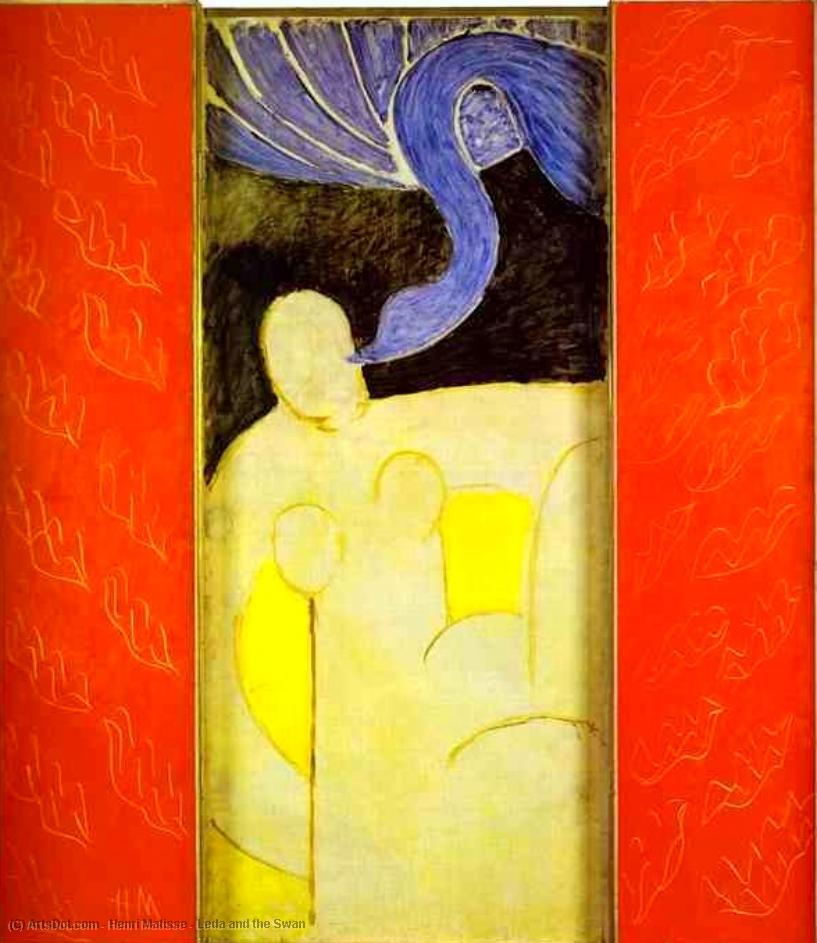
Henri Matisse's "Leda and the Swan," though often overshadowed by his more celebrated depictions of dancers, offers a profoundly intimate and emotionally charged interpretation of Ovid’s classic myth. This painting, existing in multiple versions throughout his career, isn’t a grand narrative drama but rather a carefully constructed tableau of quiet contemplation and sensual beauty. The image presented here – likely one of the later iterations – captures a pivotal moment: Leda, Queen of Sparta, is seated on a simple chair, cradling two children in her lap, while a magnificent swan descends upon her, bestowing the seed of future generations. It’s a scene stripped of overt violence or dramatic gesture, replaced by an atmosphere of serene vulnerability and maternal tenderness.
The Language of Color: Matisse's Revolutionary Approach
Matisse was a master of color, and this work exemplifies his revolutionary approach to the medium. He abandoned traditional academic techniques in favor of a vibrant, flattened style that prioritized the emotional impact of hue over meticulous representation. Notice how he employs bold, saturated colors – deep reds, blues, greens, and yellows – not to mimic reality but to evoke feeling. The red wall behind Leda isn’t merely a backdrop; it pulsates with warmth and energy, drawing the viewer into the scene. The use of tempera on paper allows for a luminosity and immediacy that is particularly striking in Matisse's hands. He layered colors directly upon each other, creating an almost sculptural effect where planes of color seem to float and overlap. This technique, characteristic of his mature style, rejects illusionism and instead focuses on the pure visual experience of color itself.
- Color Theory: Matisse’s masterful use of complementary colors – red and green, blue and orange – creates a dynamic tension within the composition, further enhancing its vibrancy.
- Flatness & Abstraction: The deliberate flattening of forms contributes to the painting's sense of immediacy and emotional intensity. It moves away from traditional perspective, prioritizing feeling over realistic depiction.
Myth, Symbolism, and the Feminine Ideal
The myth of Leda and the Swan is a complex one, often interpreted as a tale of seduction and transgression. However, Matisse’s version subtly shifts the narrative focus. He doesn't depict the forceful abduction; instead, he presents Leda as a woman in repose, accepting the encounter with a quiet dignity. The swan itself becomes less a symbol of violent conquest and more an emblem of fertility and renewal – a messenger bearing life. The two children nestled in her lap represent not just lineage but also the enduring power of motherhood. Furthermore, Matisse’s choice to depict Leda seated, rather than reclining or being overtaken, subtly asserts her agency within the myth.
A Window into Matisse's World: Context and Legacy
Created during a period of immense artistic experimentation for Matisse – he was exploring color theory, composition, and his own personal vision – “Leda and the Swan” reflects his evolving aesthetic. It aligns with his broader project of liberating art from academic constraints and forging a new path based on intuition and emotional expression. This painting is part of a larger series exploring mythological subjects, demonstrating Matisse’s enduring fascination with classical narratives and his ability to imbue them with his own distinctive voice. Reproductions of this work offer a remarkable opportunity to experience the intensity and beauty of Matisse's vision, bringing a touch of vibrant color and profound contemplation into any space.