A Bold Embrace of Color: Exploring Matisse’s “Marquet Painting a Nude in Manguin’s Studio”
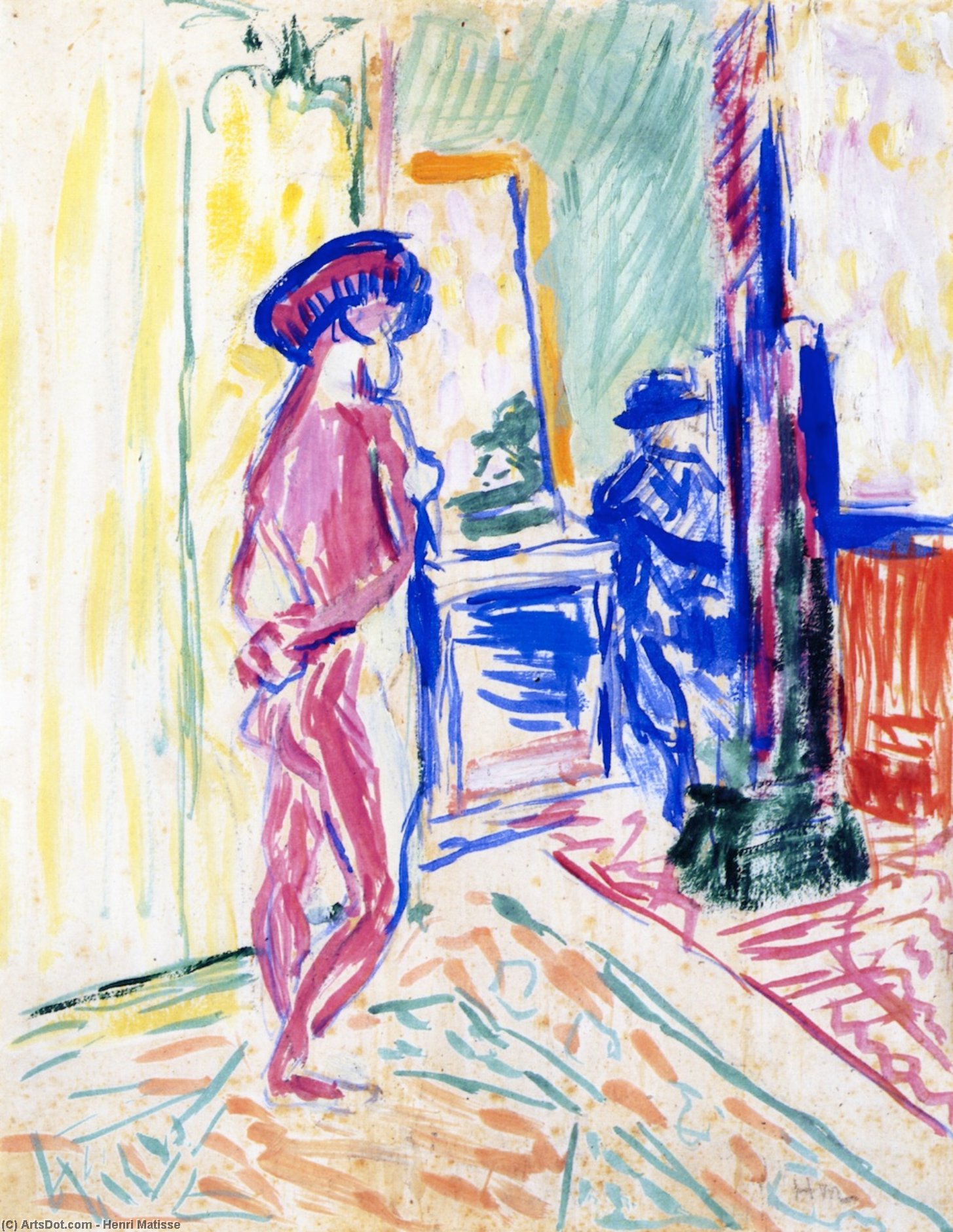
Henri Matisse’s “Marquet Painting a Nude in Manguin’s Studio,” completed in 1904, stands as a cornerstone of Fauvist art—a movement that irrevocably altered the course of artistic expression at the turn of the century. More than just a depiction of an artist's workspace, it embodies the Fauvist ethos: prioritizing vibrant hues and unrestrained brushstrokes over meticulous realism to convey emotion and immediacy.
- The Artistic Context: Fauvism emerged as a defiant reaction against Impressionism’s subtle gradations of light and color. Artists like Matisse and André Derain sought liberation from academic conventions, believing that color alone could communicate feeling effectively.
- A Studio Snapshot: The painting captures Albert Marquet diligently applying paint to a nude model while Henri Manguin observes attentively. This intimate scene is rendered with remarkable detail—the mirror reflecting the figure’s form and the couch providing a comfortable backdrop—yet it's the audacious color palette that dominates the viewer’s gaze.
Chromatic Intensity: Fauvist Color Theory in Practice
Matisse’s masterful use of color isn’t merely decorative; it’s fundamentally expressive. He employed pigments like cadmium red, ultramarine blue, and lemon yellow—colors typically shunned by Impressionists—to create a visual experience that pulsates with energy. The painting is divided into distinct sections, each showcasing a carefully considered chromatic scheme. Notice how the cooler tones of the mirror reflect the nude model’s skin, juxtaposed against the warmer hues of the couch and Marquet's easel.
Symbolism Beyond Representation
Beyond its formal qualities, “Marquet Painting a Nude in Manguin’s Studio” speaks to broader artistic concerns. It reflects the collaborative spirit of the avant-garde era, where artists experimented with new techniques and challenged established norms. The nude figure itself symbolizes vulnerability and beauty—themes prevalent throughout Matisse's oeuvre—while simultaneously serving as a conduit for exploring ideas about perception and representation.
Legacy and Emotional Resonance
“Marquet Painting a Nude in Manguin’s Studio” cemented Matisse’s reputation as a pioneer of modern art, paving the way for subsequent movements like Expressionism. Its bold colors and dynamic brushstrokes continue to inspire artists today, reminding us that art can transcend mere visual accuracy to evoke profound emotional responses. Reproductions offer an opportunity to experience this seminal work firsthand—a testament to Matisse's enduring vision.