A Symphony of Color: Exploring Henri Matisse’s ‘Not Identified (14)’
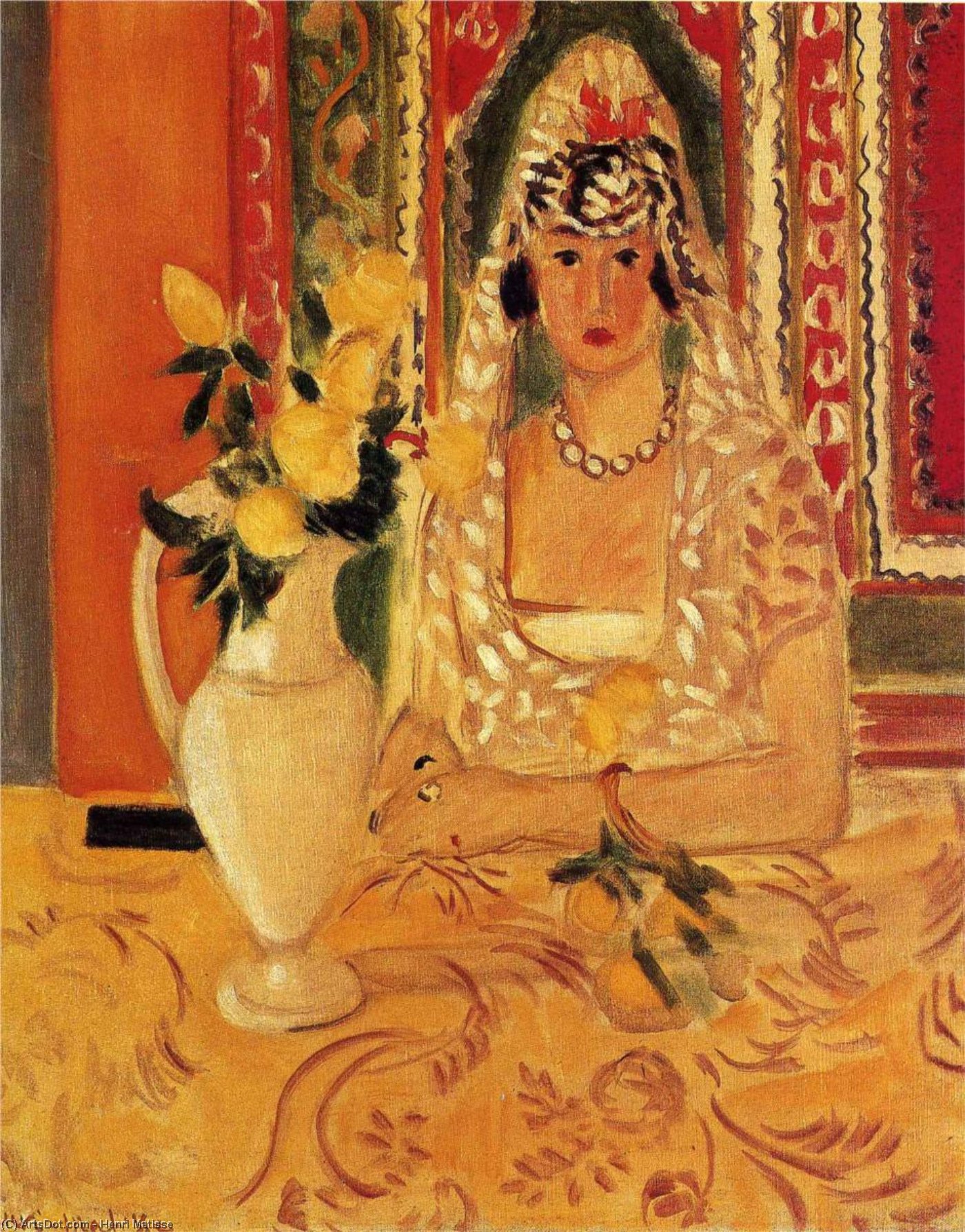
Henri Matisse's 'Not Identified (14)' stands as a cornerstone of Fauvist art, embodying the movement’s audacious embrace of color and its liberation from traditional representational constraints. Painted in 1919, this captivating canvas captures a serene domestic scene—a woman seated at a table adorned with flowers—yet transcends mere depiction through Matisse's masterful manipulation of hue and form. It’s more than just a painting; it’s an experience of warmth, vibrancy, and profound artistic innovation.
Elements and Style: Fauvist Boldness
The defining characteristic of ‘Not Identified (14)’ is undoubtedly its chromatic intensity. Matisse abandons muted tones for a riotous palette dominated by yellows—particularly in the vase overflowing with blossoms—creating a visual feast that pulsates with life. These warm hues are juxtaposed against a background subtly shaded in earthy browns and greens, establishing a harmonious balance between interior tranquility and natural exuberance. The brushstrokes themselves are loose and expressive, conveying movement and spontaneity rather than meticulous detail. This technique aligns perfectly with the Fauvist ethos—a rejection of academic conventions in favor of direct observation and emotional response.
Symbolism Within Harmony
Beyond its visual splendor, ‘Not Identified (14)’ resonates with symbolic significance. The woman seated at the table represents femininity and contemplation, while the flowers symbolize beauty, fertility, and renewal – themes frequently explored by Matisse throughout his oeuvre. The bird perched delicately on the edge of the table serves as a motif of freedom and aspiration, mirroring the artist’s own pursuit of artistic liberation. These elements intertwine to create a scene imbued with an aura of serenity and optimism—a testament to Matisse's ability to distill complex emotions into simple visual forms.
Comparison With Contemporaries: Frieseke’s Tulip Still Life
Like Frederick Carl Frieseke’s ‘Yellow Tulips,’ Matisse’s painting prioritizes color as the primary vehicle for conveying emotion and capturing the essence of nature. Frieseke, too, employs bold hues to illuminate his subjects—in this case, tulips—creating a similarly vibrant and inviting composition. However, where Frieseke focuses on precise botanical representation, Matisse deliberately simplifies forms, emphasizing expressive brushstrokes and prioritizing emotional impact over photographic accuracy. This stylistic divergence underscores Matisse’s pioneering role in redefining the boundaries of artistic expression.
Legacy at The Museum of the Annunciation: Fauvist Inspiration
‘Not Identified (14)’ exemplifies the enduring influence of Fauvism on subsequent generations of artists. Its bold color palette and expressive technique paved the way for movements like Expressionism and Surrealism, demonstrating Matisse’s profound contribution to the evolution of modern art. Pieces such as ‘Not Identified (14)’ continue to inspire collectors and enthusiasts alike, reminding us that true artistic greatness lies in daring to challenge conventions and prioritizing emotional truth above all else. The Museum of the Annunciation houses a remarkable collection of Fauvist artworks—a poignant reminder of Matisse’s visionary legacy.
Handmade oil painting reproductions of ‘Not Identified (14)’ can be found on ArtsDot.com, allowing art enthusiasts to own a piece of Henri Matisse’s Fauvism legacy.
For more information on Henri Matisse and his works, visit ArtsDot.com