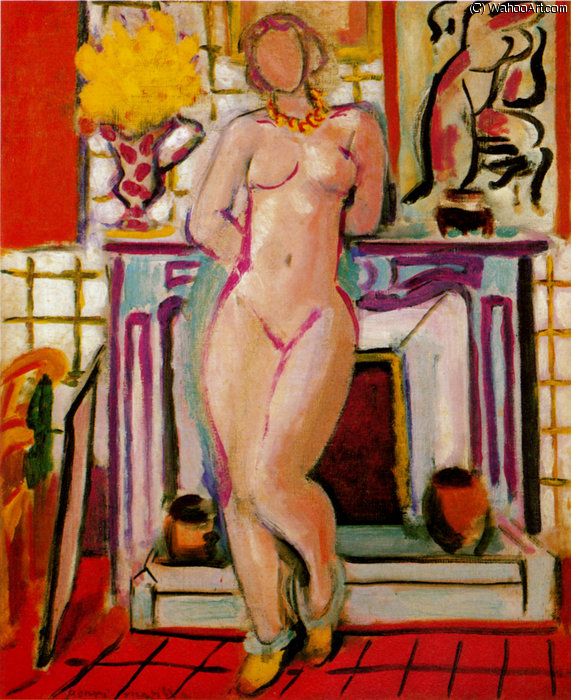
Part of a private collection, this painting alongside other notable works by Matisse like Fatmah, la mulâtresse Collection Particulière and Spanish Still Life (Seville II) demonstrate his artistic evolution.
Explore Henri Matisse (1869-1954): Fauvism's master of color! Discover iconic paintings, cut-paper collages & his influence on modern art. A leading French painter.
Nu à la cheminée Huile sur Toile Collection Particulière: A Symphony of Color and Intimacy
A glimpse into the world of Henri Matisse is akin to stepping into a garden bursting with vibrant hues—a revelation born from an unexpected convalescence following a serious illness. Born in Le Cateau-Cambrésis in 1869, Matisse initially pursued legal studies in Paris, yet fate intervened when appendicitis forced him to reconsider his ambitions. This enforced pause proved transformative, sparking a lifelong devotion to painting and establishing him as one of the foremost figures of Fauvist art. Nu à la cheminée Huile sur Toile Collection Particulière embodies this artistic spirit perfectly—a deceptively simple composition that speaks volumes about Matisse’s revolutionary approach to color and form.
The Essence of Fauvism: Bold Strokes, Radiant Color
Matisse's contribution to the art world transcends mere representation; he sought to express emotion directly through pigment. This stylistic hallmark is undeniably present in Nu à la cheminée Huile sur Toile Collection Particulière. The painting’s palette abandons naturalistic tones for audacious shades of crimson, ochre, and lemon yellow—colors deliberately divorced from their visual counterparts to convey feeling rather than accurately depict reality. These bold hues pulsate with energy, mirroring Matisse's belief that color possessed inherent expressive power. Influenced by artists like Picasso and Cézanne, he championed a liberation from academic conventions, prioritizing intuition and sensation above meticulous detail.
A Portrait of Quiet Elegance: Composition and Symbolism
The scene depicts a nude woman seated upon a fireplace mantle—a deliberate choice reflecting Matisse’s fascination with the female form and his exploration of idealized beauty. The surrounding furnishings – a couch, vase, and potted plants – serve as subtle anchors within the space, grounding the figure in an intimate domestic setting. Notably, the necklace adorning her neck symbolizes femininity and adornment, hinting at themes of grace and refinement. Matisse’s masterful use of perspective creates depth without resorting to complex shading techniques; instead, he relies on layering colors to achieve a luminous effect that captures the warmth of candlelight and evokes a sense of serene contemplation.
Technical Mastery: Impressionistic Brushstrokes
Matisse's technique is characterized by loose, expressive brushstrokes—a hallmark of Impressionism blended with Fauvist principles. These strokes aren’t intended to blend seamlessly into one another but rather retain their individuality, creating textured surfaces that invite the viewer’s eye to wander across the canvas. The artist skillfully manipulates color and light to convey atmosphere and emotion, prioritizing visual impact over precise realism. This approach is particularly evident in the depiction of the fireplace mantle and surrounding objects—where Matisse captures fleeting moments of illumination with remarkable sensitivity.
A Legacy Enduring Through Reproduction
Nu à la cheminée Huile sur Toile Collection Particulière stands as a testament to Matisse’s enduring influence on modern art. Its vibrant colors, dynamic brushstrokes, and evocative composition continue to inspire artists and designers alike. ArtsDot offers exceptional reproductions of this masterpiece, allowing collectors and enthusiasts to experience the beauty and emotional resonance of Matisse's vision firsthand—a chance to bring a touch of Fauvist brilliance into any interior space.