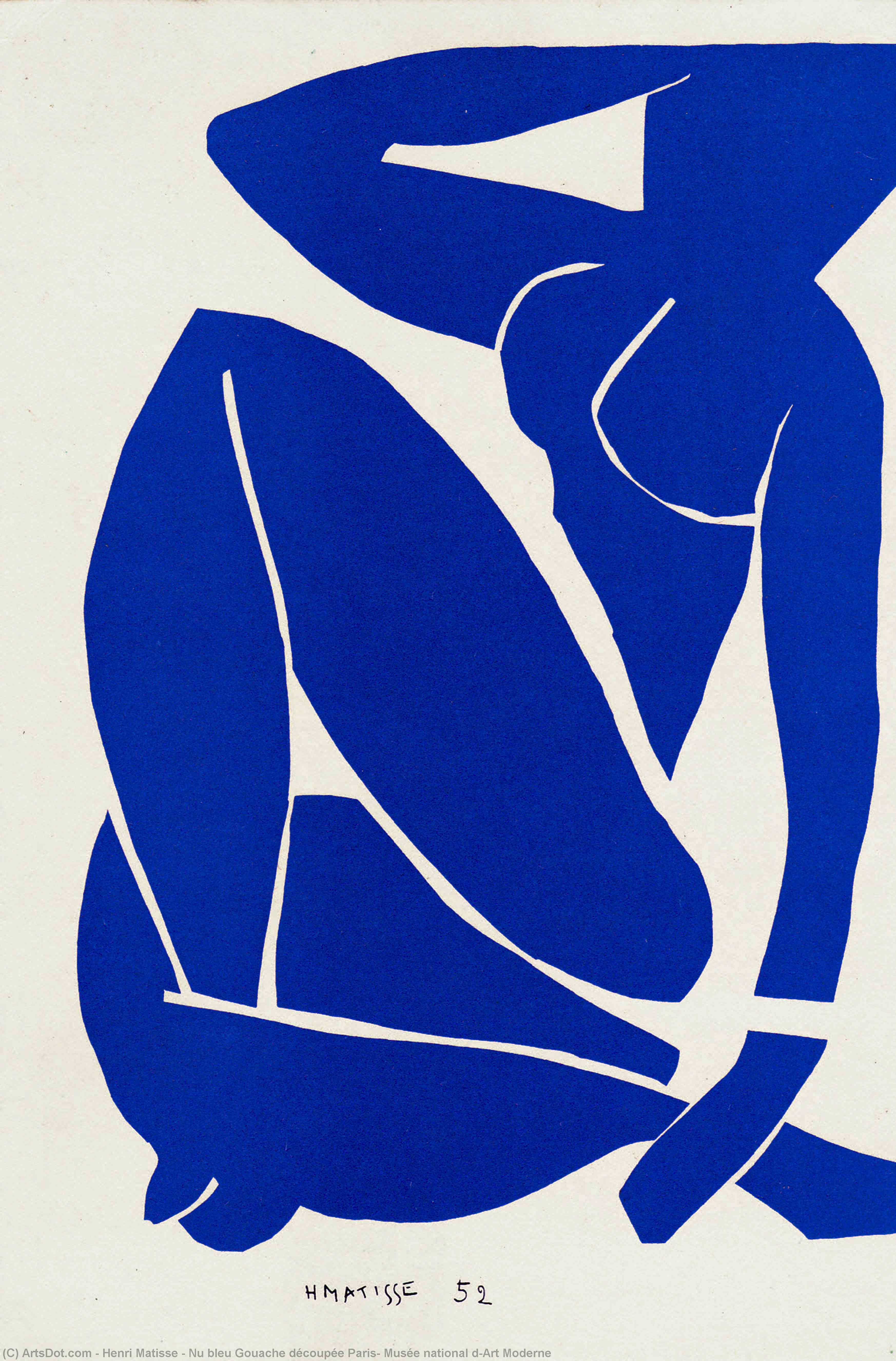
The Essence of Modernity: Henri Matisse's "Blue Nude"
A Masterpiece of Cut and Color
Henri Matisse’s “Blue Nude,” created in 1952, stands as a pivotal work within his celebrated series of cut-out paintings. Departing from traditional painting techniques, Matisse employed paper cutouts directly adhered to the canvas, resulting in a vibrant and dynamic composition that redefined artistic boundaries. This innovative approach allowed for unprecedented freedom in form and color, capturing the essence of modern art’s spirit.
Historical Context: Post-War Artistic Innovation
Created during the post-World War II era, “Blue Nude” reflects a period of profound artistic innovation and experimentation. Following years of conflict and upheaval, artists sought new ways to express themselves and capture the complexities of the human experience. Matisse’s cut-out technique emerged as a powerful means of conveying emotion and capturing the dynamism of modern life.
Technique: The Art of Paper Cutouts
<
- Paper Selection: Matisse meticulously selected vibrant, high-quality paper to achieve his desired color palette.
- Cutting Process: Using sharp scissors, he precisely cut shapes directly from the paper sheets.
- Adhesion Technique: The cut-out forms were carefully adhered to the canvas, creating a layered and dynamic composition.
Symbolism and Emotional Impact
The “Blue Nude” evokes a sense of serenity and contemplation. The simplified form and vibrant color palette create an emotional resonance that transcends traditional artistic conventions. The nude figure represents the beauty and vulnerability of the human spirit, capturing the essence of modern art’s exploration of emotion.
A Timeless Masterpiece
“Blue Nude” remains a timeless masterpiece, captivating audiences with its innovative technique, vibrant color palette, and profound emotional impact. It stands as a testament to Henri Matisse’s genius and his enduring legacy within the world of art.