A Fauvist Revelation: Exploring Matisse’s “Nude, Spanish Carpet”
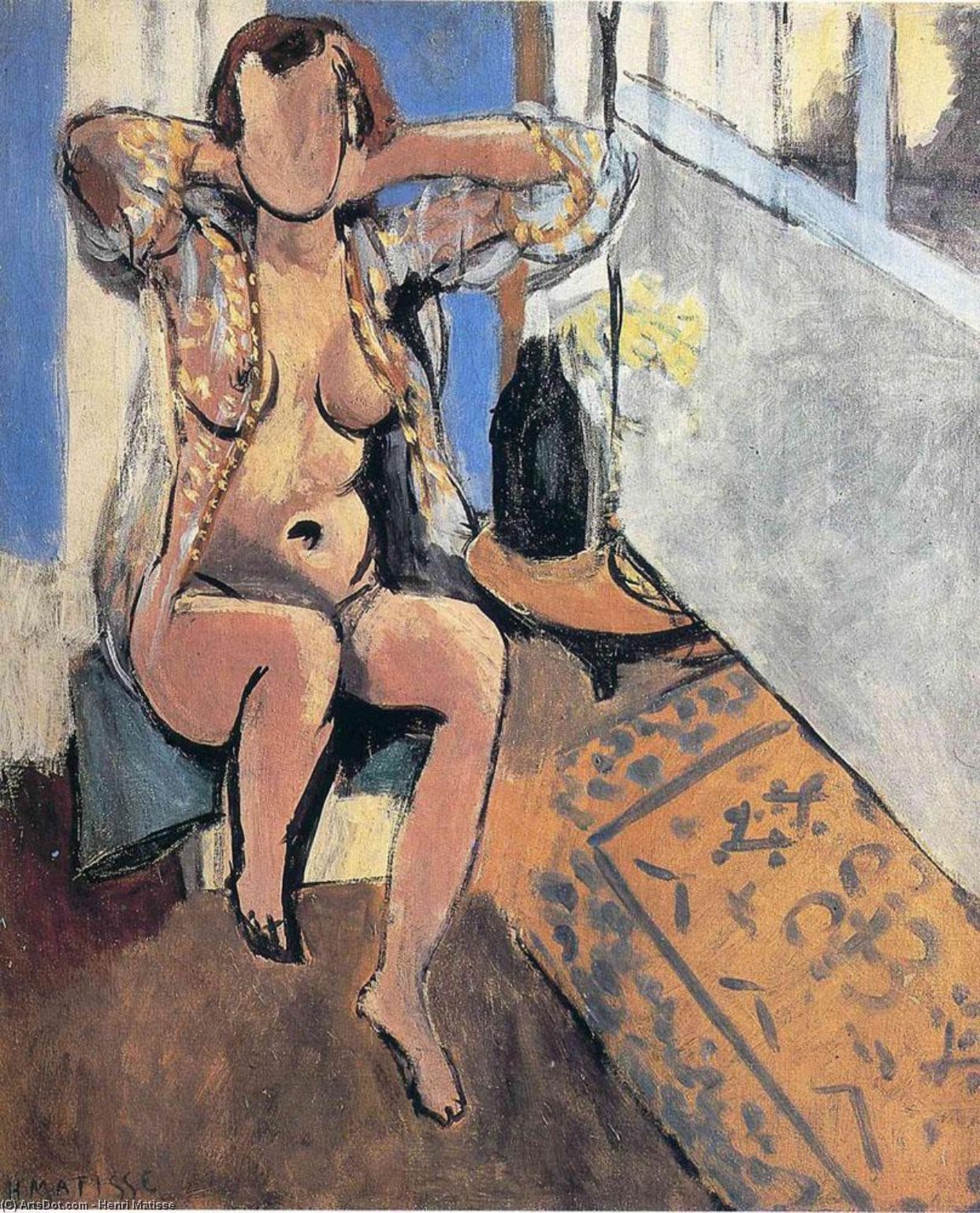
Henri Matisse's "Nude, Spanish Carpet," painted in 1906, is more than just a depiction of the human form; it’s a pivotal statement within the burgeoning Fauvist movement and a testament to Matisse’s revolutionary approach to color and composition. This artwork isn’t about *representing* reality, but rather about expressing an emotional response *to* reality through pure, unadulterated color.
The Birth of Fauvism & Artistic Rebellion
Emerging in the early 20th century, Fauvism – meaning “wild beasts” – was a radical departure from the Impressionistic and Post-Impressionistic styles that preceded it. Artists like Matisse, André Derain, Maurice de Vlaminck, and Georges Braque rejected naturalistic color palettes and sought to liberate color from its descriptive role. They employed bold, often non-naturalistic hues directly from the tube, prioritizing emotional impact over accurate representation. The 1905 Salon d'Automne exhibition in Paris became a defining moment for the movement, shocking audiences with its vibrant intensity.
Deconstructing the Composition
The painting features a reclining nude female figure set against an abstracted background inspired by Oriental carpets. Matisse doesn’t strive for anatomical perfection; instead, he simplifies forms and uses broad planes of color to define the body. The figure is not passively posed but feels dynamically integrated with the surrounding patterns. Notice how the contours are boldly outlined – a hallmark of Fauvism – further emphasizing the flatness of the picture plane. The “Spanish Carpet” isn’t merely a backdrop; it actively participates in the composition, its geometric motifs echoing and interacting with the curves of the nude.
Color as Emotion: A Symphony of Hues
The color palette is deliberately jarring yet harmonious. Matisse masterfully balances intense reds, oranges, blues, and greens, creating a visual tension that vibrates across the canvas. These aren’t colors observed in nature but rather *felt* colors – chosen for their expressive power. The use of complementary colors (like red and green) heightens the intensity and creates a sense of energy. This bold application of color is not arbitrary; it's carefully orchestrated to evoke a specific emotional response in the viewer.
Symbolism & Interpretation
While Matisse often resisted symbolic interpretations, “Nude, Spanish Carpet” invites contemplation. The nude figure has long been a subject in art history, representing vulnerability, sensuality, and the human condition. Here, however, it’s stripped of traditional allegorical meaning. Instead, the focus shifts to the pure aesthetic experience – the interplay of form, color, and texture. The Oriental carpet itself can be seen as symbolizing exoticism, luxury, or a connection to different cultures.
Emotional Impact & Lasting Legacy
“Nude, Spanish Carpet” is an exhilarating work that challenges conventional notions of beauty and representation. It’s a painting that demands attention, provoking a visceral response through its vibrant colors and dynamic composition.
Matisse's innovative use of color paved the way for future generations of artists, influencing movements like Expressionism and Abstract Expressionism.
The artwork continues to inspire interior designers seeking bold statements and collectors drawn to its historical significance and aesthetic power.
Exploring Related Works by Matisse
- “Standing Nude (Nude Study)”: A striking example of Matisse’s exploration of the human form through simplified shapes and vibrant colors.
- “Pink Nude, or Seated Nude”: An intimate portrait showcasing Matisse's ability to capture essence with minimal detail.
- “Nude on a Blue Cushion”: A unique visual experience blending Fauvism and Orientalist influences.