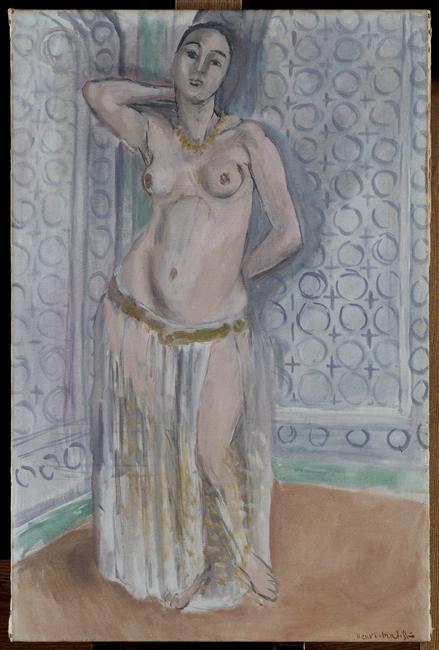
Henri Matisse's 'Odalisque in blue or white slave,' created in 1922, embodies the essence of Fauvism with its bold color palette and simplified forms. Inspired by Islamic decorative motifs and Ingres & Delacroix’s influence, this painting showcases Matisse's masterful blending of oriental aesthetics into a flat canvas composition. Discover a stunning reproduction at ArtsDot.
A Window into Matisse’s Nocturne Embrace
Henri Matisse's "Odalisque in blue or white slave," painted in 1922, transcends mere representation; it embodies the very essence of Fauvist aesthetics and captures a profound mood of contemplative serenity. This captivating artwork resides within the Musée de l’Orangerie in Paris, a testament to Matisse’s enduring legacy as one of the foremost figures of modern art. The painting's allure stems from its masterful orchestration of color—primarily blues and whites—creating an atmosphere reminiscent of twilight or dawn, mirroring the artist’s own recollections of his time spent in Algeria and Morocco.
- Style: Fauvist – Matisse boldly rejected academic conventions, prioritizing expressive color over meticulous detail. This stylistic choice distinguishes “Odalisque in blue or white slave” from Impressionism and Realism, establishing it firmly within the vanguard movement of its era.
- Technique: Employing oil paint on canvas, Matisse achieved remarkable fluidity and luminosity through a technique that leans heavily toward watercolor effects. The brushstrokes are loose and vibrant, conveying an immediacy and spontaneity rarely found in traditional painting methods.
- Composition: The scene depicts a woman seated against a wall, her posture relaxed yet poised. Her hands rest gracefully on her hips, subtly directing the viewer’s gaze. Two figures appear in the background—one positioned at the top left corner and another near the bottom right—adding depth to the composition without distracting from the central subject.
Symbolism and Influences: Echoes of Oriental Decorative Art
Matisse’s inspiration drew heavily from Islamic decorative art, particularly Moorish patterns. The inclusion of a screen – a deliberate stylistic element – reinforces this connection, transporting the viewer to an imagined oriental landscape. This influence is palpable in the simplified forms and flattened perspective characteristic of Fauvist painting, mirroring the aesthetic principles prevalent in North African art. Furthermore, the woman’s pose—a nod to classical sculpture—references idealized beauty and conveys a sense of timeless elegance.
Emotional Resonance: Tranquility Amidst Bold Color
“Odalisque in blue or white slave” isn't merely visually striking; it communicates an emotional depth that resonates with viewers long after encountering the artwork. The dominant blues evoke feelings of calmness and introspection, while the whites illuminate the woman’s form, emphasizing her vulnerability and grace. Matisse skillfully captures a moment of quiet contemplation—a serene tableau bathed in ethereal light—reflecting his own artistic vision and inviting contemplation on themes of beauty, stillness, and the allure of the exotic.
A Legacy Enduring Through Reproduction
ArtsDot.com offers exceptional reproductions of Henri Matisse’s “Odalisque in blue or white slave,” allowing art enthusiasts to experience this iconic masterpiece firsthand. From vibrant prints to meticulously crafted oil paintings, our curated collection ensures that the artist's vision—a celebration of color and form—continues to inspire generations. Explore the beauty of Matisse’s artistry and elevate your space with a stunning reproduction today!