A Moment of Contemplation: Henri Matisse’s Portrait of Michael Stein
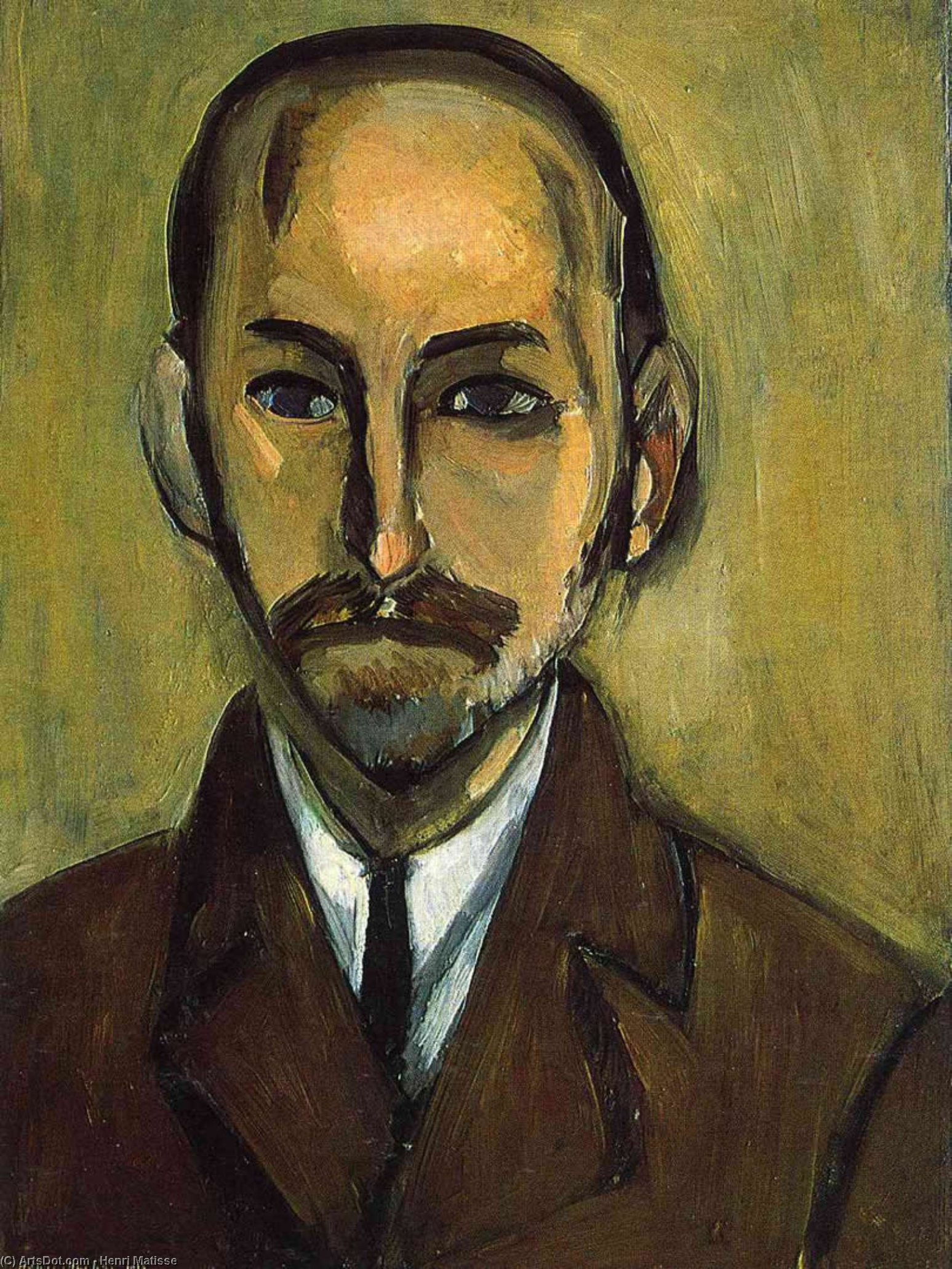
Henri Matisse's “Portrait of Michael Stein,” painted in 1916 during the vibrant and transformative period of Post-Impressionism, is more than a simple likeness; it’s an intimate glimpse into a man’s inner world. This oil on canvas work, housed at The Des Moines Art Center, offers a captivating study of form, color, and emotional resonance—elements that define Matisse's revolutionary approach to painting. The portrait immediately draws the viewer in with its warm, inviting palette dominated by yellows and ochres, creating an atmosphere of quiet contemplation. It’s a scene frozen in time, capturing a fleeting moment of introspection within a bustling artistic landscape.
At first glance, the subject is straightforward: a man of middle age, distinguished by his neatly trimmed beard and dressed in the formal attire of the era – a suit and tie. However, it’s Matisse's masterful manipulation of these details that elevates the portrait beyond mere representation. The man’s direct gaze engages the viewer directly, inviting us into his thoughts. He isn’t posing for the camera; rather, he appears lost in thought, a subtle suggestion of complexity beneath the surface. Two figures are subtly integrated into the background – likely friends or acquaintances – adding depth and context to the scene without disrupting the primary focus on Michael Stein himself. These secondary elements hint at a life lived beyond the frame, enriching the narrative of the portrait.
The Language of Color and Form
Matisse’s signature Post-Impressionist style is powerfully evident in “Portrait of Michael Stein.” He abandons the strict realism favored by earlier artistic movements, opting instead for a bold simplification of form and an expressive use of color. The brushstrokes are visible, energetic, and deliberately loose – a hallmark of his technique. This isn’t about meticulous detail; it's about conveying feeling and atmosphere through the application of paint itself. The warm yellows aren’t merely decorative; they evoke a sense of comfort, serenity, and perhaps even melancholy. Matisse employs color not to mimic reality but to amplify its emotional impact.
Notice how he uses light – or rather, the *absence* of sharp definition—to shape the figure. The forms are slightly flattened, creating an almost two-dimensional effect that contributes to the portrait’s intimate and immediate quality. This simplification, combined with his vibrant color choices, allows Matisse to focus on capturing the essence of Michael Stein's personality – a quiet dignity and a hint of melancholy. The composition itself is carefully balanced, drawing the eye across the canvas and encouraging prolonged observation.
A Window into Early 20th-Century Art
“Portrait of Michael Stein” was created during a period of immense artistic ferment—the early 20th century witnessed the rise of Fauvism and Cubism, movements that challenged traditional notions of representation. Matisse, along with Pablo Picasso, played a pivotal role in these revolutionary shifts. His work reflects this spirit of experimentation, pushing the boundaries of color and form while retaining a deeply personal artistic vision. The portrait’s influence can be seen in the subsequent development of modern art, demonstrating Matisse's ability to synthesize traditional techniques with innovative ideas.
Interestingly, the portrait was commissioned by Sarah Stein, Michael Stein’s wife, who was an avid patron of the arts and a close friend of Henri Matisse. Her support played a crucial role in allowing Matisse to continue his artistic explorations during a challenging period. The connection between the artist and his subject—and his patron—adds another layer of intrigue to this compelling work.
A Timeless Masterpiece
“Portrait of Michael Stein” remains a significant work in modern art history, not just for its aesthetic qualities but also for its ability to evoke a powerful emotional response. It’s a testament to Matisse's genius—his capacity to capture the essence of human experience through color, form, and light. For those seeking a piece that embodies both artistic innovation and quiet contemplation, this portrait offers a profound and rewarding experience. ArtsDot.com offers meticulously crafted hand-painted oil reproduction reproductions of this masterpiece, allowing you to bring its beauty into your home or office.
Explore the Hand-Painted Reproduction | Discover More Masterpieces | Learn About Henri Matisse on Wikipedia