A Symphony of Citrus Hue: Exploring Henri Matisse’s Still Life (18)
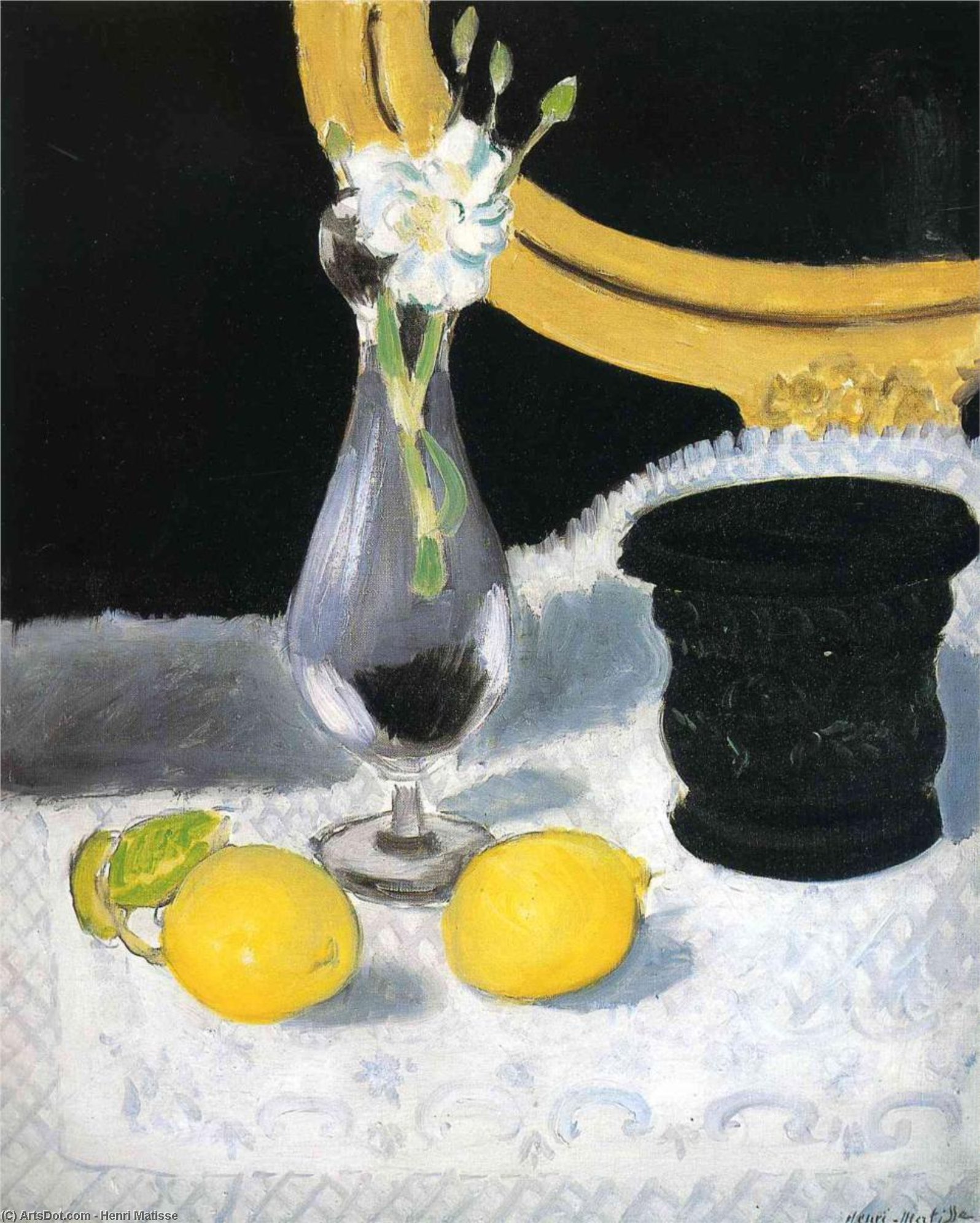
Henri Matisse's "Still Life (18)" isn’t merely a depiction of lemons and a vase; it’s an embodiment of Fauvist principles distilled onto canvas—a testament to the transformative power of color as expressive language. Painted in 1897, this deceptively simple composition reveals layers of artistic innovation that continue to resonate with audiences today. Initially drawn to law, Matisse's convalescence following appendicitis unexpectedly unlocked a passion for painting, gifting him a profound understanding of how visual elements could convey emotion and provoke contemplation. This formative experience profoundly shaped his artistic trajectory, propelling him away from academic conventions toward a bold new aesthetic direction.
- Subject Matter: The artwork centers around two lemons resting on a tabletop alongside a vase—objects chosen not for their inherent grandeur but for their ability to serve as vehicles for color exploration.
- Style: Matisse’s “Still Life (18)” firmly establishes him within the Fauvist movement, characterized by its rejection of naturalistic representation in favor of vibrant hues and flattened planes of color. This stylistic choice deliberately departs from Impressionism's focus on capturing fleeting moments of light and atmosphere.
Technique: Embracing Bold Color and Simplified Form
Matisse’s technique is revolutionary for its time. He eschewed meticulous blending, opting instead for thick impasto—heavy application of paint—to build up textured surfaces that pulsate with color. The lemons themselves are rendered in shades of yellow and orange, aggressively juxtaposed against the muted green of the vase. This deliberate disregard for tonal gradation underscores Matisse’s commitment to conveying emotion through pure color – a core tenet of Fauvist philosophy. Furthermore, he simplifies forms, reducing them to geometric shapes that emphasize their essential qualities rather than striving for photographic accuracy.
Historical Context: Challenging Artistic Tradition
“Still Life (18)” emerged during a period of significant artistic upheaval. Impressionism had dominated the art world since the mid-1860s, establishing standards of realism and tonal subtlety. Matisse’s Fauvist approach directly confronted these conventions, asserting that color could communicate feeling more effectively than traditional methods. This defiance wasn't born out of nihilistic rejection but rather from a conviction that art should aspire to something greater—a celebration of beauty and an exploration of the human experience. The painting represents a crucial step in Matisse’s artistic evolution and embodies the broader movement’s desire to liberate color from its subservient role within representational painting.
Symbolism & Emotional Impact: Beyond Representation
While seemingly unassuming, “Still Life (18)” carries symbolic weight. Lemons, traditionally associated with freshness, vitality, and optimism—themes central to Matisse’s worldview—are presented in bold hues that amplify their expressive potential. The vase serves as a grounding element, anchoring the composition while simultaneously highlighting the dominance of color. Ultimately, the painting evokes a feeling of serene contemplation – an invitation to appreciate the beauty of simple forms and the transformative power of color. It speaks to Matisse’s belief that art should inspire joy and elevate the spirit, cementing its place as a cornerstone of Fauvist legacy.