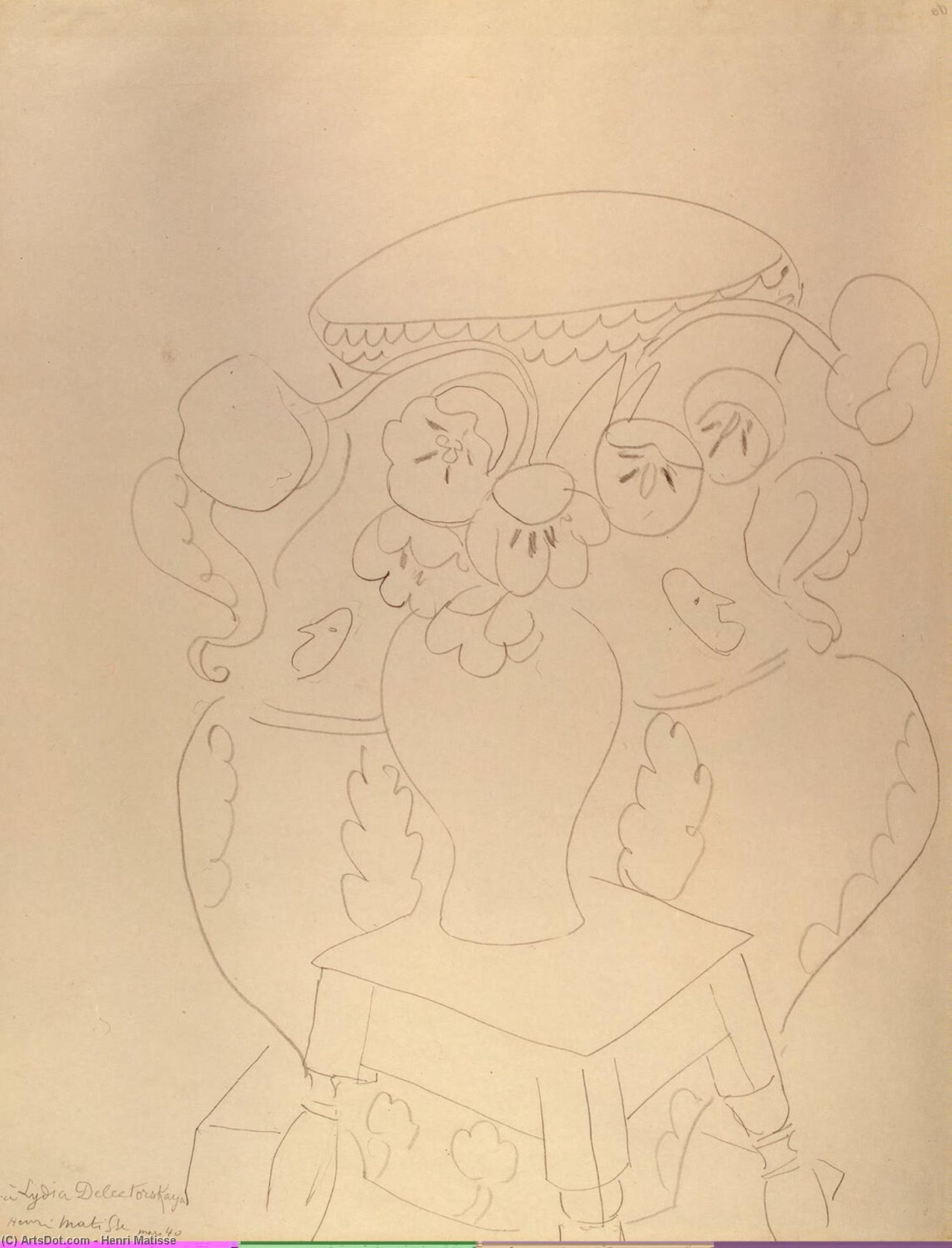
This artwork exemplifies Fauvist principles through its vibrant palette and expressive line work.
Explore Henri Matisse (1869-1954): Fauvism's master of color! Discover iconic paintings, cut-paper collages & his influence on modern art. A leading French painter.
Still Life with Two Vases
Henri Matisse stands as one of the most influential figures in early 20th century art, a painter whose revolutionary embrace of color irrevocably altered the landscape of modern expressionism. Born December 31st, 1869, in Le Cateau-Cambrésis, France, his artistic journey began far from the vibrant hues that would define his legacy—initially pursuing law—but was decisively redirected by a convalescence following an appendicitis attack where he discovered the transformative power of painting. This serendipitous encounter ignited a lifelong passion for color and form, propelling him away from legal briefs toward a world brimming with artistic possibility. Growing up in Bohain-en-Vermandois, Matisse’s upbringing instilled in him a grounding in observation and meticulous craftsmanship—qualities that would become cornerstones of his distinctive style.
The Fauvist Movement: A Bold Rebellion
Matisse's artistic trajectory coincided perfectly with the emergence of Fauvism, an avant-garde movement that erupted in France between 1905 and 1908. Rejecting Impressionists’ preoccupation with capturing fleeting moments of light and color, Fauvists championed a radical departure—the deliberate use of pure, unmixed pigments applied with unrestrained confidence. Artists like Matisse sought to liberate color from its descriptive role, prioritizing emotional impact over accurate representation. This audacious aesthetic stance challenged artistic conventions and paved the way for subsequent movements exploring expressive abstraction. The influence of Post-Impressionism Art Movement can be seen in the works of many artists, including Paul Gauguin and Georges Seurat. To explore more artworks from this movement, visit Post-Impressionism Art Movement Introduction on ArtsDot.com.
Still Life with Two Vases: A Symphony of Color
“Still Life with Two Vases,” created in 1940, exemplifies Matisse’s masterful command of Fauvist principles. The painting depicts two vases prominently displayed against a muted neutral backdrop—a strategic choice that amplifies the vibrancy of the pigments employed. Each vase is rendered in shades of crimson and ochre, punctuated by accents of lemon yellow and emerald green—a palette designed not to mimic reality but to convey mood and emotion. Matisse’s technique relies on bold brushstrokes and simplified forms, prioritizing expressive gesture over meticulous detail. The artist skillfully employs contrasting light and dark areas within the composition, generating a palpable sense of depth and volume despite the canvas's flatness. This deliberate flattening of perspective aligns with Fauvist ideals—a rejection of illusionistic realism in favor of conveying feeling directly to the viewer.
Symbolism Beyond Representation
Beyond its formal qualities, “Still Life with Two Vases” resonates with symbolic significance. The vases themselves represent stability and permanence amidst the dynamism of color—a visual metaphor for Matisse’s belief in enduring beauty and artistic integrity. Furthermore, the careful arrangement of objects contributes to a harmonious balance that reflects Matisse's fascination with geometric forms and decorative patterns. As an artist deeply attuned to his surroundings, Matisse sought to capture not merely what he saw but also what he felt—translating visual experience into emotionally resonant art.
A Legacy of Color and Innovation
Henri Matisse’s enduring influence stems from his unwavering commitment to artistic experimentation and his profound understanding of color psychology. He remains a beacon for artists striving to communicate emotion authentically, demonstrating that beauty can reside in simplification and boldness alike. “Still Life with Two Vases” stands as a testament to this legacy—a captivating artwork that continues to inspire admiration for its masterful execution and evocative visual language.