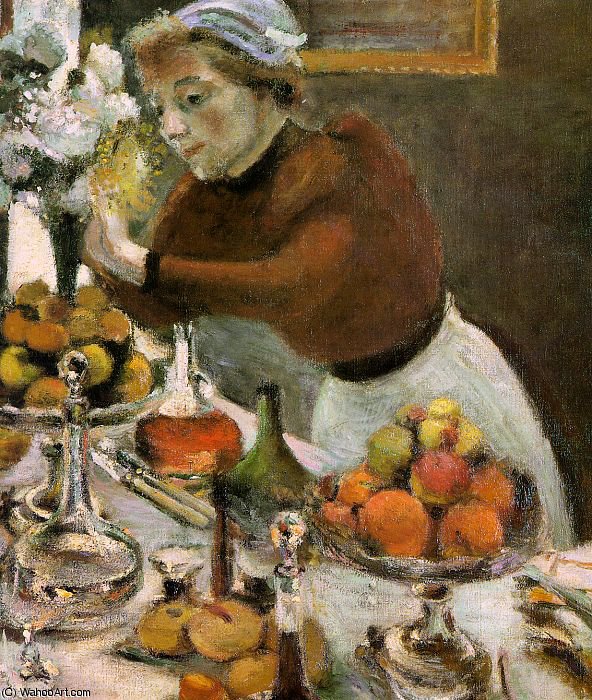
The Dinner Table (Detail): A Vibrant Echo of Fauvist Expression
Henri Matisse’s “The Dinner Table” (Detail) stands as a cornerstone of Fauvist art, embodying the movement's audacious embrace of color and its rejection of traditional representational conventions. Created in 1897, this deceptively simple composition—a woman thoughtfully arranging fruit on a table—holds within it a profound exploration of artistic innovation and emotional resonance.
- Style & Technique: Matisse’s Fauvist style prioritized painterly qualities over meticulous realism. Thick brushstrokes dominate the canvas, layering hues with energetic abandon to convey texture and movement. The artist deliberately eschewed blending colors, opting instead for juxtaposed shades that create a dazzling visual effect—a technique directly influenced by Impressionism but decisively pushing its boundaries.
- Composition & Harmony: The arrangement of fruit on the table serves as more than just decorative element; it’s carefully considered to establish balance and visual interest. Matisse skillfully utilizes color to guide the viewer's eye, highlighting key focal points while maintaining a sense of overall serenity. Notice how the warm reds and oranges of the fruit contrast with the cooler tones of the vase and background—a deliberate orchestration designed to heighten emotional impact.
- Historical Context: Fauvism emerged in Paris around 1904, spearheaded by Matisse alongside André Derain and Maurice Denis. Rejecting academic traditions, these artists sought to liberate color from its subservient role in depicting naturalistic forms. They drew inspiration from Symbolist painters like Gustave Moreau and Edvard Munch, exploring psychological states and conveying emotion through vibrant hues.
- Symbolism & Emotion: The woman depicted in “The Dinner Table” is not merely presenting fruit; she embodies a quiet contemplation—a moment of mindful observation and appreciation. Matisse’s masterful use of color communicates feelings of warmth, comfort, and perhaps even nostalgia. The luminous palette evokes the Mediterranean sun, transporting the viewer to a place of beauty and tranquility.
- Connections & Influences: Matisse's work aligns with broader artistic currents of the era, mirroring explorations undertaken by fellow Impressionists like Pierre-Auguste Renoir and Paul Cézanne. Consider Cézanne’s “Portrait of Henri Gasquet,” which similarly prioritizes expressive color over precise detail—a testament to Matisse’s pioneering role in reshaping the landscape of modern art.
A reproduction of “The Dinner Table” offers an opportunity to experience Matisse's artistic vision firsthand, capturing the vibrancy and emotional depth that define this iconic masterpiece. Its enduring appeal lies in its ability to inspire contemplation and evoke a sense of timeless beauty—a celebration of color as a conduit for conveying profound human emotion.