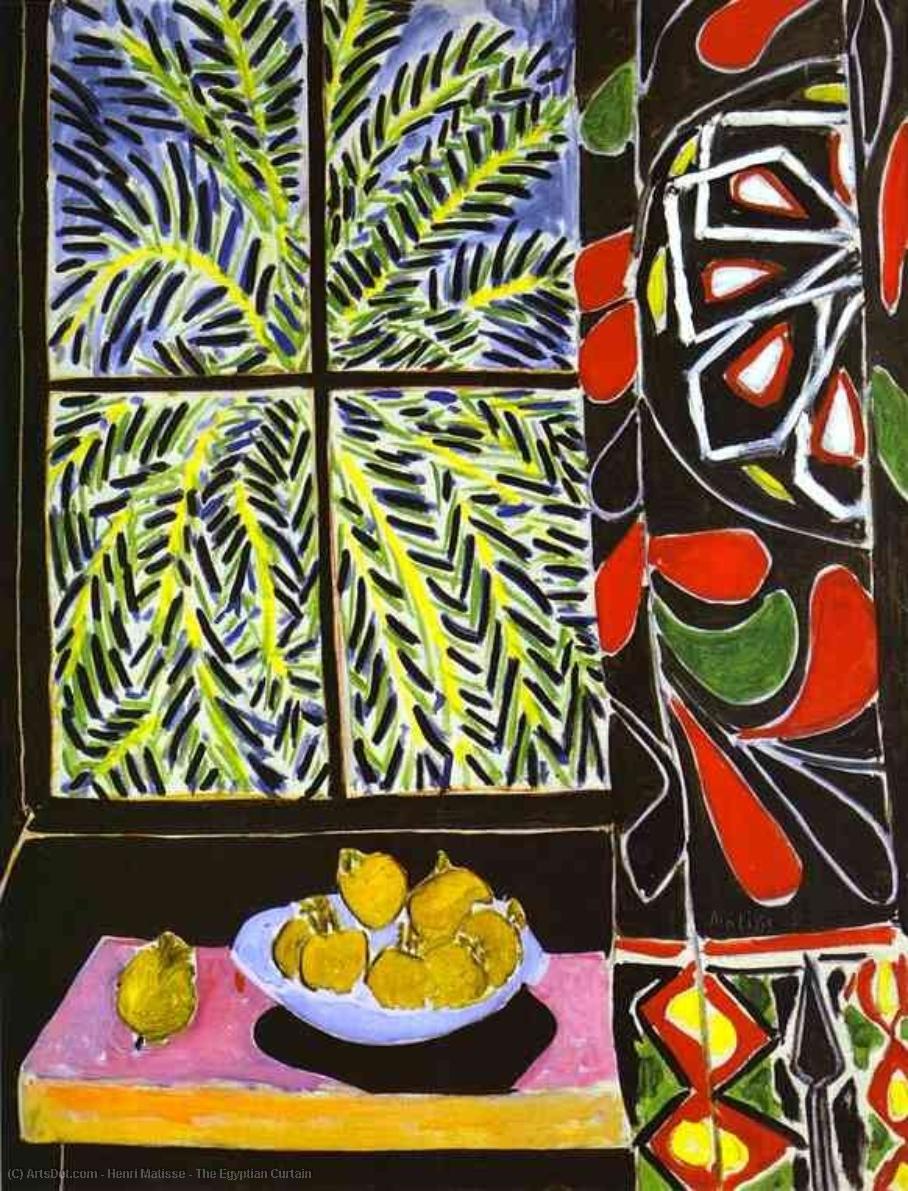
Interior with egyptian curtain, The Phillips Collect
Explore Henri Matisse (1869-1954): Fauvism's master of color! Discover iconic paintings, cut-paper collages & his influence on modern art. A leading French painter.
A Window into Matisse’s Soul: Exploring ‘Interior with Egyptian Curtain’
Henri Matisse's “Interior with Egyptian Curtain,” painted in 1948, transcends mere depiction; it embodies the artist’s signature Expressionist style and offers a glimpse into his profound engagement with color and cultural influences. This captivating artwork resides within The Phillips Collecton and exemplifies Matisse’s masterful ability to distill complex emotions into deceptively simple forms.
The Essence of Expressionism
Matisse, already a titan of artistic innovation by this period, had established himself as a pioneer of Fauvist painting—a movement characterized by its audacious use of unmixed pigments and rejection of traditional academic conventions. “Interior with Egyptian Curtain” continues this legacy, prioritizing color above all else. The dominant hues – vibrant oranges, yellows, and reds – pulsate against the muted tones of the wall and drapery, creating a dynamic visual experience that prioritizes feeling over precise representation. This deliberate disregard for realism serves to amplify the artwork’s emotional resonance, inviting viewers into Matisse's subjective perception of space and light.
A Symphony of Color and Texture
The painting’s technique is equally noteworthy. Matisse employed loose brushstrokes—a hallmark of Expressionism—to build up layers of pigment onto the canvas. These strokes aren’t blended smoothly; instead, they retain their individual character, resulting in a textured surface that captures the materiality of the scene. The artist meticulously rendered the folds of the Egyptian curtain, emphasizing its intricate patterns and adding depth to the composition. Furthermore, the placement of lemons—a recurring motif in Matisse's oeuvre—introduces an element of domestic tranquility juxtaposed against the boldness of color.
Symbolism Rooted in Exotic Influences
Beyond its formal qualities, “Interior with Egyptian Curtain” is laden with symbolic significance. The Egyptian curtain itself speaks to Matisse’s fascination with ancient cultures and his desire to explore universal themes of beauty and contemplation. Color symbolism plays a crucial role: oranges represent warmth, vitality, and optimism—qualities that permeate the entire artwork. The lemons symbolize freshness, purity, and resilience – mirroring Matisse's own unwavering spirit during a time marked by personal challenges.
Emotional Resonance and Artistic Legacy
Ultimately, “Interior with Egyptian Curtain” succeeds in conveying a palpable sense of serenity and contemplation. It’s more than just a depiction of a room; it’s an invitation to immerse oneself in Matisse’s artistic vision—a testament to his belief that color could communicate emotion directly. This artwork stands as a cornerstone of Matisse's oeuvre, demonstrating his enduring ability to capture the human condition through masterful brushwork and unwavering devotion to expressive color. Its influence continues to inspire artists today, cementing its place as an iconic masterpiece of 20th-century art.