Discover Henri Matisse’s ‘La Cour du Moulin’! A vibrant Fauvist masterpiece showcasing bold colors & serene rural scenes. Explore this iconic painting at the Musée Matisse.
Explore Henri Matisse (1869-1954): Fauvism's master of color! Discover iconic paintings, cut-paper collages & his influence on modern art. A leading French painter.
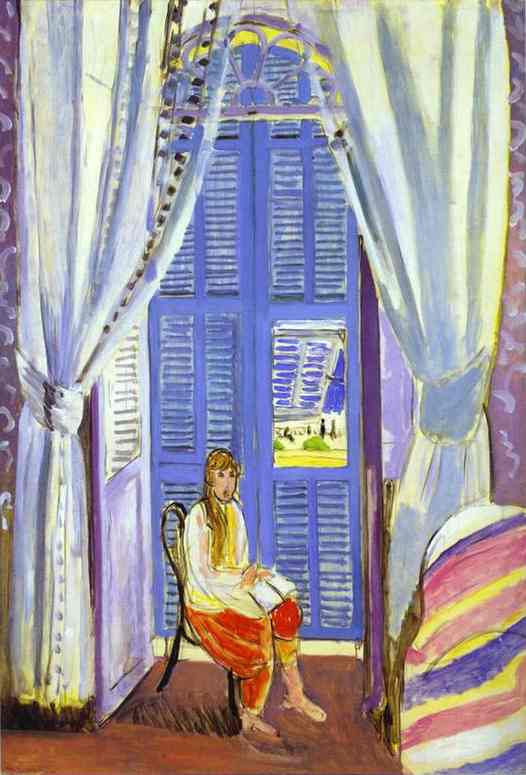
The French Window at Nice
The painting "The French Window at Nice" by Henri Matisse is a beautiful representation of a woman sitting in a chair near a window with blue shutters. She appears to be reading a book while enjoying the view outside. The room features a bed located towards the right side of the image and another smaller bed further back. There are two chairs, one where the woman is seated and another placed closer to the left side of the painting. A vase can also be seen on the left side of the room, adding an element of decoration to the scene.
Artistic Style and Influence
This painting is a prime example of Fauvism, a style characterized by vivid colors and energetic brushstrokes. Matisse was one of the leading artists associated with this movement, along with André Derain. The use of bold colors in "The French Window at Nice" creates a sense of warmth and tranquility, drawing the viewer into the serene atmosphere of the room. Fauvism rejected academic conventions, prioritizing emotional expression over realistic depiction—a radical departure from artistic traditions of the time. Matisse’s masterful handling of color exemplifies this ethos, capturing not just visual appearance but also conveying mood and feeling.
Historical Context
Painted in 1919, "The French Window at Nice" reflects the post-World War I era, where artists sought to create works that were more introspective and peaceful. This painting is part of a series of works Matisse created during his time in Nice, France, which are known for their calm and contemplative nature. The period immediately following the war was marked by disillusionment and uncertainty, yet artists like Matisse responded with optimism and beauty—a deliberate counterpoint to the grim realities of the conflict. This painting embodies this spirit of resilience and artistic renewal.
Other Works by Henri Matisse
Matisse's other notable works include Plum Blossoms, Green Background, Woman Reading at a Dressing Table (Interieur, Nice), and Poppies. These paintings showcase his versatility in capturing different moods and scenes through his unique style. He explored themes of nature, memory, and emotion with equal conviction, demonstrating an unwavering commitment to artistic innovation. His influence extends far beyond Fauvism, shaping the course of 20th-century art and inspiring generations of artists.
Museum Collections
Many of Matisse’s works are housed in renowned museums such as Musée National d'Art Moderne in Paris, France. This museum is a treasure trove for modern art enthusiasts, featuring an extensive collection of Cubism, Fauvism, and Expressionism. Visiting these institutions offers invaluable insight into the artist’s oeuvre and its enduring legacy.
Reproductions Available at ArtsDot.com
For those who appreciate the beauty of Matisse's work but cannot afford original pieces, handmade oil painting reproductions are available at ArtsDot.com. These high-quality reproductions capture the essence of Matisse’s style and can be a wonderful addition to any art lover’s collection. They allow you to experience the vibrancy and emotion of his masterpieces in your own home.
Conclusion
“The French Window at Nice” by Henri Matisse is a captivating piece that embodies the tranquility and beauty of Fauvism. Its serene atmosphere and vivid colors make it a masterpiece worth admiring. For those interested in exploring more of Matisse’s works or learning about other art movements, ArtsDot.com offers a wealth of information and beautiful reproductions to enhance your artistic journey. Discover the Masterpieces of Musée National d'Art Moderne (Paris-France) and explore the world of Fauvism through the works of Henri Matisse at ArtsDot.com.