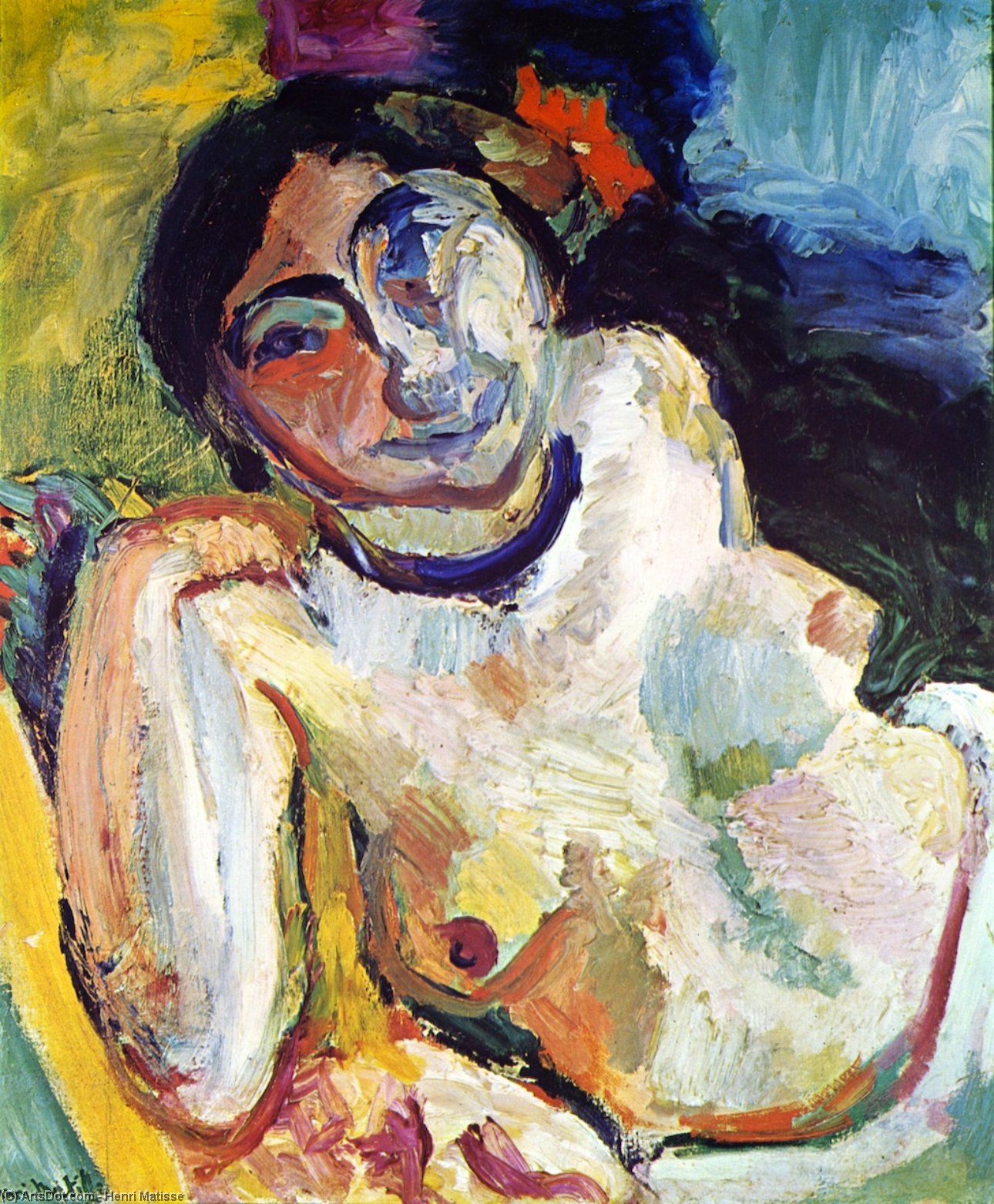
The Gypsy: A Fauvist Reverie
Henri Matisse’s “The Gypsy,” painted in 1905, stands as an emblem of Fauvism—a movement that irrevocably altered the course of modern art. More than just a depiction of a woman resting peacefully under the desert moon, it's a profound exploration of color and emotion, encapsulating the spirit of its time and cementing Matisse’s place among the pioneers of artistic innovation.
- Artist: Henri Matisse (1869-1954) – Born in Le Cateau-Cambrésis, France, Matisse embarked on a remarkable journey from law studies to becoming one of the most celebrated painters of the 20th century. His formative years were marked by illness and discovery—a serendipitous encounter with art supplies that ignited his lifelong passion for color.
- Dimensions: Measuring 55 x 46 cm, “The Gypsy” is a relatively modest canvas size but possesses an astonishing visual density thanks to Matisse’s masterful use of pigment. Currently housed in the Museum of the Annunciation in France, it offers visitors a direct connection to the genesis of Fauvist aesthetics.
- Style & Technique: Matisse’s approach was radically different from Impressionism and Post-Impressionism that preceded him. He deliberately rejected naturalistic representation, prioritizing expressive color over accurate depiction. Bold swathes of crimson, ochre, and turquoise dominate the composition, creating a vibrant tapestry that vibrates with warmth and vitality. Loose brushstrokes convey movement and texture, blurring boundaries between form and color—a technique characteristic of Fauvist painters.
The painting depicts a woman lying on her side, eyes closed in repose. Her serene expression is accentuated by the subtle interplay of light and shadow, guiding the viewer’s gaze towards her face – a focal point brimming with tranquility. A necklace adorns her neck, adding a detail that subtly reinforces the theme of ornamentation and beauty. In the background, a single red flower punctuates the landscape, amplifying the color palette and injecting an element of symbolic richness into the scene.
Beyond its aesthetic brilliance, “The Gypsy” resonates with deeper meanings rooted in Matisse’s personal beliefs and artistic vision. Influenced by Symbolist ideas—particularly those exploring dreams and subconsciousness—Matisse sought to capture not merely what he saw but what he felt. The woman embodies vulnerability and contemplation, inviting viewers to contemplate themes of rest, spirituality, and the transformative power of imagination.
- Historical Context: Fauvism emerged in Paris during 1905-1908, challenging established artistic conventions and paving the way for subsequent movements like Expressionism. Matisse’s work during this period reflects a broader cultural shift toward prioritizing emotion and subjective experience over objective observation.
- Related Works: Explore Matisse's other masterpieces at the Museum of the Annunciation in France – “Antibes,” “Luxe I Huile sur Toile Paris, Musée d’Art Moderne,” and “Standing Morocc” – to gain a fuller understanding of his artistic trajectory and enduring legacy.
"The Gypsy" continues to captivate audiences today with its audacious color palette and evocative atmosphere. It serves as a testament to Matisse's unwavering commitment to artistic experimentation and his profound ability to translate emotion into visual form—a timeless masterpiece that embodies the spirit of Fauvist innovation.