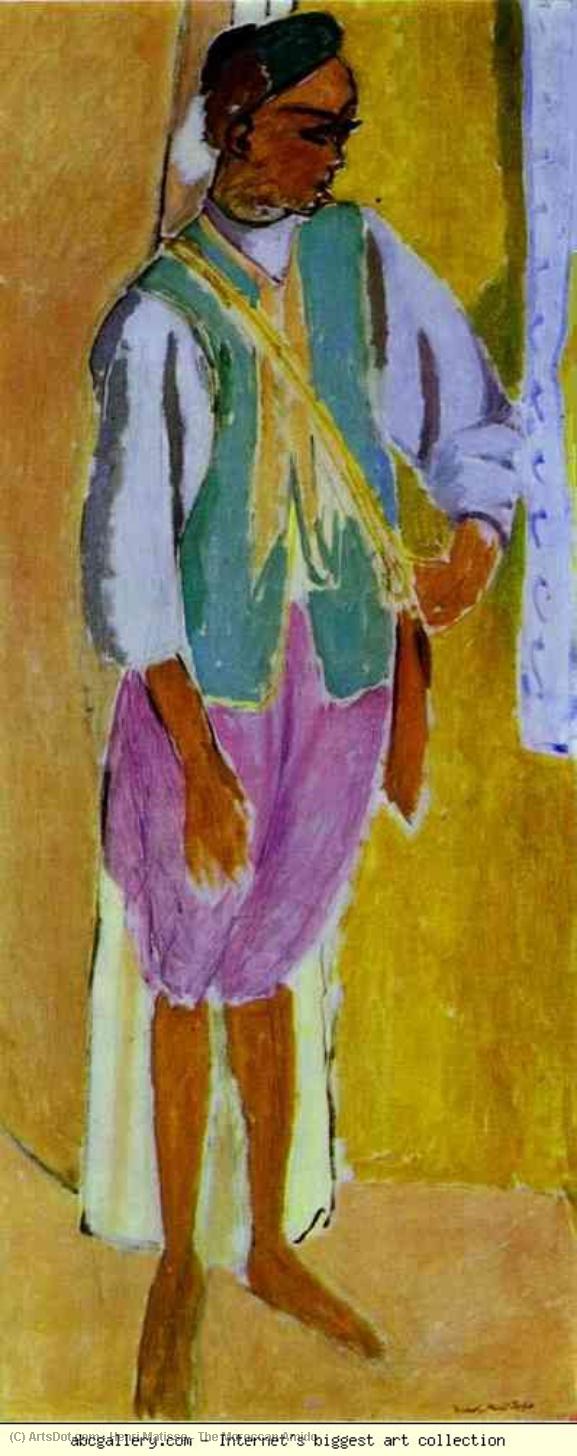
The Moroccan Amido: A Window into Matisse’s Soul
Henri Matisse's "The Moroccan Amido," painted in 1912, isn’t merely a portrait; it’s an immersion. This captivating work, part of a triptych exploring the vibrant culture of Morocco, offers a glimpse into Matisse’s revolutionary approach to color and form – a pivotal moment in the evolution of modern art. The painting depicts a woman, her identity deliberately obscured, standing before a window that acts as both a physical barrier and a portal to an imagined world. She is not presented with photographic realism but rather imbued with a sense of quiet contemplation, radiating an aura of dignified serenity.
Matisse’s signature Fauvist style explodes across the canvas. Bold swathes of crimson, turquoise, ochre, and lemon yellow dominate, creating a dazzling visual feast. These aren't colors that simply describe; they *are* the subject. He employs a technique known as “cloisonnism,” reminiscent of medieval stained glass, using flat planes of color separated by dark outlines – a deliberate simplification that intensifies the impact of each hue. The woman’s dress is a riot of patterned fabric, mirroring the decorative intensity of Matisse's approach to composition. Notice how he uses overlapping shapes and simplified forms to create depth and movement, eschewing traditional perspective in favor of an expressive, almost flattened space.
A Journey into Moroccan Culture
The painting’s title, “Amido,” refers to a type of Moroccan fabric – a rich, patterned textile often used for clothing and decoration. Matisse spent several months in Morocco in 1912, deeply influenced by the country's vibrant colors, intricate patterns, and exotic atmosphere. This trip marked a significant shift in his artistic direction, moving him away from the muted tones of his earlier work towards this explosion of color. The window itself is symbolic; it represents both a connection to the outside world and a barrier between the subject and the viewer. It invites us to imagine what lies beyond – perhaps a bustling Moroccan marketplace, a sun-drenched courtyard, or a distant landscape.
The Painter’s Palette: Technique and Innovation
Matisse's mastery of color is undeniable, but his technique was equally innovative. He often worked on multiple canvases simultaneously, allowing colors to bleed into one another and creating unexpected visual effects. This process, known as “simultaneous painting,” allowed him to intuitively explore the relationships between different hues and tones. The brushstrokes are loose and expressive, conveying a sense of spontaneity and immediacy. He utilized a technique called "broken color," applying small dabs or strokes of pure pigment directly onto the canvas, rather than mixing them on a palette. This created a shimmering effect that intensified the vibrancy of the colors.
Emotional Resonance: A Portrait of Quietude
Despite the intense visual energy of the painting, there’s an underlying sense of tranquility and introspection. The woman's gaze is averted, suggesting a private moment of reflection. Her posture is relaxed and dignified, conveying a quiet strength. Matisse wasn’t interested in capturing a likeness; he was striving to evoke a feeling – a mood of serenity and contemplation. "The Moroccan Amido" isn't just a beautiful painting; it’s an invitation to slow down, to appreciate the beauty of color and form, and to connect with the emotional power of art. It remains a testament to Matisse’s genius and his profound impact on the course of modern art.