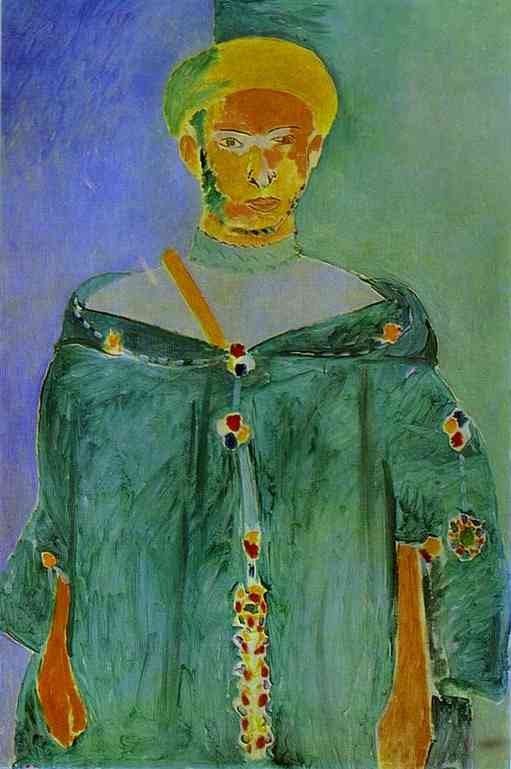
A Bold Statement of Color and Form: Henri Matisse’s “The Moroccan in Green”
Henri Matisse's "The Moroccan in Green," painted in 1913, stands as a cornerstone of Fauvist art—a movement that irrevocably challenged the conventions of Impressionism and ushered in an era of expressive abstraction. More than just a depiction of a figure, it’s a visceral exploration of color itself, prioritizing emotional impact over meticulous realism.
Subject Matter and Composition: A Singular Presence
The painting centers around a solitary Moroccan man—likely a Riffian warrior—seated in a simple robe. Matisse deliberately minimized detail, focusing instead on conveying mood through the dominant hues of green and yellow. The figure occupies almost the entire canvas space, emphasizing his importance as the focal point of visual interest. This deliberate simplification aligns with Matisse’s broader artistic philosophy: to distill form into its essence, capturing the spirit rather than merely reproducing appearances.
Fauvist Technique: Unleashing Color's Power
Matisse employed a technique characteristic of Fauvism—a radical departure from academic painting. Thickly applied brushstrokes create textured surfaces and imbue the colors with an almost luminous intensity. The palette is deliberately jarring, utilizing cadmium green as its primary hue alongside complementary yellow tones. These bold colors aren’t blended harmoniously; they clash and vibrate against each other, mirroring the artist's desire to express emotion directly.
Historical Context: Embracing Exoticism Amidst Artistic Innovation
"The Moroccan in Green" was created during Matisse’s second voyage to Morocco—a period marked by intense artistic experimentation. The painting reflects the broader fascination with exotic cultures prevalent at the time, albeit filtered through Matisse's unique aesthetic vision. It represents a reaction against the prevailing stylistic trends of Impressionism and Symbolism, asserting Fauvist principles as a forceful assertion of artistic freedom.
Symbolic Resonance: Beyond Representation
While seemingly straightforward in its depiction, “The Moroccan in Green” carries significant symbolic weight. The green robe symbolizes vitality and renewal—a visual echo of the desert landscape surrounding Tanger where Matisse executed the painting. Simultaneously, it embodies a sense of stillness and contemplation, mirroring the man’s closed eyes. Matisse's masterful use of color transcends mere representation, conveying an emotional state that speaks to themes of solitude, resilience, and the transformative power of nature.