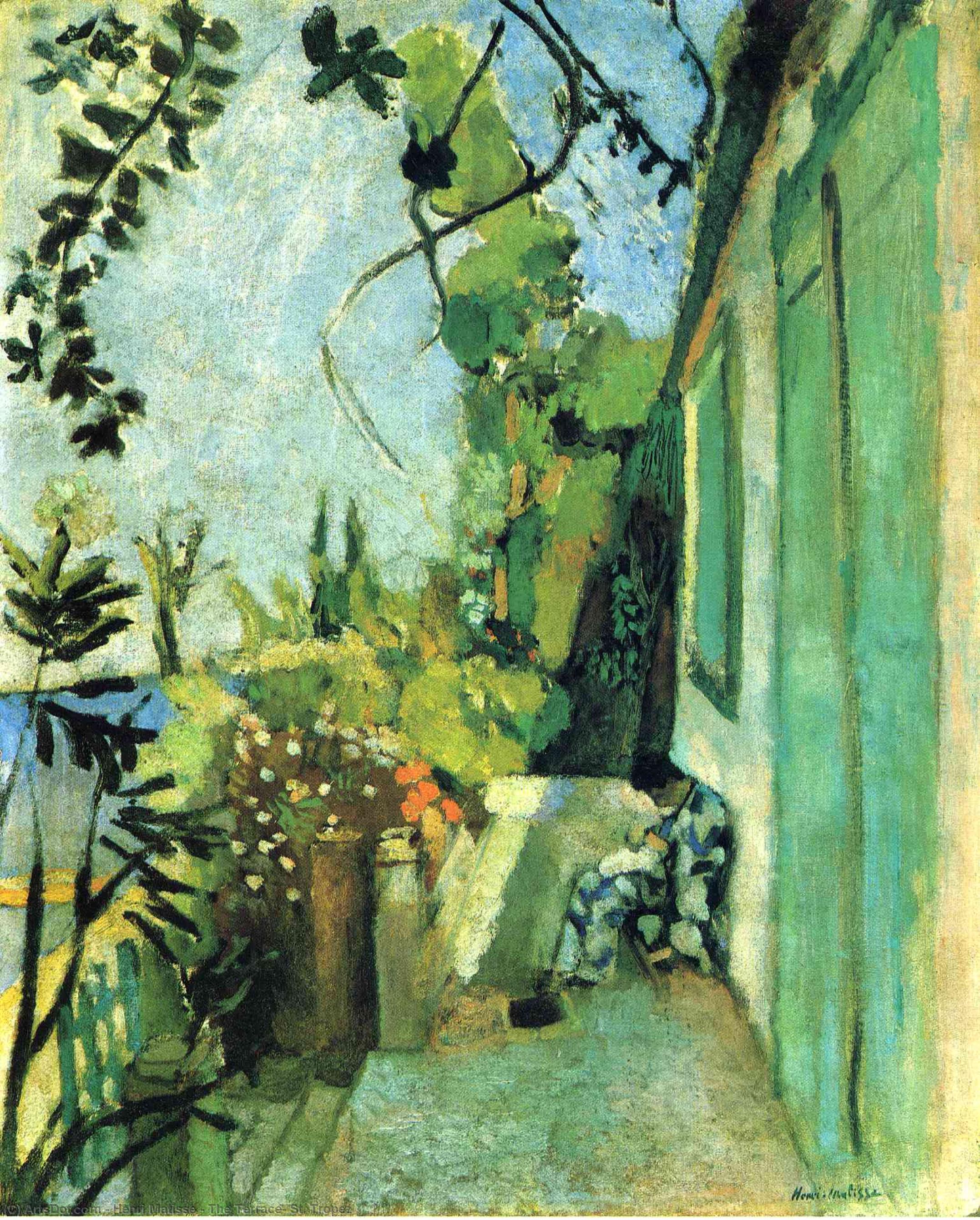
The Terrace, St. Tropez
Henri Matisse’s “The Terrace, St. Tropez,” painted in 1904, stands as a cornerstone of Post-Impressionism and embodies the vibrant spirit of the Mediterranean landscape during its formative years. More than just a depiction of scenery, it's an exploration of color, light, and emotion—elements that define Matisse’s artistic vision at this pivotal moment.
The painting captures a tranquil scene featuring a simple terrace overlooking the sea, bathed in warm sunlight. Two figures sit comfortably on a bench, seemingly absorbed in conversation, adding a human element to the serene backdrop. Lush greenery surrounds the terrace— potted plants and climbing vines—creating an inviting atmosphere that speaks to Matisse’s fascination with nature.
Matisse's masterful technique is immediately apparent. Loose brushstrokes dominate the canvas, conveying movement and spontaneity while simultaneously capturing the textures of foliage and architectural details. The color palette is bold and expressive, dominated by shades of green and blue— hues that evoke the freshness of the Riviera air and the shimmering expanse of the sea.
A strong light source casts shadows across the terrace, highlighting the contours of the plants and emphasizing the materiality of the stone walls. Matisse’s compositional choices draw the viewer's eye inwards, inviting contemplation and immersing them in the sensory experience of St. Tropez. The painting isn’t merely a visual record; it’s an emotional response to its surroundings—a celebration of beauty and tranquility.
Currently housed at the Isabella Stewart Gardner Museum in Boston, Massachusetts, “The Terrace” exemplifies Matisse's commitment to capturing atmosphere and conveying emotion through color and form. Its influence extends beyond its immediate aesthetic qualities, solidifying Matisse’s position as a pioneer of Fauvism—a movement that championed unrestrained chromatic intensity and challenged traditional artistic conventions.
Alongside André Derain, Matisse spearheaded this revolutionary art movement which lasted from 1905 to 1908. Other notable artworks by Henri Matisse include “Odalisque” (1917), “Fatma (II)” (1912), and “Still Life with Lemon” (1917). These pieces showcase his innovative use of color and form, as well as his ability to communicate profound feelings through art. For those interested in delving deeper into Post-Impressionism’s legacy, consider exploring the links provided:
Further enriching our understanding of Matisse’s artistic journey is the exploration of related artworks and biographical information. Consider visiting these resources: