A Symphony of Color and Reflection: Exploring Matisse’s “The Three O'Clock Sitting”
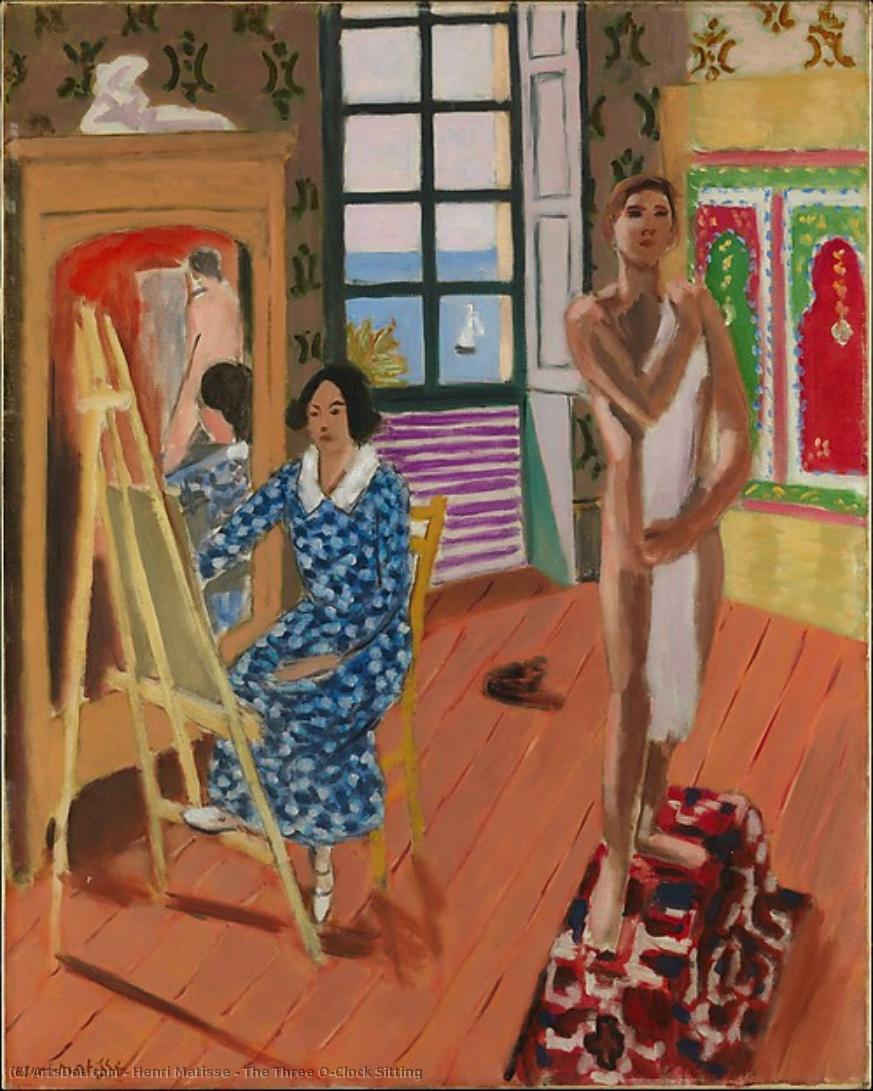
“The Three O’Clock Sitting,” painted in 1924 by Henri Matisse, stands as a quintessential embodiment of Matisse’s Nice-period aesthetic—a realm where vibrant hues dance across textured surfaces and invite contemplation. More than just a depiction of three women engaged in conversation within a richly adorned studio, this artwork is a masterful orchestration of visual elements designed to convey profound emotional resonance and intellectual stimulation.
- Subject Matter & Composition: The scene captures a moment of domestic tranquility—three women seated before an easel, bathed in the diffused light filtering through a window overlooking the Mediterranean Sea. Matisse’s deliberate positioning of figures against a backdrop of expansive landscape emphasizes both intimacy and connection to nature. Notably, Henriette Darricarrère, Matisse's favored model at the time, occupies center stage, gazing intently at her reflection in a mirror—a gesture that speaks volumes about introspection and artistic self-awareness.
- Style & Technique: Matisse’s signature style is instantly recognizable through his bold use of color – a palette dominated by reds, yellows, and blues – applied with loose, expressive brushstrokes. This technique, characteristic of Fauvist painting, prioritizes visual sensation over meticulous realism. The artist employs a layered approach, utilizing thick impasto to build up textural surfaces that capture the vibrancy of light and shadow.
Historical Context & Influences
Painted during Matisse’s prolific winter sojourn in Nice, “The Three O'Clock Sitting” reflects the broader artistic currents of the era. The influence of African art is palpable—evident in the patterned wallpaper and appliquéd textiles adorning the studio space. These elements hark back to Matisse’s fascination with primitive cultures and their expressive use of color and form, a preoccupation that profoundly shaped his artistic vision. Furthermore, the inclusion of a plaster sculpture of a reclining female figure underscores Matisse's ongoing exploration of sculptural representation alongside painting.
- Symbolism & Emotional Impact: The mirror serves as a powerful symbol—representing not only physical reflection but also psychological introspection and self-representation. The women’s gaze directs the viewer’s attention inward, prompting contemplation on themes of identity, femininity, and artistic creation. Matisse's masterful manipulation of color contributes to an atmosphere of warmth and serenity, inviting viewers to immerse themselves in the beauty of the scene.
- Decorative Potential: “The Three O’Clock Sitting”’s bold colors and textured surfaces lend themselves beautifully to interior design projects. Reproductions offer a captivating way to infuse spaces with Matisse's luminous aesthetic—bringing a touch of Mediterranean inspiration and artistic sophistication into any home.
A Legacy of Color and Impression
Henri Matisse’s “The Three O’Clock Sitting” remains an enduring testament to his artistic genius. It exemplifies the Fauvist movement's commitment to prioritizing emotion and visual impact over traditional conventions, cementing Matisse’s place as one of the most influential artists of the 20th century. Its continued appeal lies in its ability to transport viewers back to a moment of quiet contemplation—a celebration of color, form, and the human spirit.