Explore the revolutionary art of Henri Matisse! Discover his bold use of color, Fauvist origins, and lasting impact on modern painting. A comprehensive guide for art enthusiasts.
Explore Henri Matisse (1869-1954): Fauvism's master of color! Discover iconic paintings, cut-paper collages & his influence on modern art. A leading French painter.
A Symphony in Color: Exploring Henri Matisse’s Untitled (4212)
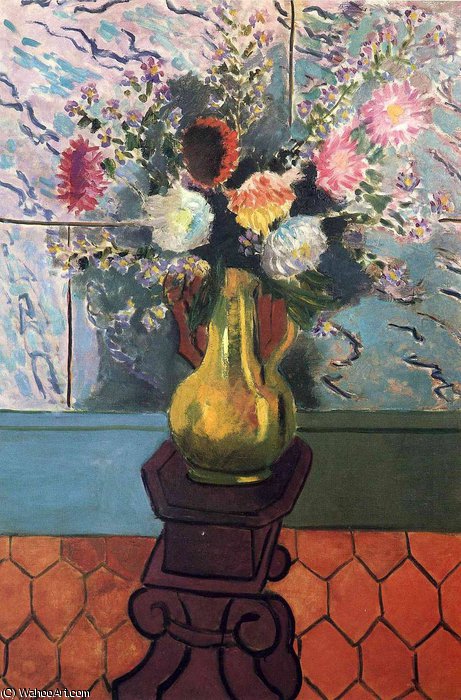
The painting “untitled (4212)” by Henri Matisse stands as a testament to the artist's unwavering commitment to expressive color and simplified form—principles that cemented his place among the pioneers of Fauvist art. Executed sometime between 1906 and 1913, this piece exemplifies Matisse’s masterful manipulation of pigment to convey emotion and capture the essence of its subject matter: a serene still life featuring an abundance of flowers arranged within a vase against a calming blue backdrop.
The Essence of Fauvist Style
Matisse's approach to painting departed dramatically from Impressionism’s focus on capturing fleeting moments of light and atmosphere. Instead, he championed “pure color,” rejecting traditional shading and perspective in favor of bold hues that prioritized visual impact over realistic representation. This stylistic choice wasn’t merely aesthetic; it was a deliberate rebellion against academic conventions and an assertion of artistic freedom—a cornerstone of the Fauvist movement which sought to liberate painting from constraints imposed by observation. The vibrant reds, yellows, and blues dominate the canvas, creating a luminous effect that draws the viewer's eye directly into the heart of the composition.
Composition and Technique: A Delicate Balance
The arrangement of flowers within the vase is meticulously considered. Matisse skillfully employs overlapping planes of color to create depth and texture without resorting to conventional shading techniques. Each flower—ranging from large poppies to smaller daisies—is rendered with confident brushstrokes, capturing their individual contours and highlighting their textural qualities. The inclusion of a potted plant adds another layer of visual interest, anchoring the floral display and subtly reinforcing the theme of natural beauty. Notice how Matisse’s technique prioritizes clarity and vibrancy, ensuring that every hue contributes to the overall harmony of the scene.
Historical Context: Embracing Modernity
“untitled (4212)” emerged during a period of significant artistic upheaval—the early 20th century saw artists challenging established norms and experimenting with new visual languages. Matisse’s Fauvist style resonated powerfully with contemporaries who were eager to break free from the constraints of academic art, mirroring broader societal shifts toward experimentation and innovation. The painting reflects the burgeoning interest in exploring subjective experience and conveying emotion through color—a trend that foreshadowed developments in Expressionism and Surrealism.
Symbolic Resonance: Beauty and Tranquility
Beyond its formal qualities, “untitled (4212)” carries a profound symbolic resonance. Flowers have long been associated with themes of fertility, renewal, and beauty—concepts central to Matisse’s artistic vision. The tranquil blue wall serves as a counterpoint to the exuberant colors of the flowers, creating a visual dialogue that underscores the painting's contemplative mood. Ultimately, Matisse invites us to appreciate the simple pleasures of nature and to contemplate the transformative power of color in conveying emotion and capturing the sublime.
A Timeless Masterpiece: Inspiring Interior Design
Today, “untitled (4212)” continues to inspire designers and collectors alike. Its bold palette and masterful composition lend themselves beautifully to interior spaces, injecting vibrancy and warmth into any room. Reproductions of this iconic artwork offer a captivating glimpse into Matisse’s artistic genius—a celebration of color and form that transcends time and resonates with audiences across generations.