Explore Henri Matisse (1869-1954): Fauvism's master of color! Discover iconic paintings, cut-paper collages & his influence on modern art. A leading French painter.
A Portrait of Contemplation: Exploring Henri Matisse’s Untitled (5138)
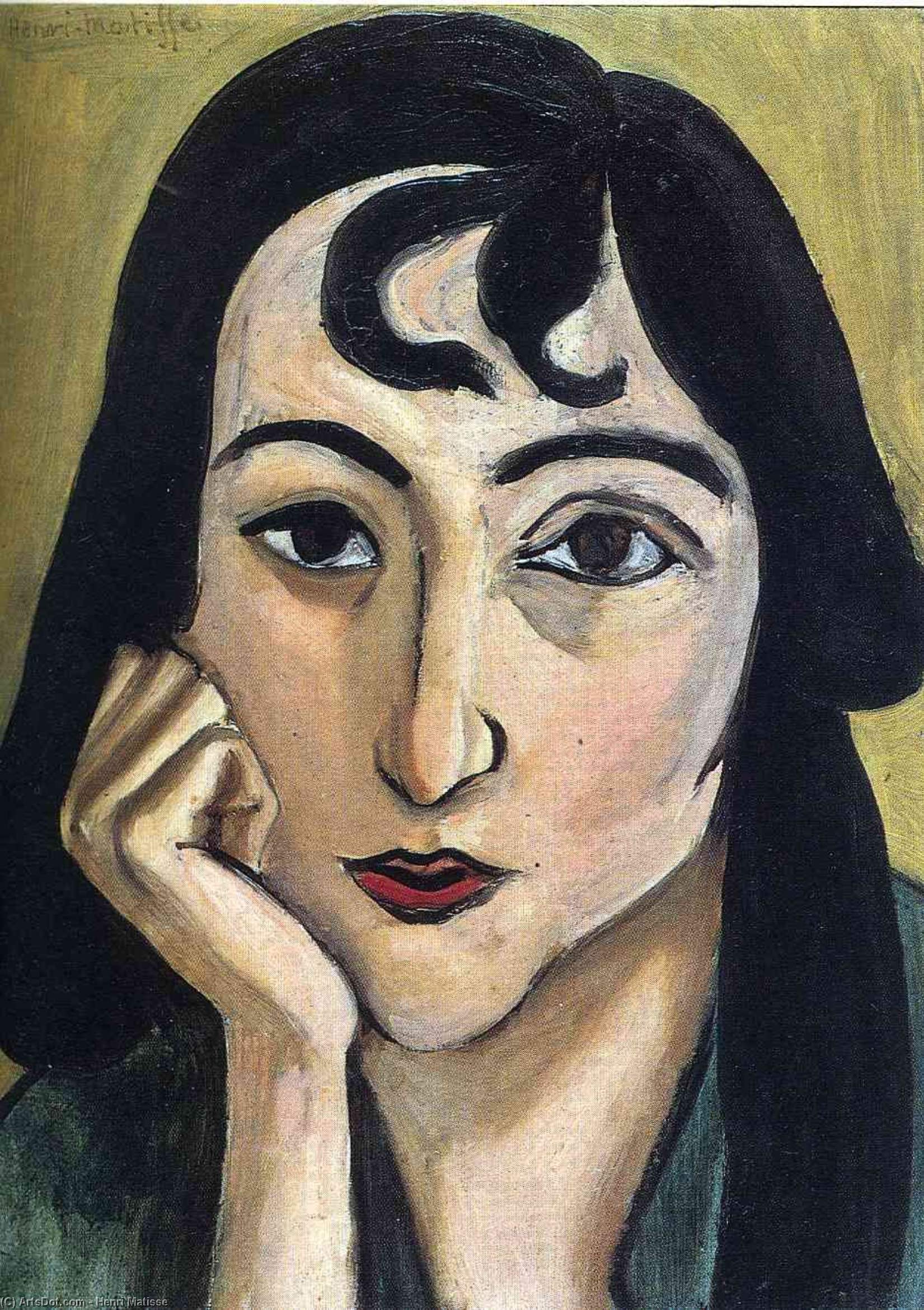
The painting, simply titled “Untitled (5138),” presents a striking image—a woman bathed in muted tones of black and white, her gaze directed upwards with an expression that speaks volumes about inner reflection. More than just a depiction of a figure, it embodies Matisse’s signature style: bold simplification combined with masterful tonal gradation, resulting in an artwork that transcends mere representation to convey profound emotion. This piece exemplifies the artist's unwavering commitment to capturing not just what is seen but also what is felt—a cornerstone of his artistic philosophy.
The Style and Technique of Matisse’s Vision
Matisse’s approach to painting was revolutionary for its time, rejecting academic conventions in favor of a vibrant palette that prioritized expressive color over meticulous detail. However, “Untitled (5138)” deliberately eschews this characteristic boldness, opting instead for a monochrome scheme—a calculated decision that amplifies the psychological depth of the portrait. The artist employs a technique known as cloisonné painting, where areas of pigment are separated by thin lines of white paint, creating distinct planes of color and texture. This method lends an ethereal quality to the image, emphasizing contours and highlighting the woman’s facial features with remarkable precision. It's a masterful demonstration of how Matisse could achieve maximum impact through minimal visual complexity.
Historical Context: The Rise of Expressionism
Painted around 1947, “Untitled (5138)” sits firmly within the burgeoning movement of Expressionism—a reaction against Impressionistic realism that prioritized subjective experience and emotional intensity. Following World War II, Matisse was increasingly drawn to exploring themes of solitude and introspection, mirroring anxieties prevalent in the postwar era. The painting reflects a broader artistic preoccupation with conveying inner states rather than external appearances, aligning perfectly with the Zeitgeist of the period. It’s important to note that Matisse himself considered this piece as part of his ongoing investigation into the fundamental elements of human existence—a quest for beauty and truth expressed through simplified forms and tonal harmonies.
Symbolism Beyond Appearance: The Woman's Upward Glance
The woman’s upward gaze is arguably the painting’s most compelling element, symbolizing a yearning for transcendence or perhaps simply an absorption in contemplation. While Matisse rarely explicitly articulated symbolic meanings within his works, art historians have interpreted this gesture as representing aspiration—a desire to escape earthly concerns and connect with something greater than oneself. The muted color palette contributes to this sense of solemnity and introspection, reinforcing the emotional core of the portrait. It invites viewers to consider questions about identity, spirituality, and the human condition – themes that resonate powerfully across cultures and generations.
Emotional Impact: A Moment Frozen in Time
Ultimately, “Untitled (5138)” succeeds in capturing a fleeting moment of profound stillness—a snapshot of inner thought rendered with breathtaking subtlety. The painting’s understated elegance speaks to Matisse's belief that art should evoke emotion without resorting to grand gestures or overt narratives. It encourages viewers to pause and consider the complexities of human experience, prompting reflection on themes of vulnerability and resilience. This artwork remains a testament to Matisse’s ability to distill profound psychological insight into a deceptively simple visual form—a timeless masterpiece destined to inspire admiration for years to come.