A Symphony of Form and Color: Exploring Matisse’s Abstract Vision
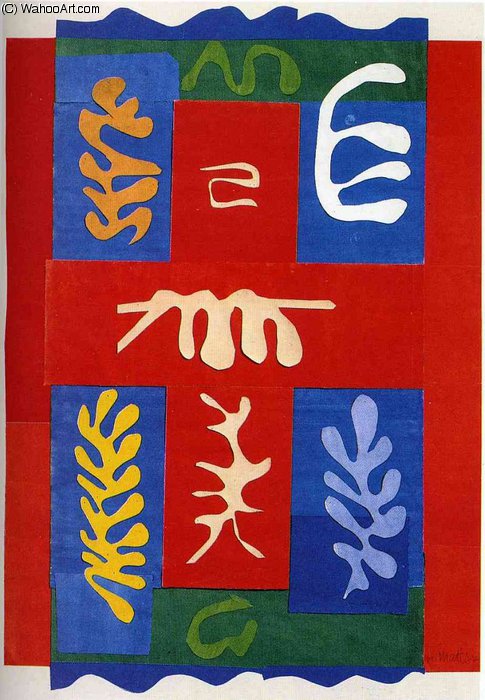
This captivating work by Henri Matisse is a vibrant exploration of abstract form and color, echoing the revolutionary spirit of his late career. Created during a period where physical limitations led him to embrace *papiers découpés* – cut-paper collage – this piece exemplifies Matisse's ability to distill complex ideas into strikingly simple compositions. While undated, it clearly aligns with the aesthetic principles he developed in the 1940s and 50s, a period marked by joyous experimentation and a renewed focus on decorative harmony.
Deconstructing Representation: Style & Technique
The artwork’s style is firmly rooted in Abstract Expressionism, yet retains a distinctively Matissean sensibility. It moves away from representational imagery, instead prioritizing the emotional impact of color and shape. The composition is built upon strong vertical divisions, creating a rhythmic structure that draws the eye upwards.
Matisse's technique here appears to be primarily collage, utilizing carefully cut and arranged shapes – reminiscent of leaves or organic forms – with clean, decisive edges. This method allowed him to bypass traditional painting techniques and directly engage with color as a structural element. The flatness of the application further emphasizes the two-dimensional nature of the work, rejecting illusionistic depth in favor of pure visual impact.
Echoes of Fauvism & Beyond: Historical Context
Henri Matisse (1869-1954) was a pivotal figure in modern art, initially known as a leader of the *Fauvist* movement – characterized by its bold, non-naturalistic use of color. While this work departs from the representational subjects often found in his earlier Fauvist paintings, it retains that same commitment to vibrant hues and expressive freedom. Later in life, facing health challenges, Matisse reinvented his artistic practice with collage. This period represents a culmination of his lifelong exploration of color, form, and simplification – a pursuit of essential qualities that transcends mere imitation of the visible world. His work influenced generations of artists, paving the way for further abstraction and experimentation.
Symbolism & Emotional Resonance
The symbolism within this piece is subtle yet evocative. The leaf-like forms suggest a connection to nature, but their stylized rendering prevents any literal interpretation. Instead, they function as abstract elements contributing to the overall dynamic energy of the composition.
The interplay of colors – saturated and bold – evokes feelings of joy, vitality, and optimism. The work’s lack of traditional perspective creates a sense of immediacy and invites viewers to engage with the artwork on a purely visual level, experiencing its emotional impact directly.
Interior Design & Collectibility
This piece would serve as a striking focal point in any modern or contemporary interior. Its vibrant color palette complements minimalist spaces while adding energy and sophistication. The abstract nature of the work allows it to integrate seamlessly with diverse design schemes, from Scandinavian simplicity to bold maximalism. As a representative example of Matisse’s late-career explorations, this artwork holds significant collectible value for art enthusiasts and investors alike. A high-quality reproduction would bring the artist's innovative spirit and joyful aesthetic into any home or office.
- Style: Abstract Expressionism, Collage
- Artist: Henri Matisse (1869-1954)
- Materials: Likely colored paper/cardboard and adhesive.
- Key Features: Bold colors, simplified forms, vertical composition, dynamic rhythm