A Study in Stillness and Shadow
In the quiet corners of art history, few moments feel as profoundly intimate as Henri Matisse’s
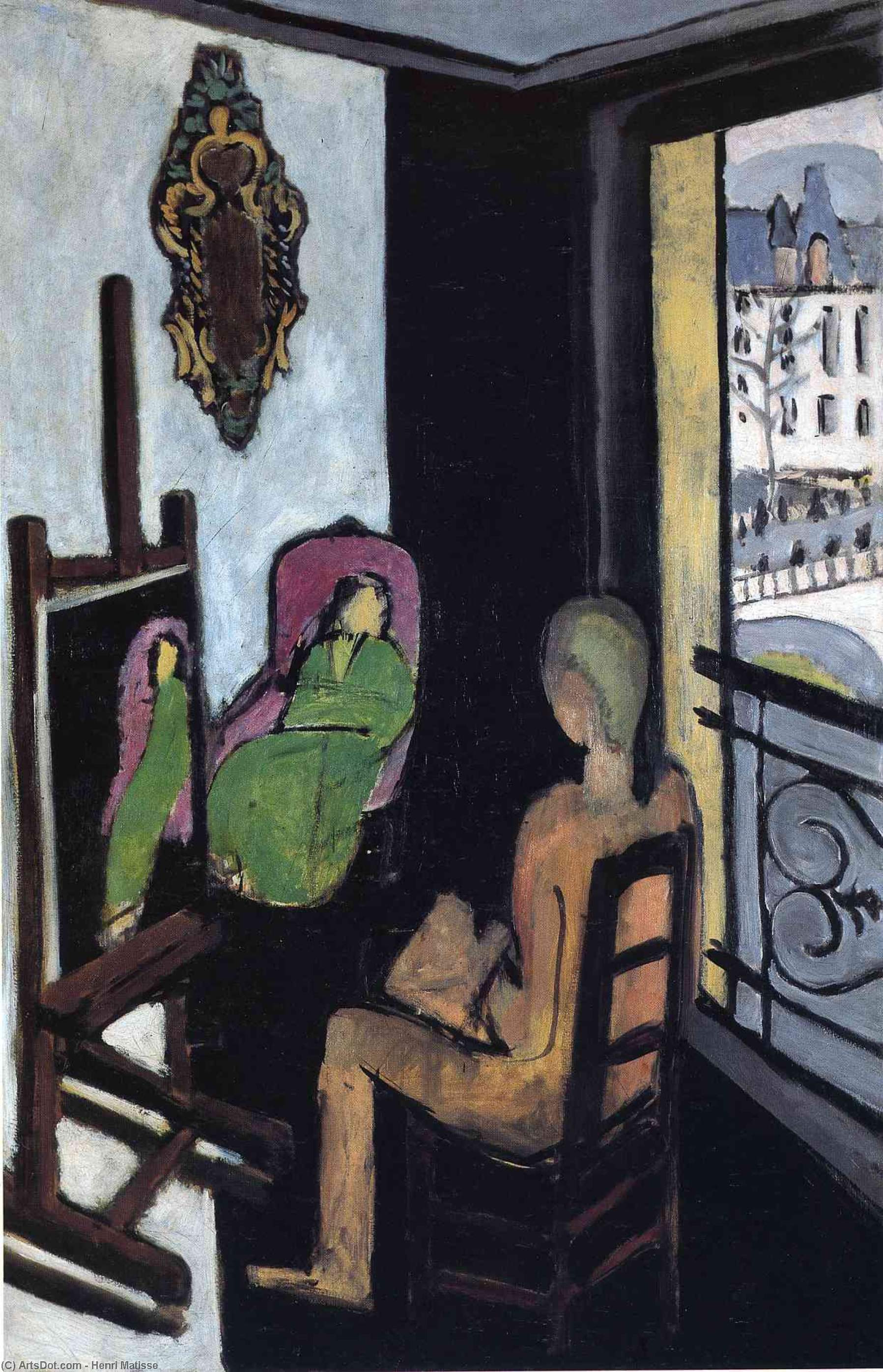
Untitled (8210). Within this monochrome composition, we find a world distilled to its most essential elements: a solitary man, seated with his back to us, lost in the silent dialogue of a book. Around him, the scene breathes with a subtle, rhythmic life; two figures stand as silent sentinels on either side, while a delicate bird perched to the left introduces a whisper of the natural world. It is a painting that does not demand attention through clamor, but rather invites it through a deep, meditative serenity. The composition creates a beautiful tension between the stillness of the reader and the potential movement of the surrounding figures, offering a visual sanctuary for any observer.
The Architecture of Line and Light
Though Matisse is celebrated as the pioneer of
Fauvism—a movement defined by its "wild" and unrestrained use of color—this particular work reveals his mastery over a different medium: the interplay of light, shadow, and form. Painted between 1913 and 1914, during a pivotal era of his stylistic evolution, the piece showcases a technique where fluid lines and meticulous tonal shading replace the need for vibrant pigments. The artist’s hand is evident in every confident stroke that delineates the chair and the seated figure, creating a sense of texture that feels almost tactile. For the discerning collector or interior designer, this work offers a sophisticated balance of
expressive simplification and structural depth, making it an ideal centerpiece for spaces that value understated elegance and classical strength.
An Eternal Resonance for Modern Spaces
Beyond its technical brilliance,
Untitled (8210) carries an emotional weight that transcends the era of its creation. It captures a universal human experience: the beauty of a quiet moment captured in time. The monochrome palette provides a timeless quality that allows the artwork to anchor a room without overwhelming it, making it a versatile choice for high-end art curation.
When integrating such a masterpiece into a contemporary interior, one considers its unique ability to:
- Establish Atmosphere: It provides a focal point of contemplation, grounding a room with its peaceful, introspective energy.
- Complement Decor: The lack of color ensures seamless integration with both minimalist modernism and rich, traditional textures.
- Connect to History: Owning a high-quality reproduction allows for a direct, tactile connection to the revolutionary spirit of early 20th-century modernism.