A Symphony of Color and Contemplation
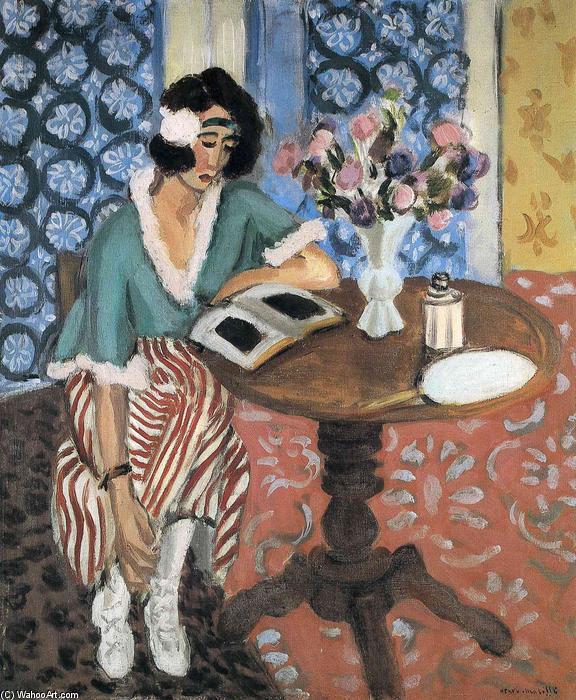
In the quiet corners of art history, few moments capture the essence of serene introspection as beautifully as Henri Matisse’s “Woman Reading.” Painted during a pivotal era in the late 19th century, this masterpiece serves as a profound window into the soul of Post-Impressionism. The scene invites us into a private sanctuary, where Madame Matisse—the artist's beloved wife—is lost in the transformative power of literature. As she sits at a table adorned with delicate floral arrangements and sun-drenched peaches, there is a palpable sense of stillness that transcends the canvas. It is not merely a depiction of a woman reading; it is a masterful distillation of emotion, where the boundaries between the physical world and the internal landscape of thought begin to blur.
The technique employed by Matisse in this early work reveals a burgeoning genius, one that would eventually redefine modern art through Fauvism. Moving away from the rigid constraints of photographic realism, Matisse utilizes loose, expressive brushstrokes that prioritize the essence of his subject over meticulous anatomical detail. This textured approach creates a surface that seems to pulsate with a life of its own. His palette is a deliberate dance of vibrant reds, warm yellows, and deep blues—colors that are not strictly naturalistic but are instead used to evoke a specific emotional resonance. For the discerning collector or interior designer, this interplay of light and bold pigment offers a dynamic energy that can breathe vitality into any sophisticated space.
Symbolism and the Art of Living
Beyond its aesthetic brilliance, “Woman Reading” is rich with symbolic layers that reward deep contemplation. The presence of peaches on the table serves as more than just a still-life element; they act as symbols of fertility, abundance, and the sweetness of life, providing a lush contrast to the quiet, focused posture of the subject. Matisse skillfully captures a mood of tranquil concentration, where the woman’s slightly tilted head and downward gaze suggest a complete immersion in another world. This theme of escapism—the idea that a book can transport a reader far beyond the confines of a cluttered or mundane room—is a universal sentiment that resonates with viewers across generations.
Historically, this painting represents Matisse’s decisive break from academic conventions. Influenced by the revolutionary spirits of Renoir and Cézanne, he sought to create an art form that spoke directly to the human spirit through color and form. For those looking to adorn their homes with a high-quality reproduction, this piece offers more than just decoration; it provides a focal point of intellectual and emotional depth. It is an invitation to slow down, to find beauty in the quiet moments, and to surround oneself with the enduring legacy of one of the greatest masters of the 20th century.