A Quiet Moment of Modernity: Exploring Matisse’s “Woman Reading at a Dressing Table (Interieur, Nice)”
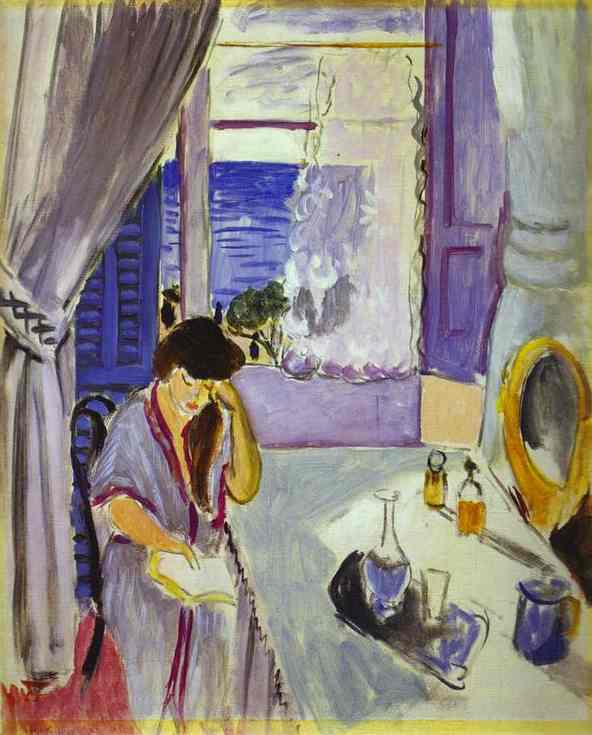
Henri Matisse's 1919 painting, *Woman Reading at a Dressing Table (Interieur, Nice)*, offers a captivating glimpse into the intimate world of domestic life, rendered with the revolutionary spirit of Fauvism. This oil on canvas (74 x 61 cm) isn’t merely a depiction of a woman reading; it's an exploration of color, form, and emotional resonance that defines Matisse’s pivotal role in modern art.
Subject & Composition: A Study in Interiority
The scene unfolds within a softly lit interior, likely a bedroom or dressing room in Nice, France. A woman is absorbed in her reading, seated before a dressing table. The composition isn't rigidly structured; instead, Matisse employs a deliberate asymmetry. Objects populate the space – a dining table subtly visible with wine glasses and bottles suggesting recent conviviality, vases brimming with floral arrangements, and a potted plant adding a touch of natural life. These elements aren’t simply props but contribute to a sense of lived-in comfort and quiet contemplation. The open doorway revealing a vibrant sky introduces an element of expansive freedom contrasting the enclosed interior space.
Fauvist Style & Artistic Technique
This painting is a prime example of Matisse's Fauvist period, characterized by its bold, non-naturalistic use of color and energetic brushwork. Matisse doesn’t aim to replicate reality; he *interprets* it through vibrant hues – purples, blues, and oranges dominate the palette, creating a harmonious yet stimulating visual experience. The lines are fluid and gestural, defining forms with an expressive quality rather than precise detail. Notice how shapes are simplified and somewhat abstracted, flattening perspective and emphasizing the two-dimensionality of the canvas. The visible brushstrokes contribute to a tactile texture, inviting the viewer to appreciate the physicality of the paint itself.
Historical Context & Matisse’s Evolution
Created in 1919, *Woman Reading at a Dressing Table* reflects a period of transition and recovery following World War I. Matisse, having already established himself as a leader of Fauvism alongside artists like André Derain and Maurice de Vlaminck, was moving towards a more refined and decorative style. His time in Nice, with its Mediterranean light and atmosphere, profoundly influenced his work during this period. This painting demonstrates his ongoing exploration of interior scenes – *interieurs* – which became a recurring theme throughout his career, offering spaces for coloristic experimentation and emotional expression.
Symbolism & Emotional Impact
The symbolism within the painting is subtle yet potent. The closed book suggests introspection and a retreat into inner thought. The mirror reflecting the woman’s image alludes to self-awareness and identity. The open doorway, bathed in light, represents a connection to the outside world – possibility, freedom, or perhaps even longing. Overall, the painting evokes a sense of peaceful solitude, quiet contemplation, and gentle melancholy. It's an invitation to pause, reflect, and appreciate the beauty of everyday moments.
Legacy & Collecting
*Woman Reading at a Dressing Table (Interieur, Nice)* resides in the prestigious collection of the
Musée National d’Art Moderne in Paris, solidifying its place within art history. Matisse's influence on subsequent generations of artists is undeniable; his emphasis on color and form continues to inspire contemporary painters today. For collectors and interior designers seeking a piece that embodies both artistic innovation and serene beauty, this painting – or a high-quality reproduction – offers a timeless addition to any space. It’s a work that invites quiet contemplation and adds a touch of sophisticated elegance to its surroundings.
- A cornerstone of Fauvism, demonstrating Matisse's revolutionary use of color.
- An intimate portrayal of domestic life, capturing a moment of peaceful solitude.
- A testament to Matisse’s evolving style, bridging the gap between early Fauvism and his later decorative works.
- A visually striking piece that adds vibrancy and sophistication to any collection or interior.