A Glimpse into Rural Portugal: “Alentejano Vegetable Patch”
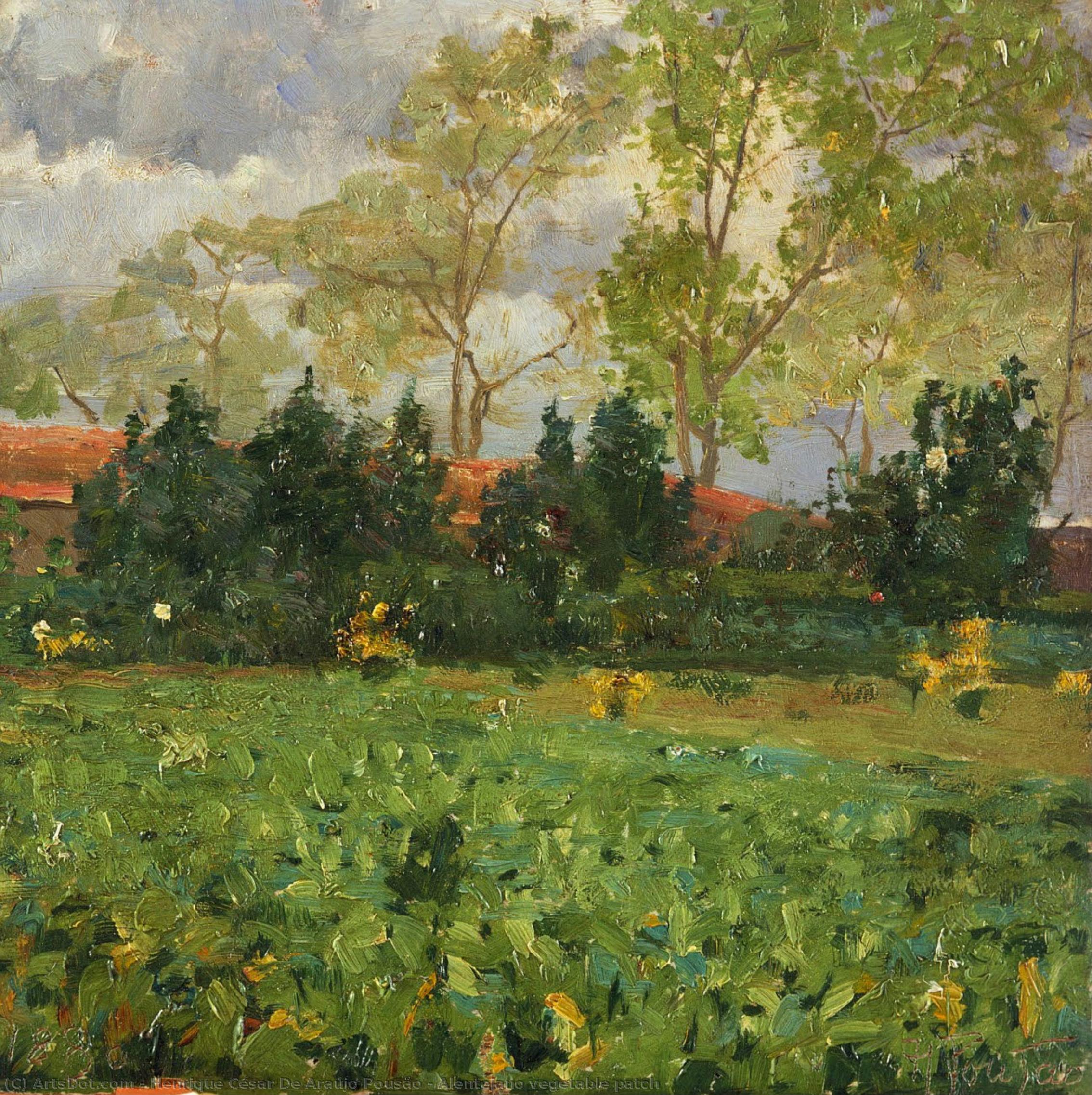
Painted in 1880 by Henrique César de Araújo Pousão, Alentejano Vegetable Patch offers a captivating window into the Portuguese countryside. This small-scale oil painting (24 x 24 cm) is more than just a landscape; it’s an evocative impression of light, texture, and the quiet beauty of nature.
Subject & Composition
The artwork depicts a vibrant vegetable patch or meadow – likely in the Alentejo region of Portugal, as indicated by the title – brimming with lush vegetation. A distant building subtly anchors the composition, hinting at human presence without dominating the natural scene. The horizontal emphasis draws the eye across the breadth of the field and towards the treeline on the horizon, creating a sense of expansive space. Pousão masterfully balances detail in the foreground with atmospheric perspective in the distance.
Style & Technique: A Portuguese Impressionist
- Impressionistic Influence: Pousão’s style clearly reflects the burgeoning influence of Impressionism, particularly artists like Camille Pissarro. He prioritizes capturing a fleeting moment and the *impression* of light and color over strict realism.
- Plein Air Painting: The work strongly suggests it was painted en plein air – outdoors – allowing Pousão to directly observe and record the nuances of natural light and atmosphere.
- Impasto & Texture: A defining characteristic is the thick application of paint, known as impasto. This technique is particularly evident in the foreground vegetation, adding a palpable sense of texture and depth that invites tactile exploration.
- Color Palette: The painting is dominated by varying shades of green, representing the abundant foliage. Touches of yellow and brown provide warmth and contrast, creating a harmonious and naturalistic color scheme.
Historical Context & Artistic Lineage
Henrique César de Araújo Pousão (1859-1884) was a tragically short-lived but remarkably talented Portuguese painter. Educated at the Fine Arts Academy of Porto, he quickly distinguished himself with his naturalist style and keen eye for light. His work bridges the gap between traditional academic painting and the emerging Impressionist movement. Pousão’s unique approach involved using black in equal proportion to other colors, demonstrating a sophisticated understanding of tonal values and color relationships.
Symbolism & Emotional Impact
Alentejano Vegetable Patch is not laden with overt symbolism. Instead, its power lies in its ability to evoke feelings of tranquility, serenity, and a deep connection with nature. The painting invites the viewer to step into this peaceful landscape and experience the simple beauty of rural life. It’s a celebration of the Portuguese countryside and a testament to Pousão's skill in capturing its essence.
For Collectors & Designers
This artwork, or a high-quality reproduction, would be an excellent addition to a collection focused on 19th-century European painting, particularly Impressionism and Naturalism. Its calming color palette and pastoral subject matter make it well-suited for interiors seeking a touch of rustic elegance and natural beauty – think country kitchens, sunrooms, or studies. The small size makes it versatile for various spaces.