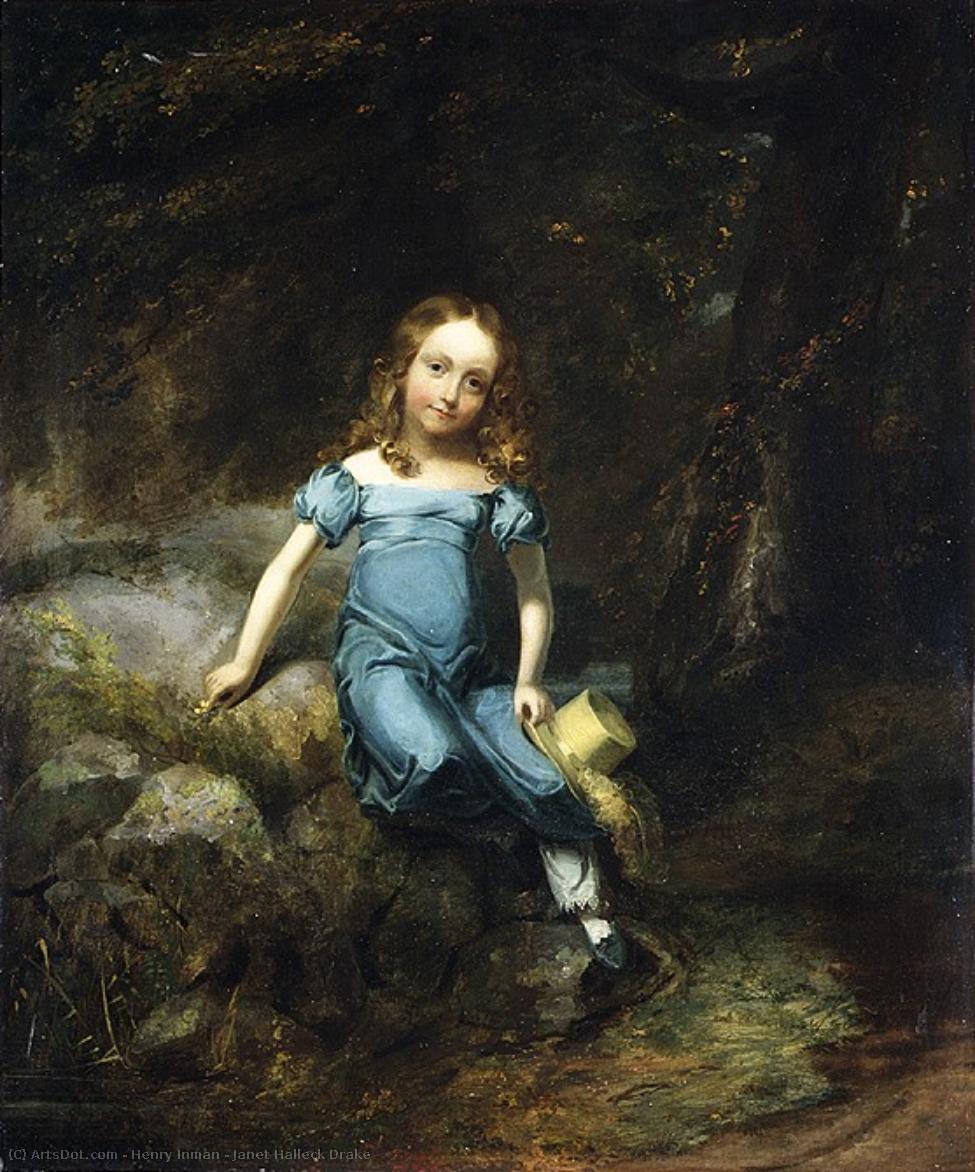
Henry Inman’s ‘Janet Halleck Drake’ (1825) captures a charming portrait of a young girl in a woodland setting. A beautiful example of American Romanticism, perfect for art collectors.
Henry Inman (1801-1846) was a prominent American portrait, genre & landscape painter. Known for his portraits of notable figures and work documenting Native American leaders, he helped found the National Academy of Design.
Explore The Metropolitan Museum of Art: 5,000 years of art from around the world! Discover masterpieces, ancient artifacts & immersive exhibitions – a global art destination awaits.
Janet Halleck Drake: A Woodland Reverie Captured in Oil
Henry Inman’s “Janet Halleck Drake” (1825) stands as a quintessential example of American Romanticism, transporting viewers back to the mid-nineteenth century and embodying its fascination with nature's beauty and innocence. More than just a portrait, it’s an exquisitely rendered tableau—a moment frozen in time—that speaks volumes about artistic sensibilities and Victorian ideals. The painting resides within the Metropolitan Museum of Art’s collection, offering art enthusiasts a chance to experience firsthand this remarkable achievement of visual storytelling.
### Subject Matter & Composition: A Child Amongst Trees
The subject is Janet Halleck Drake, approximately seven years old, depicted in a tranquil woodland setting. Inman skillfully positioned her amidst towering trees and dappled sunlight, creating an atmosphere of serenity and seclusion. Her gaze drifts off-camera—a subtle gesture that invites contemplation—suggesting a connection to something larger than herself, perhaps reflecting the Romantic preoccupation with spirituality and imagination. The artist’s meticulous attention to detail extends beyond Drake's figure; the surrounding foliage is rendered with remarkable realism, capturing the textures and nuances of the forest floor.
### Artistic Style & Technique: Impressionistic Influences
“Janet Halleck Drake” showcases Inman’s distinctive style—characterized by a blend of realism and impressionistic techniques. While maintaining accurate representation of Drake's likeness and her surroundings, he employs loose brushstrokes and vibrant color palettes to convey the feeling of light and airiness. This approach aligns with the broader artistic movement of Impressionism, which sought to capture fleeting moments of sensory experience rather than striving for photographic accuracy. The artist’s masterful use of glazing—applying thin layers of translucent paint over underlying colors—creates depth and luminosity, enhancing the painting's visual impact.
### Historical Context & Symbolism: Victorian Idealization of Childhood
Painted in 1825 during a period marked by significant social and intellectual upheaval, “Janet Halleck Drake” reflects the Victorian fascination with idealized childhood—a concept championed by thinkers like Rousseau and Wordsworth. The depiction of Drake amidst nature symbolizes purity, innocence, and connection to the natural world—values considered crucial for moral development and spiritual fulfillment. Furthermore, Inman’s inclusion of books subtly underscores the importance of education and intellectual curiosity within Victorian society. The artist's choice of a top hat—a fashionable accessory at the time—is also noteworthy, serving as a visual emblem of Inman himself and his artistic persona.
### Emotional Impact & Legacy: Beauty Captured Forever
Ultimately, “Janet Halleck Drake” transcends its formal elements to evoke a profound emotional response in viewers. Its tranquil composition and luminous colors inspire feelings of peace, nostalgia, and wonder—capturing the essence of Romantic idealism. The painting’s enduring appeal testifies to Inman's artistic genius and his ability to distill complex ideas into a single, unforgettable image. It remains a treasured piece within the Met Museum’s collection, continuing to captivate audiences with its timeless beauty and evocative storytelling.