A Vision of Mystery: Reimagining Salome
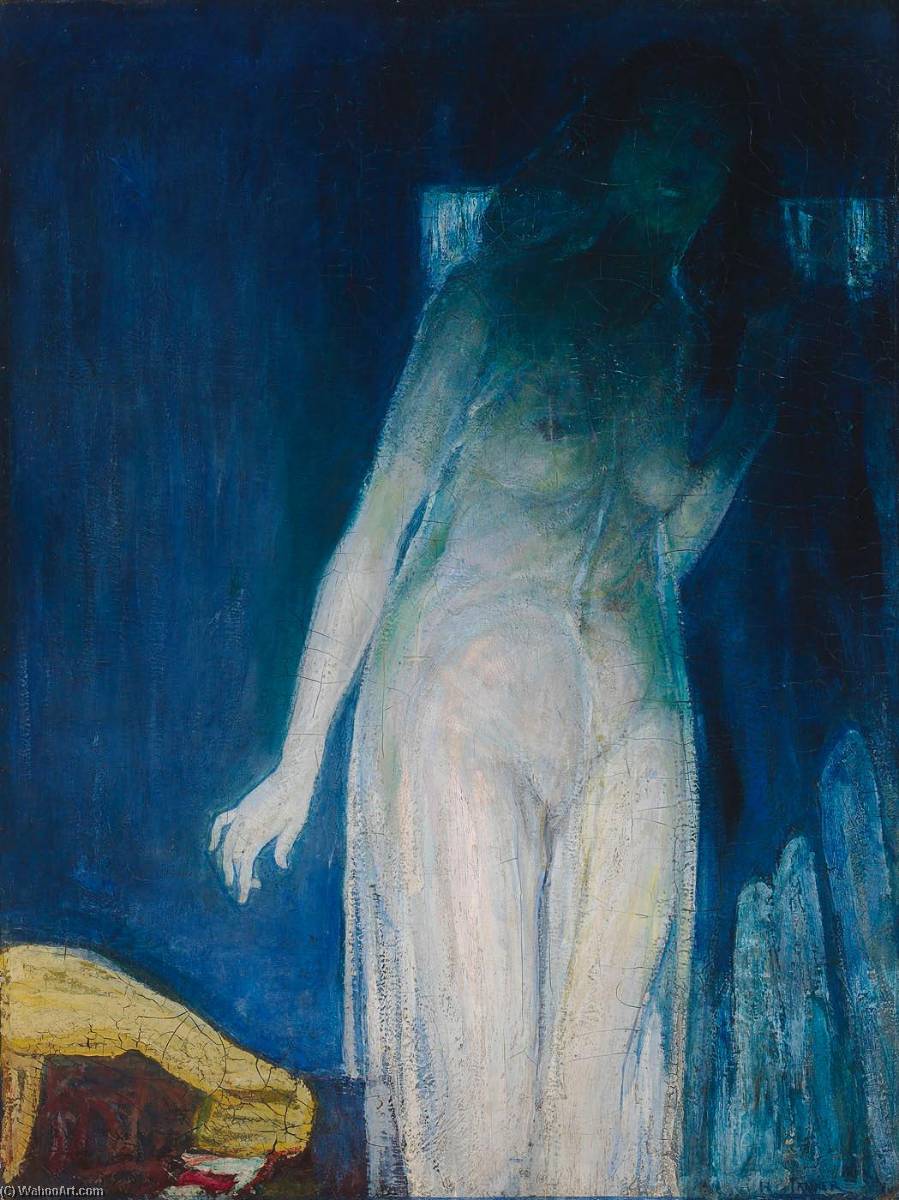
In the quiet, evocative depths of Henry Ossawa Tanner’s Salome, painted in 1900, we encounter a scene that transcends mere portraiture to become a profound meditation on identity and introspection. The composition presents a striking figure with her back turned toward the viewer, standing before a mirror that serves as both a literal reflective surface and a metaphorical gateway into the soul. This positioning creates an immediate sense of intimacy and voyeurism, inviting the observer to peer into a private moment of vulnerability. As she gazng into the glass, the boundary between the physical world and the internal psyche begins to blur, leaving us to wonder what secrets are being whispered in the silence of that reflected gaze.
The atmosphere of the painting is thick with an air of mystery and intrigue. While the central figure commands our attention through her poised, naked form, Tanner masterfully populates the periphery with subtle secondary figures that suggest a larger, unfolding narrative. These background presences, along with the enigmatic objects placed near the edges of the frame, hint at a world of courtly drama or perhaps a domestic ritual steeped in ancient significance. The large-scale format of the work—spanning nearly 120 centimeters in width—allows the viewer to become fully immersed in this atmospheric setting, making it an extraordinary centerpiece for any collection that seeks to provoke thought and conversation.
Mastery of Light and Tonal Depth
Tanner, a pioneer of African American art, brings his unparalleled ability to manipulate light to this particular piece. The technique is characterized by a sophisticated use of chiaroscuro, where the interplay between shadow and illumination creates a palpable sense of three-dimensional space. The way the light catches the curves of the subject's skin and reflects off the surface of the mirror demonstrates a technical virtuosity that elevates the work from a mere depiction to a sensory experience. His brushwork, though controlled, possesses a rhythmic quality that lends a soft, almost ethereal glow to the scene, characteristic of his ability to illuminate even the most somber subjects.
For the discerning collector or interior designer, this reproduction offers more than just aesthetic beauty; it offers a window into the late 19th-century transition toward modern psychological depth in art. The muted yet rich color palette is designed to harmonize with sophisticated decor, providing a focal point that feels both timeless and intellectually stimulating. Whether placed in a grand salon or a quiet study, Salome acts as an anchor of elegance, bringing the historical weight of Tanner’s legacy and the haunting beauty of his vision into the contemporary living space.