A Glimpse into Victorian Innocence
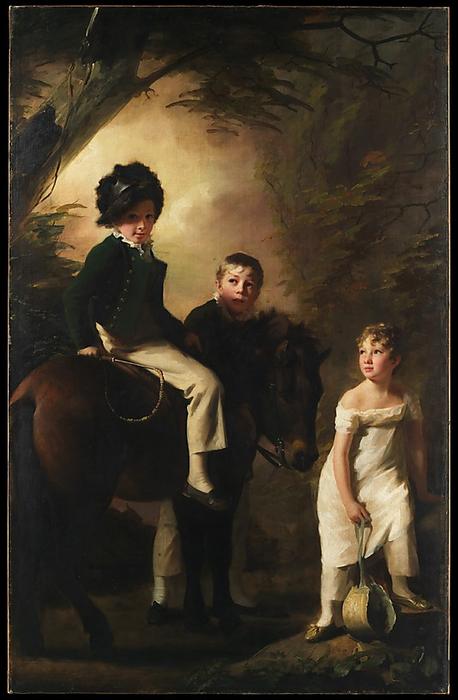
In the quiet, dappled light of a secluded woodland, Henry Raeburn’s "The Drummond Children" invites the viewer into a tender moment frozen in time. Completed around 1809, this masterpiece serves as more than just a formal portrait; it is a profound window into the early Victorian era, capturing the essence of aristocratic childhood with a remarkable blend of Romanticism and classical grace. The painting centers on young George Drummond, a six-year-old boy who sits with an air of natural poise atop a sleek black pony. His presence, marked by a green jacket and a feathered hat, radiates a burgeoning confidence that hints at his noble lineage. Beside him, his foster siblings stand in serene, almost melancholic stillness, their white dresses catching the stray beams of light that pierce through the dense canopy above. There is an undeniable intimacy in this arrangement, a sense of familial bond that transcends the centuries to touch the heart of the modern observer.
The technical brilliance of Raeburn lies in his masterful command of chiaroscuro, a technique that breathes life and drama into the canvas. By utilizing stark contrasts between deep, enveloping shadows and brilliant highlights, he creates a three-dimensional depth that pulls the subjects forward from the dark, textured foliage of the background. The forest itself is not merely a setting but a living participant in the narrative; the muted browns, deep greens, and heavy blacks of the trees create an atmosphere of mystery and sanctuary. As light filters through the branches, it dapples the children’s faces, emphasizing the meticulous detail Raeburn applied to the textures of silk, wool, and horsehair. This interplay of light and shadow does more than showcase skill; it evokes a sense of quiet dignity and the fleeting nature of youth.
Symbolism and Lasting Emotional Resonance
Beyond its visual splendor, "The Drummond Children" is rich with subtle symbolism that would have been deeply understood by contemporary audiences. The black horse, steady beneath the young boy, serves as a potent emblem of strength, nobility, and the weight of future responsibilities. Meanwhile, the woodland setting—secluded and tranquil—evokes themes of purity and the untouched innocence of childhood, sheltered from the complexities of the outside world. Even the small basket held by one of the girls adds a touch of pastoral simplicity, grounding the aristocratic subjects in a sense of natural grace. For the collector or interior designer, this painting offers a sophisticated narrative layer that can anchor a room with its themes of heritage and timelessness.
For those seeking to bring the prestige of the Scottish Enlightenment into their personal spaces, a high-quality reproduction of this work provides an unparalleled opportunity. The painting’s subdued color palette and dramatic composition make it a versatile choice for various interior styles, from classical estates to modern, moody galleries. It possesses a unique emotional gravity—a quiet, restrained emotion that commands attention without overwhelming the environment. To hang such a piece is to invite a sense of history, stability, and poetic beauty into one's home, celebrating a moment of pure, aristocratic grace that continues to inspire awe more than two centuries after its creation.