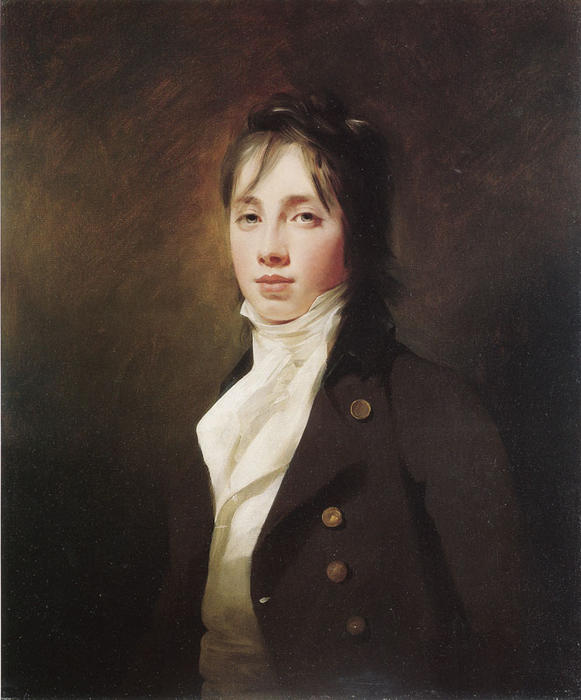
A Gaze Across Centuries: The Soul of William Fraser of Reelig
In the quiet intensity of Sir Henry Raeburn’s 1801 masterpiece, William Fraser of Reelig, one finds much more than a mere likeness of a young gentleman; one encounters a profound dialogue between the subject and the spectator. The portrait captures a seventeen-year-old William at a pivotal threshold of life, poised between the rugged, ancestral landscapes of the Scottish Highlands and the burgeoning cosmopolitanism of the British Empire. As he gazes directly at the viewer, his expression is a captivating blend of composure and quiet contemplation, suggesting an inner fortitude that belies his youth. For the discerning collector or interior designer, this painting offers a window into a vanished era, bringing a sense of dignified resilience and historical gravity to any curated space.
Raeburn, a master of the Scottish Romantic movement, eschews the rigid, polished perfection of Neoclassicism in favor of a more visceral, emotional realism. His technique is nothing short of transformative; through the meticulous application of glazing—the layering of thin, translucent washes of oil paint—he achieves a luminous depth that seems to radiate from within the canvas itself. This method allows light to dance across the textures of William’s dark suit and the crisp, stark white of his shirt, creating a tonal gradation that breathes life into the fabric. The subtle interplay of shadow and light does not merely define form but serves to illuminate the psychological complexity of the sitter, making the portrait feel remarkably present and alive.
Symbolism and the Weight of Time
Beyond the physical rendering of the subject, Raeburn weaves subtle symbolic threads into the composition that invite deeper reflection. Behind the young Fraser, a prominent clock rests upon the wall, acting as a poignant memento mori. This element serves as a silent reminder of the relentless passage of time and the fleeting nature of youth—a theme particularly resonant given William’s subsequent life of adventure and his eventual tragic end in Delhi. The clock anchors the portrait in a specific temporal reality while simultaneously elevating it to a universal meditation on destiny and the unfolding of a human life.
The historical context of the piece adds an extra layer of allure for those moved by the spirit of Scottish heritage. Painted during a period of renewed national identity following the Napoleonic Wars, the portrait embodies the tension between traditional Highland values and the allure of European enlightenment. To possess a reproduction of this work is to invite a piece of this complex history into one's home. It is an evocative choice for those seeking to anchor a room with art that possesses both intellectual depth and an undeniable aesthetic elegance, offering a timeless connection to the romantic spirit of the nineteenth century.