A Moment of Innocence: Henry Raeburn’s “Young Girl Holding Flowers”
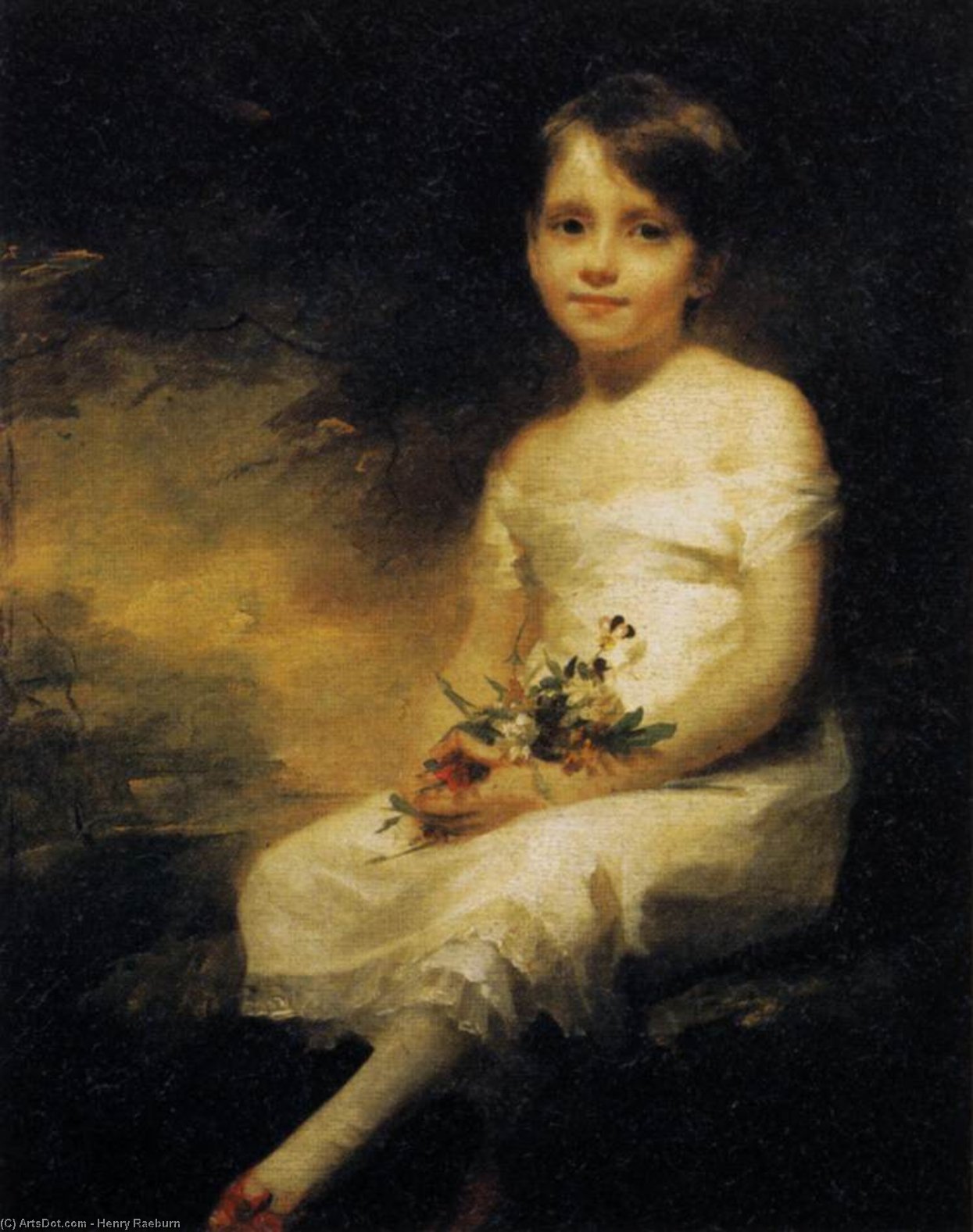
Henry Raeburn's "Young Girl Holding Flowers," painted in 1798 and currently residing within the hallowed halls of the Musée du Louvre, is more than just a charming pastoral scene; it’s a profound meditation on youth, beauty, and the fleeting joys of nature. This exquisite oil-on-canvas work captures a young girl, seemingly lost in contemplation as she cradles a vibrant bouquet of wildflowers. Raeburn's masterful technique—characterized by soft, luminous colors and delicately blended brushstrokes—imbues the painting with an almost palpable sense of warmth and intimacy. The scene unfolds within a simple, rustic setting, suggesting a connection to the land and a celebration of rural life, a theme increasingly valued during the late 18th century.
The Artist and His Vision: Raeburn’s Romantic Realism
Sir Henry Raeburn (1756-1823) stands as a pivotal figure in Scottish art, bridging the gap between Neoclassicism and the burgeoning Romantic movement. Born in Stockbridge, near Edinburgh, his early life was shaped by an apprenticeship in goldsmithing – a craft that instilled within him a meticulous attention to detail and a deep appreciation for texture and light. This precision would later translate seamlessly into his paintings, particularly evident in the rendering of the girl’s flowing dress and the intricate details of the flowers. Raeburn deliberately moved away from the rigid formality of earlier portraiture, favoring instead a more relaxed and approachable style that prioritized capturing the personality and character of his subjects. He sought to portray not just appearances but also the inner life, imbuing his figures with a sense of humanity and emotion – qualities powerfully evident in “Young Girl Holding Flowers.”
Symbolism and Narrative: A Portrait of Rural Beauty
The painting’s symbolism is layered and subtly suggestive. The young girl herself represents innocence, purity, and the beauty of childhood. Her gentle smile and contemplative gaze invite the viewer to share in her quiet moment of appreciation for nature's bounty. The wildflowers she holds – a diverse collection of blossoms – are not merely decorative elements; they carry symbolic weight. Each flower can be interpreted as representing different virtues or emotions: daisies for innocence, violets for faithfulness, and roses for love. The rustic setting—a field bathed in the golden light of late afternoon—further reinforces this connection to nature and a simpler way of life. The composition itself is carefully balanced, drawing the eye towards the central figure while creating a sense of depth and tranquility.
A Legacy Enduring: Reproduction and Appreciation
“Young Girl Holding Flowers” has captivated audiences for centuries, solidifying Raeburn’s reputation as one of Scotland's greatest artists. Its enduring appeal lies in its ability to evoke a sense of nostalgia, beauty, and the timeless connection between humanity and nature. Today, high-quality reproductions—such as those offered by ArtsDot.com—allow art lovers worldwide to experience the painting’s exquisite detail and emotional resonance. Whether displayed on a grand scale or cherished within a smaller space, this iconic work continues to inspire admiration and appreciation for Raeburn's artistic genius. For those seeking an authentic representation of this masterpiece, exploring reproductions available through platforms like ArtsDot.com offers a wonderful opportunity to bring a piece of Scottish art history into your home.
To delve deeper into the life and work of Henry Raeburn, we encourage you to explore resources such as the Web Gallery of Art () and Wikipedia ().