The painting
Hermes at The Pool (sketch) by
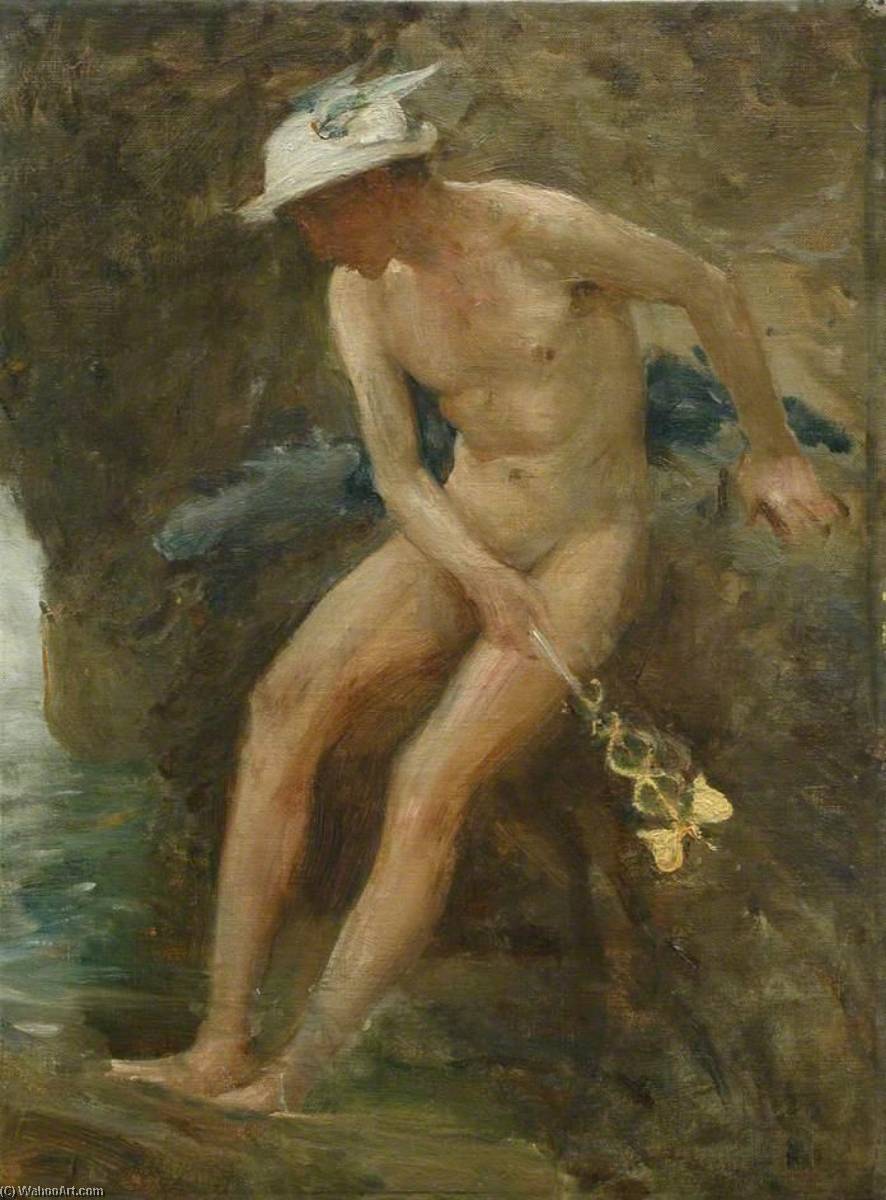
Henry Scott Tuke is a captivating piece of art that showcases the artist's unique style and technique. Created in 1900, this oil on canvas painting depicts a naked man sitting by the water, surrounded by rocks and a bird perched nearby.
The Artist's Inspiration
Henry Scott Tuke was a British painter who studied at the Slade School and was influenced by contemporary French plein-air painting. His work often featured young men and boys in natural settings, exploring themes of beauty, innocence, and masculinity. The
Royal Cornwall Polytechnic Society museum is home to many of his works, including
Hermes at The Pool (sketch).
The Painting's Composition
The composition of
Hermes at The Pool (sketch) is noteworthy for its use of light and color. The artist's brushstrokes are bold and expressive, capturing the play of sunlight on the water and the surrounding rocks. The painting's focus on the human form and the natural world creates a sense of serenity and contemplation.
Key Features of the painting include:
- The use of oil on canvas to create a rich and textured surface
- The depiction of a naked man in a natural setting, exploring themes of beauty and innocence
- The inclusion of a bird perched nearby, adding an element of whimsy and curiosity
Henry Scott Tuke's work can be found on
https://ArtsDot.com, where you can discover more about his life and art. The
Royal Cornwall Polytechnic Society museum is also a great resource for learning about the artist and his work. For more information on
Henry Scott Tuke and his paintings, visit
/art/list/?Filter=AQZDXC-Henry-Scott-Tuke-Hermes-at-The-Pool-(sketch) and
https://en.wikipedia.org/wiki/Henry_Scott_Tuke.
The painting
Hermes at The Pool (sketch) is a beautiful example of
Henry Scott Tuke's unique style and technique, and its captivating composition and themes continue to inspire art lovers today.